


Unique Corporate Gift Items to Impress Employees, Clients and Business Partners
Corporate gifting is more than exchanging presents. It is an effective way for businesses to appreciate employees, strengthen client relationships and build meaningful connections with business partners. A thoughtfully selected gift can communicate appreciation, reflect company values and create a positive impression that lasts beyond the occasion.
Today, companies are moving beyond traditional diaries, calendars and ordinary promotional products. They are exploring creative, practical and personalized options that recipients can genuinely enjoy. From premium desk accessories to customized hampers, choosing the right gift can make every business interaction more memorable.
Whether you are planning employee appreciation gifts, festive hampers or executive presents, exploring unique corporate gift items can help you discover thoughtful options that combine creativity, usefulness and brand value.
Why Corporate Gifting Matters for Modern Businesses
Corporate gifting plays an important role in maintaining professional relationships. Employees feel valued when their efforts are recognised, while clients and business partners appreciate thoughtful gestures that demonstrate respect.
Some important benefits include:
-
Employee appreciation: Gifts can recognise achievements, work anniversaries and professional milestones.
-
Client retention: A meaningful present helps maintain positive business relationships.
-
Brand recognition: Customized products can keep your business visible in everyday settings.
-
Business networking: Thoughtful gifts can make professional interactions more memorable.
-
Workplace culture: Celebrating important occasions can encourage a positive working environment.
The key is to select gifts according to the recipient, occasion and company budget instead of choosing products simply because they are popular.
Wooden Corporate Gift Items: Elegant and Timeless Choices
Wooden gifts are an excellent option for businesses looking for something elegant, practical and distinctive. Their natural appearance gives them a premium feel, making them suitable for employees, executives and important clients.
Some popular wooden corporate gift items include:
-
Wooden desk organisers: Useful for arranging stationery, business cards and everyday office essentials.
-
Engraved wooden pens: Personalized pens with names or company details create memorable professional gifts.
-
Wooden photo frames: Suitable for celebrating employee achievements, retirement and company anniversaries.
-
Wooden nameplates: Customized nameplates can add a professional touch to office desks.
-
Wooden gift boxes: Beautiful packaging can make a collection of smaller gifts feel more premium.
-
Wooden clocks: Decorative and functional gifts that suit office and home environments.
Wooden products can also be customized through laser engraving, printed messages and personalized packaging. These details help transform ordinary products into meaningful presents. For companies interested in natural materials, wooden corporate gift items offer a balance of traditional craftsmanship and modern presentation.
Corporate Gift Items List: 10 Creative Ideas Worth Considering
Finding the right present becomes easier when businesses explore different product categories. Here is a practical corporate gift items list featuring options for different recipients and occasions.
-
Personalized stationery sets: Notebooks, diaries and premium pens are useful for everyday professional activities.
-
Customized drinkware: Insulated bottles, coffee mugs and travel tumblers combine functionality with brand visibility.
-
Technology accessories: Wireless chargers, power banks and Bluetooth speakers are suitable for employees and technology-focused clients.
-
Premium gift hampers: Combine chocolates, dry fruits, gourmet snacks and lifestyle products in attractive packaging.
-
Indoor plants: Small desk plants and decorative planters offer a refreshing alternative to conventional gifts.
-
Travel accessories: Passport holders, luggage tags and travel organisers are practical options for frequent travellers.
-
Personalized office accessories: Desk calendars, organisers and nameplates make useful workplace presents.
-
Wellness gift sets: Relaxation kits, self-care products and wellness accessories can encourage employees to take a break.
-
Customized bags: Laptop bags, tote bags and backpacks are suitable for conferences, onboarding and employee rewards.
-
Experience-based gifts: Learning subscriptions, event passes and experience vouchers offer alternatives to physical products.
The best choice depends on the recipient's interests, the purpose of gifting and how frequently the product will be used.
Personalized Corporate Gifts That Create Lasting Impressions
Personalization adds emotional value to a business gift. Instead of giving everyone the same generic product, companies can include names, initials, meaningful messages or subtle brand elements.
For example, a new employee can receive a welcome kit containing a personalized notebook, water bottle and company welcome card. A long-term client may appreciate an engraved pen set or a premium hamper with a handwritten thank-you message.
According to modern corporate gifting guidance, personalization and recipient preferences are important considerations when designing gifting programmes. Businesses can explore corporate gifting trends and ideas to understand how thoughtful recognition can support workplace engagement.
Personalized corporate gifts are particularly useful for onboarding programmes, employee recognition, festive celebrations, business anniversaries and client appreciation events.
Sustainable Corporate Gifts for Environmentally Conscious Brands
Sustainability is becoming an important consideration in purchasing decisions. Companies that want their gifting choices to reflect environmental responsibility can explore reusable, recyclable and responsibly sourced products.
Some suitable options include:
-
Bamboo stationery and desk accessories.
-
Reusable stainless-steel water bottles.
-
Recycled-paper notebooks.
-
Jute bags and reusable shopping bags.
-
Seed-paper greeting cards.
-
Terracotta planters and indoor gardening kits.
When selecting sustainable corporate gifts, businesses should check the material, manufacturing claims and packaging rather than relying only on environmental labels.
These sustainable corporate gifts can also communicate a company's commitment to responsible purchasing while offering practical value to recipients.
Corporate Gift Items Wholesale: Smart Buying for Bulk Orders
Businesses purchasing gifts for large teams, distributors or client networks often need products in substantial quantities. Buying corporate gift items wholesale can help simplify procurement, maintain consistency and manage overall gifting budgets.
Before placing a bulk order, consider these important factors:
1. Set a realistic budget: Decide the approximate spending limit per recipient, including customization, packaging and delivery.
2. Check product quality: Request samples before confirming a large order. Examine material, finishing, durability and packaging.
3. Compare customization options: Check whether suppliers offer engraving, printing, company logos, personalized names and customized gift boxes.
4. Understand minimum order quantities: Confirm the minimum quantity, bulk pricing structure and production timeline.
5. Plan delivery in advance: For festivals, annual celebrations and corporate events, place orders early to avoid last-minute delays.
6. Ask about packaging and logistics: Confirm whether individual packaging, multiple delivery addresses and branded inserts are available.
Companies looking for corporate gift items wholesale should compare product quality, supplier reliability and customization capabilities instead of selecting a supplier based only on the lowest quotation.
How to Choose the Right Gift for Employees, Clients and Partners
Different recipients have different expectations, so a single gifting approach may not work for everyone.
For employees, focus on practical products, welcome kits, achievement awards and personalized accessories. For clients, consider premium stationery, curated hampers and elegant desk products. For business partners, choose thoughtful presents that reflect the value of your professional relationship.
It is also important to consider cultural preferences, dietary requirements, company gifting policies and delivery locations. A useful gift with appropriate packaging and a personalized note often creates a better impression than an expensive but unsuitable product.
Conclusion
Corporate gifting is an opportunity to appreciate people, strengthen professional relationships and communicate your brand values. From wooden accessories and customized hampers to technology products and environmentally conscious alternatives, there are many creative ways to make business gifting more meaningful.
By understanding recipient preferences, setting a suitable budget and choosing quality products, businesses can create gifting experiences that people genuinely appreciate. The right gift is not necessarily the most expensive one; it is the one that makes the recipient feel valued and remembered.

Best Ayurvedic Health Supplements in India for Natural Wellness and Daily Health
Maintaining good health requires a balanced lifestyle, nutritious food and proper daily care. Today, many people are exploring traditional wellness practices and herbal products as part of their everyday routines. Ayurveda, India's ancient system of traditional healthcare, focuses on maintaining overall well-being through diet, lifestyle practices and herbal preparations.
The growing interest in natural wellness has increased demand for the best ayurvedic health supplements in india. From herbal powders and plant-based formulations to traditional wellness products, consumers have several options to explore. However, choosing the right product requires understanding its ingredients, quality, intended use and suitability for individual needs.
Let's explore different Ayurvedic supplement categories, their traditional uses and important factors to consider before purchasing them.
Understanding Ayurvedic Supplement Powder
An ayurvedic supplement powder is a powdered preparation made using individual herbs or combinations of botanical ingredients. These products are traditionally used in different wellness routines and can be incorporated into daily lifestyles according to their intended purpose.
Some commonly recognised Ayurvedic ingredients include:
-
Ashwagandha: Traditionally used in formulations associated with stress management and vitality.
-
Amla: A natural source of vitamin C and traditionally valued for its antioxidant properties.
-
Shatavari: Commonly used in traditional Ayurvedic wellness preparations.
-
Brahmi: Traditionally associated with cognitive wellness.
-
Turmeric: Contains curcumin, a naturally occurring compound studied for its biological properties.
These ingredients are available in different formulations, including standalone powders and blended herbal preparations. Their effects can vary depending on the formulation, dosage and individual health conditions.
Ayurvedic Supplement Weight Gain: Understanding Natural Nutrition
People looking to improve their body weight often explore nutritional supplements alongside a balanced diet and exercise routine. An ayurvedic supplement weight gain product may contain traditional herbal ingredients intended to complement an individual's nutritional routine.
However, healthy weight gain primarily depends on consuming sufficient calories, protein and essential nutrients.
Before selecting a supplement, consider:
-
Your current nutritional requirements.
-
The quality and composition of the ingredients.
-
Your daily calorie and protein intake.
-
Whether the formulation is appropriate for your health condition.
-
Guidance from a qualified healthcare professional.
Some traditional formulations include ingredients such as Ashwagandha and Shatavari. However, these should not be considered guaranteed weight-gain solutions. A personalised nutrition plan remains important for achieving sustainable results.
Choosing Quality Ayurvedic Supplement Powder
Not every herbal formulation available in the market offers the same level of quality. Consumers should examine the product label, ingredient information, manufacturing details and recommended usage before making a purchase.
A reliable product should provide clear information about its composition, batch details, manufacturing date, expiry date and storage instructions.
It is also important to understand that natural ingredients do not automatically mean a product is completely safe. Certain herbal preparations can interact with medicines or cause unwanted effects.
According to the Ministry of AYUSH, consumers should be aware of the regulatory requirements and labelling practices applicable to traditional medicine products. The Ministry has also clarified that licensing by state authorities should not be confused with direct product approval by the Ministry.
Where to Find Ayurvedic Herbal Powders Online
With the growth of online shopping, consumers can now explore a wide variety of traditional herbal products through digital marketplaces and specialised health and wellness platforms.
When searching for ayurvedic herbal powders online, compare different products instead of selecting one based only on attractive packaging or promotional offers.
Consider these factors before ordering:
-
Ingredient transparency: Check whether the complete ingredient list is provided.
-
Quality information: Look for available quality-testing and manufacturing details.
-
Product authenticity: Purchase from established brands or authorised sellers.
-
Packaging: Prefer properly sealed packaging with clear labelling.
-
Customer support: Check whether the seller provides accessible product information and assistance.
Consumers can also explore the official NCCIH information on Ayurvedic medicine to understand available scientific evidence, limitations and potential safety concerns.
How to Identify Reliable Ayurvedic Health Supplements Suppliers
Businesses entering the herbal wellness industry need dependable suppliers who can maintain consistent product quality and transparent business practices.
When evaluating ayurvedic health supplements suppliers, manufacturers, wholesalers and retailers should consider the following:
-
Availability of relevant manufacturing licences.
-
Quality-control and testing procedures.
-
Ingredient sourcing and traceability.
-
Manufacturing hygiene and packaging standards.
-
Minimum order quantities and wholesale pricing.
-
Product documentation and business transparency.
Suppliers should also be able to explain their manufacturing processes and provide relevant quality documentation.
For businesses planning to develop their own herbal wellness product range, selecting a suitable manufacturing partner is an important step towards building customer confidence and maintaining consistent product standards.
Exploring the Connection Between Herbal Wellness and Personal Care
The natural wellness market extends beyond traditional supplements. Consumers are increasingly exploring products across skincare, haircare, personal care and herbal beauty categories.
This creates opportunities for businesses interested in developing different product lines under the broader health and beauty industry.
For example, companies can explore herbal skincare formulations, botanical haircare products, natural personal care ingredients and wellness-focused product collections.
Businesses researching top cosmetic manufacturers in india should evaluate their manufacturing capabilities, product development expertise, quality-control processes and packaging options. This is particularly important for brands planning to introduce herbal-inspired beauty and personal care products.
How to Choose the Best Ayurvedic Health Supplements in India
Selecting suitable supplements requires more than following popular trends. Consumers should focus on product quality, ingredient suitability and reliable manufacturing information.
Here are some practical buying considerations:
-
Check product labelling: Read the ingredient list and recommended usage carefully.
-
Understand the formulation: Identify whether the product is a single-herb powder or a multi-ingredient preparation.
-
Verify manufacturer details: Look for relevant licensing and manufacturing information.
-
Compare product quality: Consider testing information, packaging and sourcing transparency.
-
Seek professional advice: Consult a qualified healthcare professional, especially if you take medication, have an existing health condition or are pregnant.
When exploring the best ayurvedic health supplements in india, avoid products that promise instant results, permanent cures or guaranteed treatment outcomes. The National Center for Complementary and Integrative Health also highlights that scientific evidence for many Ayurvedic approaches remains limited and that certain preparations may contain potentially harmful substances.
Conclusion
Ayurveda continues to attract attention among consumers interested in traditional wellness practices and herbal products. From powdered botanical ingredients to specialised nutritional formulations, the market offers different options for individuals and businesses exploring natural wellness.
Whether you are purchasing products for personal use or searching for reliable suppliers for your business, always prioritise ingredient transparency, product quality, appropriate licensing and responsible usage.
Choosing the best ayurvedic health supplements in india should involve informed research rather than simply following popular products or marketing claims. Explore reliable wellness resources, compare available formulations and consult qualified professionals to make suitable decisions for your health and lifestyle.
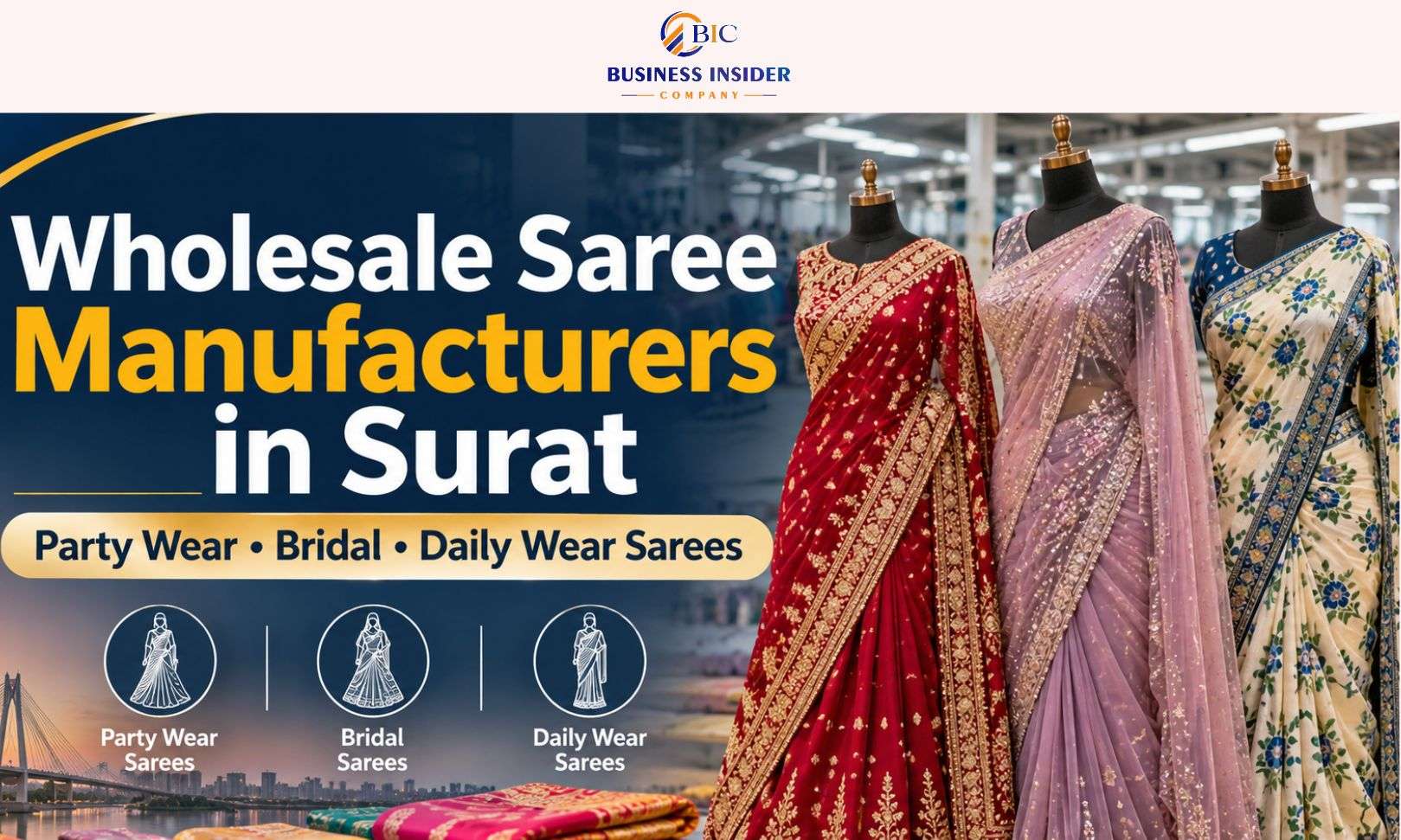
Wholesale Saree Manufacturers in Surat for Party Wear, Bridal and Daily Wear Sarees
The Indian saree market offers a wide variety of designs, fabrics, colours and traditional styles for different occasions. From elegant everyday cotton sarees to heavily embroidered bridal collections, sarees continue to be an important part of India's ethnic fashion industry. For retailers, boutique owners, distributors and online sellers, finding a dependable wholesale supplier is essential for building a profitable business.
Surat, Gujarat, has developed into one of India's major textile manufacturing centres. The city is particularly recognised for synthetic fabrics, sarees, dress materials, embroidery and textile processing. Its manufacturing ecosystem offers buyers access to different product categories, competitive sourcing opportunities and a wide range of designs.
Choosing the right wholesale saree manufacturers in surat can help retailers maintain consistent product quality, introduce fresh collections and manage inventory according to customer demand. Whether you want party wear sarees, bridal sarees or comfortable daily wear designs, understanding the wholesale market can make purchasing decisions easier.
This guide explains saree categories, fabrics, pricing factors, supplier selection, online purchasing and bulk-order considerations for businesses looking to source sarees from Surat.
Why Surat Is a Popular Destination for Wholesale Saree Purchasing
Surat has a well-established textile ecosystem that includes yarn suppliers, weaving units, textile processors, printing businesses, embroidery specialists, wholesalers and distributors. This connected supply chain makes it easier for buyers to explore different saree collections within the same textile market.
The city's textile industry is known for producing and processing man-made fabrics, particularly polyester-based materials. Buyers can find printed, embroidered, embellished and designer-inspired saree collections for different customer segments.
According to the Government of India's textile-sector information, Surat is an important man-made fibre textile centre. Its textile ecosystem supports the production of synthetic fabrics and traditional ethnic-wear materials. You can explore more about the Surat textile cluster to understand its manufacturing and processing activities.
Key Advantages of Buying Sarees from Surat
1. Wide product selection
Buyers can explore multiple saree categories, including party wear, bridal, festive, casual, printed, embroidered and lightweight collections. This makes Surat useful for retailers who serve customers with different budgets and preferences.
2. Competitive sourcing opportunities
The presence of several manufacturers, processing units and wholesalers creates opportunities to compare prices and product specifications. Businesses can select collections according to their expected selling price and profit margins.
3. Variety of fabrics
Surat's textile market offers different synthetic and blended fabrics, including georgette, chiffon, satin, art silk and other materials. These fabrics are used for creating lightweight, decorative and occasion-based sarees.
4. Design and colour variations
Manufacturers regularly introduce new prints, embroidery patterns, colour combinations and border designs. Retailers can use these collections to refresh their inventory during wedding seasons, festivals and other important shopping periods.
5. Bulk purchasing opportunities
Many suppliers cater to retailers and distributors purchasing multiple pieces or complete design collections. However, minimum order quantities and wholesale conditions differ from one supplier to another.
Understanding Different Saree Categories for Wholesale Buyers
Before purchasing inventory, retailers should understand which saree categories are suitable for their target customers. A balanced collection can include affordable everyday designs, mid-range festive options and premium occasion wear.
1. Party Wear Sarees
Party wear sarees are designed for celebrations, receptions, engagement functions, birthday parties and festive gatherings. These sarees generally feature decorative elements that create an attractive appearance without necessarily having the heavy construction of bridal collections.
Popular party wear styles include:
-
Sequin work sarees with contemporary patterns.
-
Georgette sarees with embellished borders.
-
Satin sarees with elegant draping.
-
Net sarees featuring stone and thread work.
-
Organza sarees with embroidered detailing.
-
Lightweight designer sarees with modern prints.
For retailers, party wear collections can attract customers looking for stylish outfits at different price points. Maintaining a combination of subtle and heavily embellished designs can help serve customers with different preferences.
2. Bridal Sarees
Bridal sarees are among the most detailed and occasion-specific categories in the ethnic fashion market. Customers often look for rich colours, traditional motifs, intricate embroidery, zari work and premium-looking fabrics.
Common bridal saree options include:
-
Traditional silk-style sarees.
-
Heavy zari-work sarees.
-
Embroidered bridal sarees.
-
Velvet-finish occasion sarees.
-
Designer reception sarees.
-
Banarasi-inspired sarees.
Retailers should carefully inspect embroidery finishing, border attachment, fabric quality, blouse-piece details and colour consistency before purchasing bridal inventory.
Since bridal purchases are often planned around specific ceremonies, offering multiple colours and design variations can help businesses serve different customer requirements.
3. Daily Wear Sarees
Daily wear sarees are designed for regular use, workplace dressing, household activities and casual occasions. Comfort, easy maintenance, fabric durability and affordability are important purchasing considerations in this category.
Popular options include:
-
Printed cotton sarees.
-
Lightweight synthetic sarees.
-
Daily wear georgette sarees.
-
Simple floral-print sarees.
-
Comfortable blended-fabric sarees.
-
Minimal-border designs.
Daily wear products can generate repeat purchases because customers often buy them for regular wardrobe use. Retailers can maintain a wider selection of colours, prints and affordable designs to appeal to different customer groups.
Fabric Selection: What Should Retailers Look For?
Fabric selection affects the appearance, comfort, durability and selling price of a saree. Buyers should understand the characteristics of commonly available materials before placing bulk orders.
|
Fabric |
Common use |
Key characteristics |
|---|---|---|
|
Georgette |
Party and daily wear |
Lightweight, flowing drape |
|
Chiffon |
Party and casual wear |
Sheer, soft and lightweight |
|
Organza |
Festive and occasion wear |
Structured and translucent |
|
Satin |
Party wear |
Smooth surface and subtle shine |
|
Art silk |
Festive and bridal-inspired |
Silk-like appearance |
|
Cotton |
Daily wear |
Breathable and comfortable |
|
Net |
Party and bridal wear |
Sheer and decorative |
A good sourcing strategy involves selecting fabrics based on customer requirements rather than focusing only on appearance. For example, a retailer selling everyday sarees should prioritise comfort and easy maintenance, whereas a bridal boutique may focus more on embroidery, fabric richness and finishing.
How to Identify Reliable Suppliers and Manufacturers
Selecting a supplier is one of the most important decisions for a saree retailer. A low quotation does not automatically indicate a good purchasing opportunity. Businesses should evaluate product quality, communication, order policies and delivery reliability.
When comparing wholesale saree manufacturers in surat, consider the following factors:
Manufacturing and product specialisation: Understand whether the business manufactures sarees, processes fabrics, performs embroidery or operates primarily as a wholesale distributor. This helps you identify the right source for your product requirements.
Product catalogue: Request an updated catalogue containing clear photographs, fabric information, available colours, design codes and wholesale prices.
Sample availability: Whenever possible, order samples before purchasing a large quantity. Physical inspection helps you evaluate fabric texture, stitching, embroidery and finishing.
Minimum order quantity: Ask whether the supplier accepts single-design bulk orders, mixed-design orders or a minimum quantity across the complete catalogue.
Payment terms: Clarify advance payments, balance payments, accepted payment methods and refund or replacement policies.
Shipping arrangements: Check dispatch timelines, packaging standards, transportation charges and delivery coverage.
Communication: A dependable supplier should provide clear answers about product availability, order status and any changes in specifications.
How to Build a Profitable Saree Inventory
Retailers should avoid purchasing every available design simply because it looks attractive. A better approach is to develop an inventory plan according to customer demand, seasonal requirements and available investment.
For example, a retailer serving budget-conscious customers may focus more on daily wear sarees and affordable festive collections. A boutique serving premium customers may allocate more inventory to designer, embroidered and bridal options.
A balanced purchasing strategy can include:
-
Daily wear sarees for regular customer demand.
-
Party wear sarees for celebrations and events.
-
Bridal collections for wedding-related shopping.
-
Festive sarees for seasonal promotions.
-
Lightweight sarees for younger customers and casual occasions.
Review sales performance regularly. Designs that sell consistently can be reordered, while slow-moving products should be evaluated before investing in similar collections.
Wholesale Sourcing and Price Considerations
Price is an important factor when purchasing sarees in bulk. However, the final wholesale rate depends on several product specifications, including fabric, design complexity, embroidery, printing, finishing and order quantity.
Retailers should compare the complete product specification rather than selecting a supplier based only on the lowest quotation.
wholesale saree manufacturers in india: Understanding the Supplier Network
India has a diverse textile and ethnic-wear manufacturing industry. Different regions specialise in particular fabrics, weaving techniques, printing styles and traditional designs.
Surat is particularly recognised for synthetic sarees, man-made fabrics, dress materials and textile processing. Other manufacturing centres are known for silk, cotton, traditional weaving and regional textile crafts.
Businesses exploring Indian textile industry information can learn more about the country's textile sector, its contribution to employment and its importance to the economy.
When comparing suppliers, consider:
-
Product specialisation and manufacturing capabilities.
-
Fabric sourcing and quality standards.
-
Bulk-order availability.
-
Design customisation options.
-
Production and dispatch timelines.
-
Domestic and international shipping support.
For retailers, working with a supplier that understands their product category can make inventory planning and repeat purchasing easier.
wholesale saree manufacturers in surat with price: What Determines the Cost?
The wholesale price of a saree is not fixed across all collections. Two sarees with similar colours may have very different prices because of their fabric, construction and decorative work.
Important pricing factors include:
1. Fabric quality: The type, weight, texture and quality of the fabric influence the base cost. Premium materials generally have different pricing from basic synthetic fabrics.
2. Embroidery and embellishment: Thread embroidery, zari, sequins, stones and decorative borders require additional materials and workmanship.
3. Printing technique: Digital printing, screen printing and other surface-decoration methods can have different production costs.
4. Design complexity: Sarees with intricate patterns, multiple decorative elements or detailed finishing may cost more than simple designs.
5. Order quantity: Some manufacturers offer different rates for larger orders. The actual discount depends on production requirements and supplier policies.
6. Packaging and transportation: Individual packaging, bulk cartons, insurance and delivery charges can affect the final landed cost.
7. Product specifications: Blouse-piece inclusion, border detailing, fabric length and finishing requirements should be confirmed before finalising a quotation.
Retailers should request a written quotation with product codes and specifications. This helps prevent confusion when ordering repeat collections.
wholesale sarees in surat with low price: How to Purchase Economically
Businesses looking for affordable inventory should focus on value rather than simply choosing the lowest available price. Low-cost products can become expensive if they have poor finishing, inconsistent colours or high return rates.
Consider these practical purchasing methods:
-
Compare quotations from multiple suppliers.
-
Ask for catalogue-based bulk pricing.
-
Check whether mixed-design orders are accepted.
-
Purchase samples before confirming large orders.
-
Prioritise designs that match your customer demand.
-
Confirm whether the quoted price includes packaging and GST.
-
Check the replacement policy for damaged products.
For example, a small retailer may prefer purchasing a limited quantity of different designs to understand customer preferences. A large distributor may benefit from negotiating a repeat-order arrangement for products with consistent demand.
A simple example of wholesale cost calculation
Suppose a retailer purchases 50 sarees at an average supplier price of ₹500 each.
|
Particulars |
Amount |
|---|---|
|
Quantity |
50 pieces |
|
Average purchase price |
₹500 |
|
Total product cost |
₹25,000 |
|
Estimated transportation |
₹1,000 |
|
Total before applicable taxes and other costs |
₹26,000 |
The average landed cost is ₹520 per saree before any applicable additional expenses.
If the retailer sells each saree for ₹750, the difference between selling price and landed cost is ₹230 per piece, before operating expenses, discounts, returns and other business costs.
This example is only an illustration. Actual prices and profit margins depend on the supplier, product quality and selling conditions.
How to Purchase Sarees Online from Wholesale Suppliers
Online sourcing has made it easier for retailers to discover collections without travelling to different textile markets. Businesses can review catalogues, compare product details and communicate with suppliers remotely.
However, online purchasing requires additional attention because buyers cannot physically inspect every product before placing an order.
wholesale sarees online: A Practical Buying Guide
When purchasing through online catalogues or supplier websites, follow these steps:
Step 1: Identify your product requirements
Decide whether you need party wear, bridal, daily wear, festive or mixed collections. Define the preferred fabric, colours, price range and quantity.
Step 2: Request an updated catalogue
Ask suppliers for recent product photographs and videos. Ensure that the images represent the actual products being supplied.
Step 3: Confirm product details
Check the fabric description, saree length, blouse-piece details, embroidery, colour options and finishing specifications.
Step 4: Verify the supplier
Look for business information, contact details, customer feedback and a clear order process. For large orders, consider requesting a business invoice and other relevant documentation.
Step 5: Order samples
If possible, purchase a few pieces before confirming a large shipment. This allows you to evaluate the actual fabric and finishing.
Step 6: Confirm payment and shipping terms
Discuss advance payments, dispatch schedules, transportation costs, packaging and damage-related policies.
Step 7: Maintain purchase records
Keep invoices, product codes, supplier communications and order confirmations. These records can be helpful when placing repeat orders.
surat sarees online low price: Finding Affordable Collections
Businesses searching for affordable online collections should compare multiple suppliers and carefully review product specifications.
Look for catalogues that provide transparent prices, clear product images and information about available quantities. Avoid making large payments to unverified sellers based only on attractive photographs or unusually low quotations.
You should also consider whether the supplier can maintain the same quality and design specifications across repeat orders. Consistency is particularly important for businesses selling through their own websites, marketplaces or physical stores.
A well-planned online sourcing process can help retailers save time, explore more designs and maintain a flexible inventory.
Important Quality Checks Before Confirming a Bulk Order
Quality inspection helps reduce product complaints, returns and inventory losses. Even if a supplier has a good reputation, every new collection should be evaluated according to its specifications.
Fabric inspection: Check the texture, transparency, thickness, colour and overall condition of the material.
Stitching and finishing: Examine the edges, fall, pico, seams and attachment of decorative elements.
Embroidery inspection: Look for loose threads, uneven stitching, missing stones and poorly attached embellishments.
Colour consistency: Compare multiple pieces from the same design to identify noticeable differences.
Blouse-piece verification: Confirm whether the saree includes an unstitched blouse piece and whether its fabric matches the product description.
Measurement verification: Check the advertised saree length and blouse-piece measurements.
Packaging inspection: Ensure that sarees are packed appropriately to minimise damage, moisture exposure and handling issues during transportation.
A quality checklist can be particularly useful for businesses purchasing dozens or hundreds of pieces at a time.
How Different Businesses Can Benefit from Wholesale Saree Sourcing
The wholesale saree market serves businesses with different operating models. Each type of buyer should develop a sourcing strategy according to its customer base and sales channels.
1. Retail Clothing Stores
Physical retailers need collections that appeal to local customers. They can maintain daily wear, festive and party wear categories to encourage repeat visits and increase product variety.
2. Saree Boutiques
Boutiques often focus on selected designs, unique colour combinations and premium-looking collections. They should prioritise fabric quality, finishing and distinctive styling.
3. Online Resellers
Online resellers can benefit from catalogue-based purchasing and product videos. Before listing a saree, they should verify that the product images, descriptions and specifications accurately represent the actual item.
4. Marketplace Sellers
Businesses selling through e-commerce marketplaces should focus on consistent product information, accurate images, packaging and stock management. They should also calculate marketplace fees and return-related expenses when deciding their selling prices.
5. Distributors and Bulk Buyers
Distributors generally require dependable supply, competitive purchase rates and repeat-order availability. They should evaluate production capacity, dispatch timelines and the supplier's ability to fulfil larger requirements.
Seasonal Demand and Saree Collection Planning
Saree purchasing patterns often change throughout the year. Festivals, weddings, family celebrations and regional events can influence customer preferences.
Retailers should plan their inventory in advance rather than waiting until demand increases.
|
Shopping period |
Suggested collections |
|---|---|
|
Wedding season |
Bridal and heavy embroidered sarees |
|
Navratri |
Colourful festive sarees |
|
Diwali |
Designer and party wear sarees |
|
Summer |
Lightweight cotton and breathable fabrics |
|
Regular shopping |
Printed and affordable daily wear |
|
Reception season |
Elegant embellished sarees |
These are general merchandising suggestions, not guaranteed demand forecasts. Local customer preferences and previous sales records should guide the final buying decision.
Common Mistakes to Avoid When Buying Wholesale Sarees
Even experienced retailers can face purchasing problems if they do not evaluate suppliers and products carefully. Avoiding common mistakes can help businesses protect their investment.
1. Purchasing only according to price
The cheapest product is not always the most economical option. Poor-quality fabric or finishing can increase customer complaints and returns.
2. Ignoring minimum order quantities
Always clarify the minimum quantity before finalising a collection. Some suppliers may require a specific quantity per design rather than allowing a mixed assortment.
3. Not checking actual product images
Ask for real photographs and videos instead of relying entirely on edited catalogue pictures. This is especially important for embellished and bridal sarees.
4. Overlooking delivery timelines
Late deliveries can affect seasonal sales and customer commitments. Confirm dispatch and estimated delivery dates before making payment.
5. Not discussing replacement policies
Understand how the supplier handles damaged, defective or incorrect products. Keep these terms in writing.
6. Buying too much untested inventory
New businesses should avoid investing their entire budget in untested designs. Start with a manageable assortment and expand based on actual sales.
Why Businesses Should Compare Multiple Wholesale Suppliers
Working with one supplier may simplify purchasing, but comparing multiple suppliers can help retailers understand market prices, available collections and product quality.
For example, one supplier may specialise in lightweight printed sarees, while another may offer embroidered party wear and bridal collections. Comparing their product ranges allows a retailer to develop a more complete catalogue.
When researching saree manufacturing and supplier options, buyers should consider the following:
-
Does the supplier offer the required saree categories?
-
Are product descriptions and specifications clear?
-
Can the supplier provide samples?
-
Are bulk prices competitive?
-
Is repeat-order availability confirmed?
-
Are payment and shipping conditions transparent?
A reliable sourcing relationship should offer more than an attractive first quotation. Product consistency, communication and order fulfilment are equally important.
Future Opportunities in the Wholesale Saree Market
The saree industry continues to evolve as customer preferences change and businesses expand their online presence. Traditional styles remain important, while contemporary colours, lightweight fabrics and modern embellishments attract customers looking for updated ethnic fashion.
Some important opportunities for retailers include:
Online retail expansion: Social media platforms, websites and e-commerce marketplaces allow businesses to reach customers beyond their local markets.
Personalised collections: Retailers can develop collections according to regional preferences, festivals, age groups and customer budgets.
Contemporary ethnic fashion: Modern blouse combinations, minimal borders, pastel shades and lightweight designs can attract customers interested in contemporary styling.
Premium occasion wear: Designer-inspired and embroidered sarees provide opportunities to serve customers shopping for weddings, receptions and celebrations.
Better inventory management: Using digital stock records and tracking best-selling designs can help businesses make more informed purchasing decisions.
Businesses sourcing through wholesale saree manufacturers in surat should pay attention to changing market preferences and regularly review available collections. Building relationships with dependable suppliers can make it easier to introduce new products and maintain a competitive assortment.
Frequently Asked Questions (FAQs)
Q1. Why is Surat popular for wholesale saree purchasing?
Surat is known for its textile manufacturing and processing ecosystem. The city offers a wide selection of synthetic sarees, printed fabrics, embroidered collections and dress materials, making it an important sourcing destination for retailers and distributors.
Q2. What types of sarees can retailers purchase from Surat?
Retailers can explore party wear, bridal, daily wear, printed, georgette, chiffon, organza, satin, synthetic and embroidered saree collections. Availability varies by supplier and season.
Q3. How can I find reliable wholesale saree manufacturers?
Check supplier credentials, product catalogues, fabric specifications, sample availability, minimum order quantities, payment policies and customer feedback. Requesting a sample is a useful way to assess quality before placing a large order.
Q4. What factors affect wholesale saree prices?
Fabric type, embroidery, printing, design complexity, finishing, quantity, packaging and transportation can influence wholesale prices. Buyers should compare quotations using the same product specifications.
Q5. Can small retailers purchase sarees in bulk?
Yes. Some suppliers accept smaller bulk orders, while others have higher minimum order quantities. Retailers should confirm these conditions before selecting a collection.
Q6. Is online saree purchasing suitable for retailers?
Yes, online purchasing can help retailers compare catalogues and explore different collections. However, they should verify supplier details, request actual product photographs and videos, and understand payment and replacement policies.
Q7. Which sarees are suitable for everyday retail sales?
Printed, lightweight synthetic, cotton and simple georgette sarees can be suitable options for everyday collections. The best selection depends on local customer preferences and price expectations.
Q8. How can retailers calculate their saree selling prices?
Retailers should include the purchase price, transportation, packaging, applicable taxes, marketplace fees, operating expenses and expected profit margin when calculating the final selling price.
Conclusion: Make Better Wholesale Saree Purchasing Decisions
Choosing the right supplier is an important step for retailers, boutique owners, distributors and online sellers entering or expanding in the ethnic fashion market. Surat offers a broad textile ecosystem, multiple product categories and opportunities to source collections for different customer segments.
Whether your business focuses on affordable daily wear, fashionable party wear or premium bridal collections, always prioritise product quality, transparent pricing and dependable supply. Compare multiple catalogues, inspect samples, understand minimum order quantities and confirm delivery conditions before investing in bulk inventory.
For businesses planning to expand their product range, connecting with reliable wholesale saree manufacturers in surat can support better inventory planning, consistent product availability and long-term supplier relationships.
A well-researched sourcing strategy, combined with an understanding of customer demand, can help your saree business build a stronger position in the competitive ethnic fashion market.

Cosmetic Manufacturers in India for Skincare, Haircare, and Personal Care Products
India's beauty and personal care industry is growing as consumers increasingly look for quality skincare, haircare, and grooming products. This demand has created opportunities for entrepreneurs, established beauty brands, retailers, and distributors who want to introduce their own cosmetic product lines.
Choosing the right manufacturing partner is an important step when starting or expanding a beauty business. From product formulation and ingredient selection to packaging and quality testing, manufacturers play an important role in turning a product idea into a market-ready solution.
Whether you want to launch a skincare brand, introduce a new hair serum, or expand your personal care collection, understanding the manufacturing process can help you make better business decisions.
Understanding the Cosmetic Manufacturing Industry in India
India has a diverse manufacturing ecosystem that supports different beauty and personal care categories. Companies may offer product development, bulk manufacturing, private labelling, third-party production, and customised packaging.
Some commonly manufactured products include:
-
Skincare: Face washes, moisturisers, sunscreens, serums, face creams, and toners.
-
Haircare: Shampoos, conditioners, hair oils, hair masks, and serums.
-
Personal care: Body lotions, hand creams, body washes, and grooming products.
-
Beauty products: Cleansers, face packs, and other cosmetic formulations.
Businesses should evaluate manufacturing facilities, formulation capabilities, product quality, and regulatory compliance before selecting a partner.
Hair Care Product Manufacturers
Haircare is an important segment of the beauty industry because customers have different needs depending on their hair type, lifestyle, and grooming preferences. Products such as shampoos, conditioners, hair oils, masks, and leave-in treatments are commonly included in haircare collections.
Reliable Hair Care Product Manufacturers can help brands develop products for specific customer requirements. For example, a business may want to introduce a nourishing shampoo, a lightweight conditioner, or a serum designed for frizz management.
Before finalising a manufacturing partner, consider:
-
Formulation options: Check whether the manufacturer supports customised formulations.
-
Ingredient selection: Understand the ingredients and their intended product functions.
-
Production capacity: Ensure the facility can handle your expected order volumes.
-
Packaging choices: Explore bottles, pumps, tubes, and other suitable packaging.
-
Quality testing: Ask about stability, microbiological, and safety testing.
A manufacturer with suitable technical expertise can help businesses maintain product consistency while developing a recognisable brand identity.
hair serum manufacturer
Hair serums are popular haircare products because they are available in different formulations for concerns such as dryness, frizz, manageability, and shine.
A capable hair serum manufacturer should understand formulation requirements, ingredient compatibility, product texture, and packaging suitability.
When developing a serum, brands should consider:
-
Lightweight or richer formulation preferences.
-
Suitable conditioning ingredients.
-
Fragrance and sensory experience.
-
Bottle design and dispensing mechanism.
-
Product stability and compatibility testing.
The formulation should match the intended purpose of the product. Marketing claims should also be supported by appropriate evidence rather than exaggerated promises.
hair serum manufacturers in india
The demand for specialised haircare products creates opportunities for businesses interested in introducing their own serum collections. Working with experienced hair serum manufacturers in india can help entrepreneurs explore product development, bulk production, and customised packaging.
Before signing an agreement, request product samples and discuss formulation ownership, minimum order quantities, production timelines, quality documentation, and pricing.
It is also useful to understand whether the manufacturer offers ready-made formulations or develops products according to individual brand requirements.
Choosing the Right Manufacturing Partner
Selecting a manufacturing partner involves more than comparing product prices. Businesses should examine the manufacturer's experience, production facilities, technical capabilities, documentation, and communication process.
The right partner should be able to explain the complete process, from initial product discussions to finished-goods delivery.
Manufacturing Models for Beauty Businesses
There are different ways to manufacture and launch cosmetic products:
-
Private-label manufacturing: Businesses select available formulations and sell products under their own brand.
-
Third-party manufacturing: An external manufacturing company produces products according to agreed specifications.
-
Custom formulation: A brand works with formulation experts to develop products with specific characteristics.
Each model has different cost, development, and operational requirements. Entrepreneurs should select an arrangement based on their budget, product objectives, and long-term business plans.
Quality Standards, Safety and Compliance
Product quality is essential for building customer trust. Businesses should ask manufacturers about raw-material sourcing, production hygiene, testing procedures, batch records, and finished-product inspections.
In India, cosmetic manufacturing is governed by the Cosmetics Rules, 2020. Manufacturing licences are issued by the respective State Licensing Authorities, and manufacturers must meet applicable requirements, including prescribed quality and safety standards. The official Cosmetics Rules and regulatory guidelines provide useful information about these requirements.
CDSCO+1Relevant Indian Standards also cover certain finished cosmetic products and testing methods. Businesses can refer to BIS cosmetic standards when reviewing applicable product specifications.
Bureau of Indian Standards+1Before placing a bulk order, request relevant licences, product specifications, test reports, and supporting documentation. Requirements may vary according to the product category and applicable regulations.
personal care manufacturers in india
The personal care segment includes products used in everyday grooming and hygiene routines. Body lotions, hand creams, body washes, moisturisers, and other grooming products offer opportunities for businesses looking to expand beyond skincare and haircare.
Experienced personal care manufacturers in india may support businesses with formulation selection, product development, packaging, and bulk production.
When evaluating a facility, check whether it can manufacture multiple product categories while maintaining suitable quality controls. This can be especially useful for brands planning to introduce a complete personal care collection instead of launching a single product.
How to Evaluate Manufacturing Costs and Packaging
Manufacturing costs depend on several factors, including:
-
Type and complexity of the formulation.
-
Quality and quantity of raw materials.
-
Product size and packaging material.
-
Order quantity and production requirements.
-
Testing, labelling, and customisation.
-
Transportation and storage.
There is no single standard manufacturing price for every cosmetic product. Request quotations from multiple suppliers and compare what is included in each proposal.
Packaging also influences customer perception. Airless pumps, dropper bottles, squeeze tubes, and jars serve different product requirements. Select packaging based on product compatibility, usability, protection, and brand positioning.
Finding the Right Supplier for Your Beauty Brand
When researching suppliers, do not make a decision based only on online advertisements or attractive quotations. Ask for samples, review their manufacturing capabilities, and understand their commercial terms.
You can explore cosmetic manufacturers in india to research relevant businesses and opportunities in the health and beauty sector.
A useful supplier evaluation checklist includes:
|
Evaluation Factor |
What to Check |
|---|---|
|
Manufacturing licence |
Applicable licences and documentation |
|
Product quality |
Testing and quality-control procedures |
|
MOQ |
Minimum order requirements |
|
Customisation |
Formulation and packaging options |
|
Pricing |
Complete production quotation |
|
Delivery |
Production and dispatch timelines |
top cosmetic manufacturers in india
When researching the top cosmetic manufacturers in india, businesses should focus on measurable capabilities rather than relying entirely on rankings or promotional claims.
Consider manufacturers that offer suitable production infrastructure, experienced technical teams, transparent pricing, reliable documentation, and consistent product quality.
A manufacturer that understands your target market and business requirements can become a valuable long-term production partner.
Business Opportunities in India's Beauty Industry
The beauty industry offers opportunities for startups, established retailers, wholesalers, and online sellers. Businesses can explore niche categories such as herbal skincare, premium haircare, daily-use personal care, and specialised beauty products.
However, successful product launches require more than manufacturing. Brands should also invest in market research, attractive packaging, digital marketing, product positioning, and customer feedback.
A well-planned product range can help businesses differentiate themselves in a competitive market.
Frequently Asked Questions (FAQs)
1. What products can cosmetic manufacturers produce in India?
They may produce face washes, moisturisers, serums, shampoos, conditioners, hair oils, body lotions, and other beauty and personal care products, depending on their facilities and licences.
2. How do I choose a reliable hair serum manufacturer?
Check formulation expertise, product samples, ingredient documentation, testing procedures, manufacturing licences, packaging options, and minimum order quantities.
3. What is private-label cosmetic manufacturing?
Private-label manufacturing allows a business to sell cosmetic products under its own brand, generally using formulations offered by an external manufacturer.
4. What is the difference between private-label and third-party manufacturing?
Private-label production commonly involves selecting existing formulations and branding them. Third-party manufacturing is a broader arrangement in which another facility produces products according to agreed specifications.
5. What should I check before ordering personal care products in bulk?
Review samples, product specifications, applicable licences, testing reports, packaging compatibility, pricing, and delivery commitments.
6. Can startups launch their own skincare and haircare brands?
Yes. Startups can explore private-label and third-party manufacturing arrangements, subject to suitable budgets, product requirements, and regulatory compliance.
Conclusion
India's beauty manufacturing ecosystem offers opportunities for businesses interested in skincare, haircare, and personal care products. Selecting the right production partner requires careful evaluation of product quality, formulation expertise, manufacturing facilities, regulatory compliance, and commercial terms.
Whether you are launching your first beauty product or expanding an existing collection, researching suitable manufacturers and understanding the production process can help you make informed decisions.
For businesses exploring the beauty sector, researching cosmetic manufacturers in india can be a useful starting point for identifying potential manufacturing opportunities and developing a strong product strategy.

Textile Agency in Mumbai: A Complete Guide to Finding the Right Textile Partner
Mumbai has long been an important centre for India's textile and garment trading industry. From wholesale fabric markets and traditional textile businesses to modern sourcing companies, the city offers several opportunities for retailers, garment manufacturers, boutique owners, and bulk fabric buyers. Businesses looking to purchase quality fabrics at competitive rates often depend on experienced textile agents who can connect them with suitable manufacturers, wholesalers, and suppliers.
Choosing the right textile partner is an important business decision. Fabric quality, pricing, minimum order quantities, delivery schedules, and supplier reliability can directly influence your business operations and profitability. Whether you are starting a clothing business, expanding an existing garment manufacturing unit, or looking for bulk shirting materials, understanding Mumbai's textile market can help you make better purchasing decisions.
This guide explains how textile agencies work, where businesses can explore wholesale fabric options, what influences fabric prices, and how to select a reliable textile sourcing partner.
Understanding the Role of Textile Agencies in Mumbai
A textile agency acts as a bridge between fabric buyers and the businesses involved in textile production and distribution. Instead of contacting multiple suppliers individually, buyers can work with an agency to identify suitable fabric options, compare quotations, understand product specifications, and coordinate bulk orders.
The Indian textile industry covers several stages, including fibre production, yarn manufacturing, fabric formation, processing, and garment production. This interconnected supply chain creates opportunities for businesses to work with specialised sourcing partners. The Government of India's Ministry of Textiles provides information about the sector, its development, and related government initiatives.
A professional agency can support businesses in several ways:
-
Fabric sourcing: Finding fabrics according to the buyer's requirements.
-
Supplier coordination: Connecting buyers with suitable manufacturers and wholesalers.
-
Price negotiation: Helping buyers compare quotations and purchasing conditions.
-
Quality assessment: Checking fabric composition, texture, finishing, and consistency.
-
Bulk order management: Coordinating quantities, sampling, and delivery requirements.
-
Market understanding: Sharing information about available fabric categories and sourcing options.
For a new clothing business, these services can reduce the time spent searching for suitable suppliers. Established garment manufacturers can also benefit from having a sourcing partner who understands their recurring requirements.
Shirting Fabric Agents in Mumbai
Shirting materials are among the important fabric categories in the apparel industry. They are used to manufacture formal shirts, casual shirts, office wear, uniforms, designer collections, and everyday clothing.
Businesses searching for shirting fabric agents in Mumbai generally want access to different fabric qualities, competitive wholesale quotations, and dependable supply arrangements. An experienced agent can help buyers understand the differences between fabric types and identify materials suitable for their target customers.
Types of Shirting Fabrics Available
Different shirt designs require different fabric characteristics. Some materials offer breathability, while others focus on durability, wrinkle resistance, or a premium appearance.
1. Cotton Shirting Fabric
Cotton is a popular choice for everyday and formal shirts because of its softness and breathability. It is available in different weaves, including poplin, Oxford, and twill.
Common uses include:
-
Office shirts
-
Casual shirts
-
Summer collections
-
Premium everyday clothing
2. Polyester Shirting Fabric
Polyester is a synthetic fabric known for its durability and relatively easy maintenance. It is commonly used for uniforms, workwear, and affordable shirt collections.
Its characteristics include:
-
Wrinkle resistance
-
Colour retention
-
Quick drying
-
Easy maintenance
3. Cotton-Polyester Blended Fabric
Blended fabrics combine characteristics of natural and synthetic fibres. Cotton-polyester blends are often selected by manufacturers looking for a balance between comfort, durability, and maintenance.
4. Linen Shirting Fabric
Linen is valued for its lightweight construction and breathable feel. It is frequently used for summer shirts and premium casual collections.
5. Rayon and Viscose Shirting Fabric
Rayon and viscose fabrics can offer a smooth texture and attractive drape. They are suitable for certain fashion-focused shirt collections, depending on the fabric construction and intended use.
How to Select the Right Shirting Material
Before purchasing fabric in bulk, businesses should consider:
-
Intended garment design
-
Target customer and selling price
-
Fabric composition
-
GSM and fabric thickness
-
Weaving pattern
-
Colour and print requirements
-
Shrinkage and colourfastness
-
Washing and maintenance requirements
A fabric that looks attractive in a sample may behave differently during cutting, stitching, and washing. Therefore, buyers should always test samples before placing large orders.
Benefits of Working with Experienced Fabric Agents
Working with experienced shirting fabric agents in Mumbai can simplify the purchasing process. Buyers can discuss their requirements, compare multiple fabric options, and understand the purchasing conditions before making a decision.
Some important benefits include:
-
Access to a wider range of fabric options.
-
Assistance with identifying suitable suppliers.
-
Better understanding of wholesale purchasing requirements.
-
Support with sample selection and quality comparisons.
-
Improved coordination for repeat purchases.
However, buyers should independently verify the supplier, fabric specifications, payment terms, and product quality before confirming an order.
Wholesale Shirt Fabric Market in Mumbai
Mumbai has a well-established textile trading ecosystem that serves retailers, wholesalers, garment manufacturers, and fashion businesses. Buyers can explore different fabric categories through textile traders, wholesale dealers, and sourcing networks.
The wholesale shirt fabric market in Mumbai is relevant for businesses that need fabrics in different colours, patterns, compositions, and price categories. Instead of choosing a supplier based only on the quoted rate, buyers should evaluate the overall value of the material.
What Should Buyers Look for in a Wholesale Fabric Market?
A suitable wholesale market or sourcing network should provide access to:
-
Cotton and blended shirting materials
-
Plain and printed fabrics
-
Checks and stripes
-
Formal shirt fabrics
-
Casual shirt materials
-
Premium and designer fabrics
-
Different widths and fabric constructions
Buyers should also check whether the supplier offers sampling, repeat-order availability, customisation, and bulk purchasing arrangements.
Popular Fabric Trading Areas to Explore
Mumbai has several recognised textile trading locations. Two areas that buyers may research when planning fabric sourcing are:
1. Mangaldas Market
Mangaldas Market is associated with fabric and textile trading. Buyers exploring different fabric categories can investigate the available shops, product ranges, and wholesale purchasing conditions.
2. Mulji Jetha Market (M.J. Market)
Mulji Jetha Market is another established textile trading destination in Mumbai. Businesses can explore fabric merchants and compare available materials according to their requirements.
Before visiting any market, buyers should confirm the current shop details, operating hours, product availability, and purchasing conditions.
How to Compare Different Fabric Dealers
Comparing multiple dealers helps buyers avoid making purchasing decisions based only on attractive prices.
|
Comparison factor |
What to check |
|---|---|
|
Fabric quality |
Composition, texture and construction |
|
Pricing |
Rate per metre and applicable taxes |
|
Minimum order |
Minimum quantity required |
|
Availability |
Stock and repeat-order options |
|
Samples |
Availability before bulk purchase |
|
Payment terms |
Advance, balance and credit conditions |
|
Delivery |
Dispatch schedule and transportation |
A well-planned comparison can help businesses identify suppliers that meet their quality and budget requirements.
Wholesale Fabric Market in Mumbai with Price
Fabric pricing is one of the most important considerations for wholesalers, retailers, and garment manufacturers. However, there is no single fixed price for every fabric category. Rates depend on the raw material, yarn quality, fabric construction, finishing, quantity, and supplier.
When researching the wholesale fabric market in Mumbai with price, buyers should compare fabrics with similar specifications rather than comparing only the price per metre.
Major Factors That Affect Wholesale Fabric Prices
1. Fabric Composition
Natural fibres, synthetic fibres, and blended materials have different production costs. Cotton, linen, polyester, and viscose fabrics can therefore have different price structures.
2. GSM and Thickness
GSM refers to grams per square metre. It is a measurement of fabric weight. Higher GSM does not automatically mean better quality, as the appropriate weight depends on the intended garment.
3. Weaving Technique
Plain weave, twill, satin, Oxford, and other constructions have different production requirements. The weaving method influences appearance, texture, and performance.
4. Dyeing and Printing
Solid colours, yarn-dyed patterns, digital prints, and specialised finishes may involve different processing costs.
5. Order Quantity
Some suppliers offer different rates for different purchase quantities. However, buyers should check minimum order requirements and whether the quoted price applies to the entire quantity.
6. Fabric Finishing
Additional processes such as mercerising, softening, wrinkle-resistant treatment, and other specialised finishes can influence the final rate.
How to Request a Wholesale Fabric Quotation
A proper quotation request should contain clear product requirements.
Include the following details:
-
Fabric type and composition
-
Required GSM
-
Fabric width
-
Colour or pattern
-
Total quantity in metres
-
Required delivery location
-
Sampling requirements
-
Expected delivery timeline
Providing complete specifications helps suppliers prepare more accurate quotations and reduces misunderstandings.
Why the Cheapest Fabric Is Not Always the Best Choice
A lower-priced fabric may initially appear attractive, but hidden quality issues can increase overall production costs.
For example, inconsistent width, excessive shrinkage, colour bleeding, or fabric defects can lead to material wastage and garment rejection.
Buyers should calculate the overall cost of purchasing and using the fabric rather than focusing only on its initial rate.
For reliable sourcing, compare the fabric's performance, quality consistency, delivery reliability, and final purchasing cost.
Textile Suppliers in Mumbai
Choosing the right supplier is essential for maintaining product quality and ensuring a consistent supply of materials. A supplier should be able to understand your business requirements and provide clear information about fabric specifications, prices, stock, and delivery.
When evaluating textile suppliers in Mumbai, buyers should consider the supplier's product range, business experience, communication, and ability to handle their required quantities.
How to Identify a Reliable Textile Supplier
1. Verify Business Details
Check the supplier's business information, address, contact details, GST registration where applicable, and available business references.
2. Request Fabric Samples
Always request samples before purchasing large quantities. Examine the material under proper lighting and check its texture, thickness, colour, and construction.
3. Compare Product Specifications
Make sure the quoted fabric matches the specifications discussed. A supplier should clearly communicate the composition, width, GSM, and finishing.
4. Check Supply Capacity
Ask whether the supplier can fulfil your required quantity and support repeat orders. This is especially important for businesses that manufacture garments regularly.
5. Understand Payment Terms
Discuss advance payments, balance payments, credit arrangements, cancellation policies, and refund conditions before confirming an order.
6. Review Delivery Arrangements
Confirm packaging, transportation, dispatch timelines, and responsibility for any transit-related damage.
Questions to Ask Before Finalising a Supplier
-
Do you manufacture the fabric or trade it?
-
What is your minimum order quantity?
-
Can you provide samples?
-
Is the same fabric available for repeat orders?
-
What quality checks are performed?
-
What are your payment terms?
-
How long does delivery normally take?
-
Can you provide an invoice and business documentation?
These questions help buyers understand whether a supplier is suitable for a short-term purchase or a long-term business relationship.
Textile Manufacturers in Mumbai
Textile manufacturers play an important role in converting raw fibres and yarns into finished fabrics that can be used for garment production. Depending on their infrastructure and specialisation, manufacturers may focus on weaving, knitting, dyeing, printing, processing, or finished textile products.
Businesses searching for textile manufacturers in Mumbai should first understand the difference between manufacturers, wholesalers, and agents.
Textile Manufacturer vs Wholesale Dealer vs Textile Agent
|
Business type |
Main role |
|---|---|
|
Textile manufacturer |
Produces or processes fabric |
|
Wholesale dealer |
Purchases and sells fabric in bulk |
|
Textile agent |
Connects buyers with suitable suppliers or manufacturers |
Each business model serves a different purpose. A garment manufacturer may prefer purchasing directly from a fabric mill for large recurring orders, whereas a smaller retailer may find a wholesaler more convenient.
An agent can be useful when a buyer needs help identifying suitable sources, comparing products, or coordinating purchases across different suppliers.
Important Qualities of a Good Manufacturing Partner
Before finalising a manufacturing partner, consider these points:
-
Production capacity: Can the manufacturer fulfil your required quantity?
-
Quality consistency: Are the fabric specifications maintained across batches?
-
Technical capabilities: Does the manufacturer offer the required weaving, dyeing, or finishing processes?
-
Customisation: Can the fabric be developed according to your design requirements?
-
Production timeline: Can the manufacturer meet your delivery schedule?
-
Documentation: Are invoices, product specifications, and other required documents available?
Different Manufacturing Capabilities
Not every textile manufacturer produces every type of fabric. Some businesses specialise in cotton weaving, while others focus on synthetic fabrics, blended materials, knitted textiles, or specialised finishes.
Understanding these capabilities helps buyers approach the right production partner.
For example, a company manufacturing formal shirts may require consistent poplin or twill fabric, whereas a fashion brand producing summer collections may need lightweight cotton or linen-based materials.
How to Choose the Right Textile Partner for Your Business
Selecting a sourcing partner should involve more than checking prices. A reliable relationship depends on product quality, communication, transparency, and the ability to fulfil business requirements.
Here are some practical steps to follow.
1. Define Your Fabric Requirements
Start by preparing a list of the materials your business needs. Mention the fabric composition, GSM, width, colour, pattern, and expected quantity.
Clear requirements make supplier communication easier and help you receive comparable quotations.
2. Understand Your Target Market
A premium clothing brand may require high-quality cotton, linen, or specialised blended materials. A budget clothing retailer may prioritise affordable fabrics that offer acceptable durability and appearance.
Your customer segment should influence your purchasing decision.
3. Compare Multiple Quotations
Request quotations from different suppliers. Compare the specifications, pricing, minimum order quantities, payment conditions, and delivery timelines.
Avoid comparing two quotations without checking whether the fabrics have the same composition and construction.
4. Test Fabric Samples
Sample testing is essential before bulk purchasing. Check shrinkage, colourfastness, texture, stitching performance, and durability.
If possible, conduct a trial production run before placing a large order.
5. Evaluate Communication and Support
A dependable sourcing partner should respond clearly to questions, share accurate product details, and communicate changes in availability or delivery schedules.
Good communication can prevent problems during repeat purchases.
6. Build a Long-Term Relationship
Once you identify a reliable supplier, maintain proper records of product specifications, rates, sample approvals, and previous orders.
Long-term business relationships can make future sourcing more organised and predictable.
Benefits of Working with a Professional Textile Sourcing Agency
Fabric sourcing can become complicated when a business needs multiple materials, different qualities, and regular supplies. A sourcing agency can simplify the process by helping buyers connect with suitable textile businesses.
The right partner may offer the following advantages.
Better sourcing coordination: Buyers can discuss their requirements with a sourcing professional instead of independently approaching multiple businesses.
Time savings: Assistance with supplier identification and product comparisons can reduce the time spent searching for suitable materials.
Product selection: Buyers can explore different fabric categories based on their intended application and budget.
Commercial assistance: Quotations, minimum quantities, payment conditions, and delivery arrangements can be discussed more systematically.
Business expansion: Access to suitable sourcing networks can support retailers and manufacturers as their product requirements grow.
However, the exact services offered vary between agencies. Buyers should confirm the scope of services before entering into an agreement.
Common Mistakes to Avoid When Buying Wholesale Fabrics
Even experienced buyers can face difficulties when purchasing fabrics in bulk. Avoiding common mistakes can help reduce financial risks and production delays.
1. Purchasing Without Testing Samples
Never assume that a fabric will perform exactly as expected based on a photograph or verbal description. Always inspect a physical sample before approving a bulk order.
2. Focusing Only on Price
Low prices may sometimes indicate differences in fabric quality, construction, or finishing. Compare overall value instead of choosing the cheapest quotation.
3. Ignoring Minimum Order Quantities
Some suppliers have minimum purchasing requirements. Confirm the quantity before planning your inventory or production schedule.
4. Not Checking Colour Consistency
Colour variations between different batches can affect the appearance of finished garments. Request batch information and discuss colour consistency before ordering.
5. Overlooking Delivery Schedules
Delayed fabric deliveries can affect garment production and customer commitments. Confirm realistic delivery timelines and keep a buffer for unexpected delays.
6. Not Maintaining Purchase Records
Keep copies of invoices, samples, fabric specifications, quotations, and payment confirmations. These records are useful when placing repeat orders or resolving disputes.
Fabric Quality Checks Every Bulk Buyer Should Know
Fabric quality directly affects the final appearance, comfort, and durability of a garment. A professional purchasing process should include a basic quality inspection before accepting bulk material.
Some important quality checks include:
-
Composition verification: Confirm the fibre content against the supplier's description.
-
GSM measurement: Check the fabric weight against the required specification.
-
Width inspection: Verify usable fabric width.
-
Surface inspection: Look for holes, stains, uneven weaving, and visible defects.
-
Colourfastness: Check whether colour transfers or fades during washing and rubbing.
-
Shrinkage testing: Measure dimensional changes after washing.
-
Texture evaluation: Check softness, stiffness, and surface feel.
-
Batch consistency: Compare the supplied material with the approved sample.
For large orders, businesses may consider professional fabric inspection based on an agreed quality standard.
Textile Sourcing Opportunities for Different Businesses
Different businesses have different purchasing requirements. A sourcing solution that works for a large garment factory may not be suitable for a small boutique.
Retail Clothing Stores
Retailers generally need fabrics that match their customer preferences and selling prices. They should focus on colour variety, design availability, manageable quantities, and repeat stock.
Garment Manufacturers
Garment manufacturers need a consistent supply of materials that meet production specifications. Fabric strength, shrinkage, width, and batch consistency are especially important.
Boutique Owners and Fashion Designers
Boutiques and designers may prefer distinctive textures, premium materials, printed fabrics, and customised options. Smaller quantities and sample availability can be important considerations.
Uniform Manufacturers
Uniform manufacturers often require durable, easy-to-maintain fabrics that can be supplied consistently. They should pay attention to colour stability, fabric strength, and repeat-order availability.
Online Clothing Businesses
Online fashion sellers should select fabrics according to their product positioning, customer expectations, and production budgets. Maintaining consistent fabric quality is important for reducing returns and customer complaints.
How a Textile Agency Supports Bulk Fabric Purchasing
Bulk purchasing requires careful planning because a single order may involve substantial quantities and financial commitments. Buyers should understand the complete sourcing process before confirming an order.
A sourcing partner can assist with several stages:
-
Requirement collection: Understanding the buyer's fabric type, specifications, quantity, and budget.
-
Supplier identification: Finding manufacturers, wholesalers, or dealers that handle the required materials.
-
Product comparison: Comparing fabric samples, quality, and available options.
-
Quotation coordination: Collecting pricing and commercial terms.
-
Order confirmation: Finalising specifications, quantities, and payment conditions.
-
Delivery coordination: Following up on dispatch and delivery arrangements.
-
Businesses involved in garment exports should also understand applicable product requirements and industry regulations. The Apparel Export Promotion Council is a useful resource for information about India's apparel export ecosystem.
Why Mumbai Is Relevant for Textile SourcingMumbai's business environment connects different segments of the textile and apparel trade. Buyers can explore traditional fabric markets, established textile dealers, sourcing professionals, and businesses involved in garment manufacturing.
For companies purchasing fabrics from different locations, the most suitable sourcing partner is not necessarily the closest one. It is the partner who can meet the required quality, pricing, quantity, and delivery conditions.
How to Find a Suitable Textile Agency for Your Requirements
If your business is looking for a reliable textile agency in Mumbai, begin by identifying your actual sourcing needs.
Some buyers require regular shirting materials, while others need multiple fabric categories for different garment collections. A suitable agency should understand these requirements and help identify appropriate sourcing options.
Before making a decision, evaluate the following:
-
Range of fabric categories handled.
-
Experience in textile sourcing and trading.
-
Ability to coordinate with relevant suppliers.
-
Transparency in quotations and commercial terms.
-
Availability of product samples.
-
Communication and order follow-up.
-
Ability to understand bulk purchasing requirements.
-
4. Customisation and Smaller Production Runs
Fashion businesses increasingly look for materials that match their specific designs and customer requirements. This creates opportunities for suppliers offering customised colours, patterns, finishes, and manageable production quantities.
5. Better Supply Chain Management
Businesses are placing greater importance on delivery tracking, stock planning, documentation, and supplier coordination. Efficient supply chain management can help reduce unnecessary delays and purchasing risks.
Conclusion
Finding the right textile sourcing partner requires research, product knowledge, and a clear understanding of your business requirements. Buyers should compare fabric quality, supplier reliability, wholesale quotations, minimum order quantities, and delivery conditions before making purchasing decisions.
Mumbai offers opportunities for businesses looking to explore different fabric categories, wholesale dealers, and textile trading networks. Whether you operate a clothing store, boutique, garment manufacturing unit, or wholesale business, selecting a suitable sourcing partner can make your purchasing process more organised.
A reliable textile agency in Mumbai should help you understand available fabric options, connect with appropriate suppliers, and coordinate sourcing requirements according to your business needs. Take time to verify samples, compare quotations, and establish clear commercial terms before confirming bulk purchases.
The right textile partnership is not simply about finding a lower price. It is about building a dependable supply relationship that supports consistent quality, efficient operations, and long-term business growth.
Do not make a decision based only on promotional claims. Ask for clear information about the agency's services and verify the commercial details independently.
Information to Prepare Before Contacting an Agency
To make the sourcing process more efficient, prepare a short requirement document containing:
Requirement
Information to provide
Fabric category
Cotton, polyester, linen, blended, etc.
Application
Formal shirts, casual shirts, uniforms, etc.
Composition
Required fibre percentage
GSM
Preferred fabric weight
Quantity
Total metres required
Budget
Expected purchasing range
Location
Delivery destination
Timeline
Required delivery date
This information helps the agency understand your expectations and identify suitable options more effectively.
Future Trends in the Textile and Apparel Industry
The textile industry continues to evolve with changing customer preferences, manufacturing technologies, and sourcing requirements. Businesses need to understand these developments to remain competitive.
1. Growing Demand for Blended Fabrics
Blended fabrics are used across different clothing categories because they combine the properties of multiple fibres. Manufacturers continue to explore blends that offer suitable comfort, durability, appearance, and affordability.
2. Increasing Focus on Sustainable Materials
Consumers and brands are paying greater attention to responsible production, recycled fibres, and environmentally conscious manufacturing practices.
Businesses can explore organic cotton, recycled polyester, and other alternative materials where suitable certifications and product information are available.
3. Digital Fabric Sourcing
Online catalogues, digital communication, and virtual product presentations are making it easier for buyers to discover suppliers and compare fabric options.
However, digital images should not replace physical sample testing when quality is important.
4. Customisation and Smaller Production Runs
Fashion businesses increasingly look for materials that match their specific designs and customer requirements. This creates opportunities for suppliers offering customised colours, patterns, finishes, and manageable production quantities.
5. Better Supply Chain Management
Businesses are placing greater importance on delivery tracking, stock planning, documentation, and supplier coordination. Efficient supply chain management can help reduce unnecessary delays and purchasing risks.
Conclusion
Finding the right textile sourcing partner requires research, product knowledge, and a clear understanding of your business requirements. Buyers should compare fabric quality, supplier reliability, wholesale quotations, minimum order quantities, and delivery conditions before making purchasing decisions.
Mumbai offers opportunities for businesses looking to explore different fabric categories, wholesale dealers, and textile trading networks. Whether you operate a clothing store, boutique, garment manufacturing unit, or wholesale business, selecting a suitable sourcing partner can make your purchasing process more organised.
A reliable textile agency in Mumbai should help you understand available fabric options, connect with appropriate suppliers, and coordinate sourcing requirements according to your business needs. Take time to verify samples, compare quotations, and establish clear commercial terms before confirming bulk purchases.
The right textile partnership is not simply about finding a lower price. It is about building a dependable supply relationship that supports consistent quality, efficient operations, and long-term business growth.
Frequently Asked Questions (FAQs)
1. What does a textile agency do?
A textile agency helps buyers connect with textile manufacturers, wholesalers, and suppliers. Depending on its services, it may assist with fabric sourcing, product selection, quotations, supplier coordination, and bulk purchasing.
2. How can I find reliable shirting fabric agents in Mumbai?
Start by researching established textile trading businesses and sourcing professionals. Compare their product range, fabric samples, business details, pricing, and order terms before finalising an agent.
3. Where can I buy wholesale shirt fabrics in Mumbai?
You can explore established textile trading areas such as Mangaldas Market and Mulji Jetha Market, along with other fabric dealers and wholesale suppliers. Check current availability and purchasing terms directly with sellers.
4. What factors affect wholesale fabric prices?
Fabric prices depend on fibre composition, GSM, weaving technique, processing, dyeing, finishing, order quantity, and supplier conditions. Imported materials and specialised fabrics may have additional cost considerations.
5. Which fabric is best for shirt manufacturing?
Cotton, cotton-polyester blends, polyester, linen, and viscose are commonly used for shirts. The right material depends on the intended design, comfort requirements, durability, target market, and budget.
6. How can I check the quality of wholesale fabric?
Check fabric composition, GSM, width, weaving, colour consistency, shrinkage, and surface defects. Request samples and conduct washing and performance tests before purchasing large quantities.
7. What is the difference between a textile agent and a textile manufacturer?
A manufacturer produces or processes fabrics, while an agent connects buyers with relevant suppliers or manufacturers. A wholesaler primarily purchases and resells materials in bulk.
8. Is buying fabric in bulk more cost-effective?
Bulk purchasing may provide better per-metre rates depending on the supplier and order quantity. However, buyers should also consider storage costs, inventory requirements, quality consistency, and the risk of unsold stock.
A suitable textile agency in Mumbai should be evaluated on its supplier network, fabric knowledge, product quality, and ability to support your purchasing requirements. These factors are more important than choosing a partner solely because of a low quotation.
India's textile value chain extends from fibre and yarn production to fabric processing and finished garments, creating opportunities across multiple stages of the industry.
Dress Material Manufacturers: A Complete Guide to Choosing the Right Manufacturer for Your Business
The Indian textile industry offers a wide variety of fabrics, designs, and dress materials for retailers, wholesalers, boutique owners, and clothing businesses. With changing fashion preferences and increasing demand for ethnic wear, choosing the right manufacturing partner has become an important part of running a successful clothing business.
Whether you sell unstitched suits, cotton dress materials, embroidered fabrics, or designer collections, working with reliable dress material manufacturers can help you maintain product quality, manage costs, and offer attractive collections to your customers.
However, selecting a supplier involves more than comparing prices. You need to understand fabric quality, design availability, production capacity, minimum order quantities, and delivery commitments. This guide explains how to find the right manufacturer and build a profitable wholesale sourcing strategy.
Understanding the Role of Dress Material Manufacturers
A manufacturer plays an important role in converting raw fabrics into finished dress material collections. The process may include fabric selection, dyeing, printing, embroidery, finishing, quality inspection, and packaging.
Manufacturers supply different categories of dress materials, including:
-
Cotton Dress Materials: Suitable for everyday wear, summer collections, and comfortable ethnic outfits.
-
Rayon Dress Materials: Popular for their soft texture, attractive prints, and lightweight feel.
-
Georgette Dress Materials: Commonly used for party wear and fashionable ethnic collections.
-
Silk Dress Materials: Preferred for festive occasions, traditional functions, and premium collections.
-
Chiffon Dress Materials: Lightweight fabrics often used for elegant and occasion-based outfits.
-
Embroidered Dress Materials: Feature decorative work such as thread embroidery, sequins, and embellishments.
Understanding these categories helps retailers select products according to their target customers and business requirements.
Dress Material Manufacturer in Surat
Surat is one of India's well-known textile and fabric trading centres. The city has an extensive textile ecosystem that includes fabric processing units, wholesalers, traders, embroidery businesses, and garment-related suppliers.
A dress material manufacturer in surat can be a valuable sourcing partner for businesses looking for different fabric varieties, attractive designs, and competitive wholesale purchasing opportunities.
Some popular categories available through Surat's textile market include:
-
Printed cotton and rayon dress materials.
-
Fancy and designer suit materials.
-
Embroidered dress material sets.
-
Daily-wear and office-wear collections.
-
Festive and party-wear fabrics.
-
Unstitched salwar suit materials.
For retailers and boutique owners, sourcing from Surat can provide access to a broad selection of designs and suppliers. However, always compare product quality, fabric specifications, and business terms before confirming bulk orders.
How to Explore Surat Dress Material Wholesale Market Online
Today, digital platforms have made textile sourcing easier for buyers across India. Retailers no longer need to visit physical markets every time they want to explore new collections.
The surat dress material wholesale market online provides an opportunity to discover fabric collections, compare suppliers, request product catalogues, and communicate directly with sellers.
Here are some practical ways to explore online wholesale options:
-
Search for textile manufacturers and wholesalers through business directories.
-
Visit supplier websites to explore their latest catalogues.
-
Check product images, fabric descriptions, and available designs.
-
Contact suppliers through WhatsApp or business enquiry forms.
-
Request fabric samples before placing large orders.
-
Compare minimum order quantities and shipping policies.
Online sourcing can save time and help businesses discover suppliers from different textile categories. However, product photographs should not be the only factor influencing your purchase decision.
For better sourcing decisions, explore the surat dress material wholesale market online while checking supplier credibility, customer feedback, and product specifications.
Surat Dress Material Wholesale Market Online with Price
Pricing is one of the most important considerations when purchasing dress materials in bulk. Wholesale rates generally depend on fabric type, printing techniques, embroidery, design complexity, finishing, order quantity, and manufacturing costs.
When researching the surat dress material wholesale market online with price, avoid choosing a supplier simply because their quoted price is lower than others.
Consider these pricing factors before purchasing:
| Pricing Factor | Why It Matters |
|---|---|
| Fabric quality | Determines comfort, durability, and overall product value |
| Printing and embroidery | Additional work can increase manufacturing costs |
| Order quantity | Bulk purchasing may offer different price slabs |
| Packaging | Special packaging can affect the final cost |
| Transportation | Delivery charges influence total purchasing expenses |
Always request a detailed quotation that includes the fabric specifications, quantity, applicable taxes, packaging, and shipping charges.
You can also review the textile quality and testing guidance provided by the Government of India's Textiles Committee to understand the importance of quality in textile sourcing.
Surat Dress Material Wholesale Market Online Cash on Delivery
Payment flexibility is another important factor for small retailers and new clothing businesses. Some buyers prefer cash on delivery because it provides an additional payment option when purchasing products online.
When exploring the surat dress material wholesale market online cash on delivery, confirm whether the supplier actually provides COD for wholesale orders. Payment options can vary depending on order value, delivery location, and seller policies.
Before selecting a supplier, check:
-
Whether COD is available for bulk orders.
-
Whether advance payment is required.
-
Whether there are additional COD charges.
-
Whether the seller provides an invoice.
-
What happens if the received products are damaged or incorrect.
Do not assume that every wholesale supplier offers cash on delivery. Confirm the payment terms directly before placing your order.
The surat dress material wholesale market online cash on delivery option may be convenient for eligible purchases, but always prioritise verified suppliers and transparent business policies.
Important Factors to Consider When Choosing a Manufacturer
Selecting the right manufacturing partner can influence your business reputation and customer satisfaction. Before finalising a supplier, evaluate the following factors.
1. Fabric Quality
Check fabric texture, colour consistency, stitching, finishing, and durability. Request samples to understand the actual product quality.
2. Design Variety
Choose suppliers who offer different prints, colours, patterns, and fabric categories. Regular design updates can help retailers maintain fresh collections.
3. Minimum Order Quantity
Understand the manufacturer's MOQ before purchasing. A flexible MOQ can be helpful for small retailers and growing boutiques.
4. Production Capacity
Confirm whether the supplier can handle repeat orders and maintain consistent product quality during bulk production.
5. Delivery and Communication
Discuss dispatch timelines, shipping arrangements, return policies, and communication channels before placing an order.
You can also explore relevant Indian textile standards when researching fabric specifications and quality requirements.
How to Choose the Right Wholesale Dress Material Supplier
Finding a dependable supplier requires proper research and comparison. Start by shortlisting multiple manufacturers based on their product range, business experience, and wholesale terms.
Ask for catalogues, samples, quotations, and business details. Compare their product quality rather than relying only on promotional offers.
Reliable dress material manufacturers should provide clear product information, transparent pricing, consistent communication, and realistic delivery commitments.
For businesses looking to expand their supplier network, working with established manufacturers and verified textile businesses can make bulk sourcing more organised and efficient.
Conclusion
Choosing the right textile sourcing partner is an important step towards building a successful clothing business. From fabric quality and design variety to pricing and delivery, every factor contributes to a better wholesale purchasing experience.
Whether you are a boutique owner, retailer, distributor, or new entrepreneur, research your suppliers carefully and request samples before committing to large orders.
The right dress material manufacturers can help your business maintain product consistency, explore new collections, and build long-term customer relationships.
If you are planning to expand your textile business, start comparing wholesale suppliers, understand their manufacturing capabilities, and choose a partner that matches your business goals.
India Garment Manufacturing: Complete Guide to Industry, Machinery and Prices
India has become an important destination for textile production, clothing manufacturing and wholesale garment supply. The country offers skilled workers, established textile markets, modern production facilities and competitive manufacturing costs. Consequently, businesses can source garments for domestic markets and international customers.
The growth of india garment manufacturing creates opportunities for clothing brands, retailers, wholesalers, exporters and new entrepreneurs. Moreover, manufacturers are adopting modern machinery to improve production speed, fabric quality and operational efficiency.
Cities such as Surat, Tiruppur, Ludhiana, Delhi, Mumbai and Bengaluru have developed strong textile and garment production networks. Therefore, understanding manufacturing processes, machinery and investment requirements can help businesses make better sourcing decisions.
garment manufacturing industry
The Indian garment manufacturing industry includes several production activities, from fabric sourcing to finished clothing. Manufacturers produce sarees, shirts, trousers, dresses, kurtis, uniforms, ethnic wear and many other clothing products.
Furthermore, the industry supports thousands of small, medium and large businesses. Each manufacturing unit follows different production methods depending on its product category, capacity and target customers.
Major Garment Manufacturing Hubs in India
Some Indian cities are particularly important for clothing production.
-
Surat: Popular for sarees, dress materials, synthetic fabrics and women's ethnic wear.
-
Tiruppur: Known for knitted garments, T-shirts and cotton clothing.
-
Ludhiana: Specializes in sweaters, woollen garments and winterwear.
-
Delhi: Offers readymade garments, fashion clothing and wholesale markets.
-
Mumbai: Supports fashion manufacturing, designer clothing and garment trading.
-
Bengaluru: Known for apparel production, garment exports and textile businesses.
These locations provide sourcing opportunities for retailers, distributors and international buyers. Businesses can also explore textile suppliers and manufacturers through Business Insider Company, a business directory that helps users discover companies across different industries.
How Does Garment Manufacturing Work?
The manufacturing process generally includes the following stages:
-
Fabric sourcing: Manufacturers purchase suitable fabrics from textile suppliers.
-
Pattern development: Designers prepare patterns according to garment measurements.
-
Fabric inspection: Workers check fabric quality and identify defects.
-
Cutting: Fabric is cut into different garment components.
-
Stitching: Sewing machines join the fabric pieces.
-
Finishing: Workers add buttons, zippers, labels and other details.
-
Quality inspection: Finished garments are checked for defects.
-
Packaging: Approved products are packed for distribution or export.
A well-managed production process helps businesses reduce material wastage and maintain consistent product quality.
garment manufacturing machine
Machinery plays a major role in modern clothing production. It helps manufacturers increase output, maintain stitching accuracy and reduce manual labour. The selection of equipment depends on the type of garments, production capacity and available investment.
Common equipment used in garment factories includes:
-
Single-needle sewing machine: Used for regular stitching and garment assembly.
-
Overlock machine: Creates clean edges and prevents fabric fraying.
-
Flatlock machine: Suitable for sportswear and stretchable garments.
-
Buttonhole machine: Creates buttonholes with consistent finishing.
-
Fabric spreading machine: Spreads fabric evenly before cutting.
-
Fabric cutting machine: Cuts fabric according to prepared patterns.
-
Embroidery machine: Adds decorative designs to clothing.
Factors to Consider Before Purchasing Machinery
Before investing in equipment, manufacturers should evaluate production requirements. Consider machine speed, electricity consumption, maintenance costs, spare parts availability and operator training.
Additionally, compare different manufacturers and suppliers before making a purchase. Businesses can explore industrial supplies to discover relevant industrial business categories and sourcing opportunities.
garment manufacturing machine price
The garment manufacturing machine price depends on its type, brand, automation level, production capacity and technical features. Basic machines generally require lower investments, whereas advanced industrial equipment can cost significantly more.
The following table provides indicative market price ranges in India. Actual quotations vary by supplier, specifications and location.
|
Machine Type |
Approximate Price Range |
|---|---|
|
Basic sewing machine |
₹8,000–₹20,000 |
|
Industrial sewing machine |
₹15,000–₹45,000 |
|
Overlock machine |
₹18,000–₹50,000 |
|
Flatlock machine |
₹25,000–₹70,000 |
|
Buttonhole machine |
₹50,000–₹1,50,000 |
|
Automatic sewing machine |
₹60,000–₹2,50,000 |
These figures are indicative estimates, not verified supplier quotations. Therefore, request updated prices and warranty details before purchasing.
How to Choose the Right Machine
Small garment businesses can begin with essential sewing and cutting equipment. However, large manufacturing units may benefit from automated machinery.
Compare machine specifications, after-sales service, installation support and spare parts availability. Also, calculate the total investment instead of considering only the purchase price.
automatic cloth making machine price in india
The automatic cloth making machine price in india varies according to the technology and manufacturing process. Textile production equipment differs from garment stitching machinery. Therefore, buyers should identify whether they need knitting, weaving, fabric processing or garment assembly equipment.
Automatic textile machinery can help businesses improve production consistency and reduce repetitive manual operations.
Important factors affecting equipment prices include:
-
Production capacity per hour.
-
Machine speed and automation level.
-
Fabric type and production requirements.
-
Imported or domestic manufacturing.
-
Software and control systems.
-
Installation and maintenance expenses.
For example, a basic textile production machine may require a smaller investment than a high-capacity automated weaving or knitting system. Buyers should request detailed quotations from multiple suppliers before finalizing their purchase.
fabric cutting machine price
The fabric cutting machine price depends on cutting capacity, blade type, automation and fabric thickness. These machines help garment manufacturers cut materials accurately and prepare components for stitching.
Common fabric cutting equipment includes:
-
Manual fabric cutting machine: Suitable for small production units.
-
Straight knife cutting machine: Used for cutting multiple fabric layers.
-
Round knife cutting machine: Suitable for smaller cutting operations.
-
Band knife cutting machine: Offers precision for detailed cutting work.
-
Automatic fabric cutting machine: Uses computerized systems for accurate and high-volume cutting.
Tips for Buying Fabric Cutting Equipment
First, understand your daily production requirements. Next, check cutting accuracy, operating speed and safety features. Also, evaluate maintenance costs and the availability of replacement blades.
Small manufacturers may prefer manual or semi-automatic equipment. In contrast, large factories can consider computerized cutting systems to improve productivity and reduce fabric wastage.
Business Opportunities in the Indian Garment Sector
The garment sector offers several business opportunities for entrepreneurs and established companies. Growing demand for affordable fashion, ethnic clothing, casualwear and export-quality apparel creates opportunities across different market segments.
Some profitable business opportunities include:
-
Starting a readymade garment manufacturing unit.
-
Supplying wholesale clothing to retailers.
-
Manufacturing private-label clothing for fashion brands.
-
Producing uniforms for schools and companies.
-
Exporting garments to international markets.
-
Supplying fabrics and garment accessories.
-
Providing machinery and equipment to textile factories.
However, businesses should research customer demand, production costs and competition before investing.
How Business Directories Help Manufacturers
Finding reliable buyers, suppliers and business partners is important for manufacturing growth. Online business directories make it easier to discover companies, explore industry categories and identify potential business connections.
Business Insider Company provides a platform for discovering businesses across multiple industries, including textile-related categories. Manufacturers, wholesalers and suppliers can explore relevant listings through its textile business directory.
Conclusion: Building a Successful Garment Manufacturing Business
The future of india garment manufacturing depends on technology, product quality, skilled workers and efficient production management. From small stitching units to large textile factories, businesses can benefit from choosing suitable machinery and understanding market requirements.
Whether you are planning a new factory or expanding an existing clothing business, research your investment carefully. Compare suppliers, evaluate equipment and build strong relationships with wholesale buyers.
The right combination of manufacturing knowledge, modern machinery and reliable business connections can support long-term growth in the Indian textile sector.
Explore manufacturing opportunities with Business Insider Company.
Find Business Partners and Grow Your Business!
Discover textile manufacturers, wholesale suppliers, industrial businesses and potential partners through Business Insider Company. Explore business listings and connect with companies to expand your manufacturing network.

Handmade Gift Items: A Complete Guide to Unique Handmade Gifts, Creative Designs, Best Manufacturers, and Wholesale Buying
Handcrafted products have become increasingly popular because they offer creativity, uniqueness, and a personal touch that mass-produced products often cannot provide. From decorative home accessories and personalized presents to handmade jewellery and artistic showpieces, these products attract customers looking for meaningful gifting options. The growing demand for creative products has also opened opportunities for manufacturers, artisans, retailers, and entrepreneurs.
The Indian handicraft industry offers a wide range of products made using traditional techniques, natural materials, embroidery, woodwork, pottery, fabric, and decorative elements. Whether someone wants to purchase a special present or start a small business, understanding product categories, suppliers, and market opportunities can help make better decisions.
Handmade gift business
Starting a handmade gift business can be an attractive opportunity for creative individuals and entrepreneurs. Customers increasingly appreciate products that reflect craftsmanship, originality, and thoughtful design. Entrepreneurs can begin with a small collection and gradually expand their product range according to customer demand.
Popular product categories include:
-
Handmade decorative items and wall hangings.
-
Personalized photo frames and nameplates.
-
Handmade candles and scented gifts.
-
Wooden handicrafts and artistic showpieces.
-
Handmade jewellery and accessories.
-
Fabric-based gifts and embroidered products.
-
Customized corporate and festival gifts.
Before starting, entrepreneurs should identify their target audience, research competitors, calculate production costs, and establish reliable sourcing arrangements.
Choosing the right products and maintaining consistent quality can help build customer trust and encourage repeat purchases.
Handmade website
An attractive handmade website can help artisans, manufacturers, and sellers showcase their creativity to a wider audience. A professional website allows businesses to display product photographs, descriptions, customization options, prices, and contact information.
A well-organized website should include:
-
Product Catalogue: Display different collections with clear photographs and descriptions.
-
About Us: Explain the brand story, craftsmanship, and manufacturing process.
-
Contact Information: Provide business details and inquiry options.
-
Customer Reviews: Build credibility through genuine customer feedback.
-
Shopping Options: Offer convenient ordering and payment facilities.
Businesses should also focus on mobile-friendly website design, search engine optimization, and product-specific landing pages.
A professional online presence makes it easier for potential customers and business buyers to discover unique handmade products.
Handmade gift business ideas
There are several handmade gift business ideas that entrepreneurs can explore depending on their skills, investment capacity, and target market.
1. Personalized Gifts: Customized mugs, photo frames, nameplates, and engraved products are suitable for birthdays, anniversaries, and special occasions.
2. Handmade Home Décor: Decorative wall hangings, wooden accessories, handmade lamps, and artistic showpieces can attract home décor customers.
3. Handmade Jewellery: Earrings, necklaces, bracelets, and beaded accessories offer opportunities for creative designers and jewellery sellers.
4. Eco-Friendly Gifts: Products made from jute, bamboo, recycled materials, and natural fabrics appeal to customers interested in sustainable alternatives.
5. Corporate Gifting: Customized gift hampers, branded stationery, handmade diaries, and decorative products can serve corporate clients.
Entrepreneurs can start with a focused product category, understand customer preferences, and gradually introduce additional collections.
jewelry handmade website
A jewelry handmade website provides an opportunity for designers and jewellery manufacturers to showcase their unique collections. Handmade jewellery includes products created using beads, stones, metalwork, threads, clay, resin, and traditional decorative techniques.
Popular handmade jewellery categories include:
-
Handmade earrings and necklaces.
-
Beaded bracelets and bangles.
-
Resin jewellery and artistic pendants.
-
Traditional handmade jewellery sets.
-
Customized bridal and festive accessories.
-
Oxidised and terracotta jewellery.
For jewellery businesses, product photography is particularly important because customers want to understand the design, finishing, colour, and size before purchasing.
Providing customization options, clear product descriptions, and attractive packaging can also improve the shopping experience.
Handmade products website india
India has a strong tradition of handicrafts and handmade manufacturing. Different regions are known for their distinctive materials, artistic techniques, and traditional craftsmanship. This creates opportunities for manufacturers, artisans, wholesalers, and retailers to connect with customers across the country.
Businesses exploring a handmade products website india should look for platforms that offer product discovery, business information, supplier details, and convenient inquiry facilities.
Some important Indian handicraft categories include:
-
Rajasthani traditional handicrafts.
-
Wooden decorative products.
-
Handmade textile and fabric accessories.
-
Bamboo and jute products.
-
Pottery and ceramic decorations.
-
Handmade jewellery and fashion accessories.
-
Festival and wedding gift collections.
For manufacturers and suppliers, presenting accurate product information, manufacturing capabilities, and business contact details can help attract retailers and bulk buyers.
Businesses can also explore Business Insider Company to improve their online business visibility and connect with potential customers, manufacturers, suppliers, and entrepreneurs.
Handmade gift items online
Shopping online has made it easier for customers to discover creative products for birthdays, weddings, anniversaries, festivals, and corporate events. Online platforms provide access to different designs, product categories, customization services, and sellers from multiple locations.
Before purchasing, customers should consider the following factors:
-
Product Quality: Check the material, finishing, and craftsmanship.
-
Design: Choose products according to the occasion and recipient's preferences.
-
Customization: Confirm whether names, messages, colours, or designs can be personalized.
-
Pricing: Compare prices based on material, labour, and product complexity.
-
Delivery: Check estimated delivery time and packaging arrangements.
-
Seller Reliability: Review business details and customer feedback.
Customers looking for decorative inspiration can also explore these useful gift items for home when selecting creative presents for different occasions.
Handmade gift items wholesale
Wholesale purchasing offers business opportunities for retailers, gift shops, online sellers, resellers, and corporate gifting companies. Buying products in larger quantities can help businesses manage inventory and develop competitive pricing strategies.
When sourcing wholesale products, buyers should evaluate several important factors:
1. Manufacturer Verification: Check the supplier's business details, experience, and manufacturing capabilities.
2. Minimum Order Quantity: Understand the MOQ before placing a bulk order.
3. Product Samples: Request samples to evaluate quality, finishing, and design consistency.
4. Wholesale Pricing: Compare quotations from different suppliers and understand transportation and packaging costs.
5. Customization: Ask whether manufacturers offer customized designs, branding, and packaging.
6. Supply Capacity: Confirm whether the supplier can fulfil repeat orders within the required timeline.
Building long-term relationships with dependable manufacturers can help retailers maintain consistent product availability and customer satisfaction.
Buying Tips for Handmade Gifts
Selecting the right product requires attention to quality, creativity, and usefulness. Buyers should consider the recipient's interests, the purpose of gifting, and the occasion before making a purchase.
For business buyers, it is equally important to evaluate product demand, profit margins, supplier reliability, and inventory requirements.
A combination of attractive designs, good craftsmanship, reasonable pricing, and reliable service can help create a positive customer experience.
Conclusion
The market for handmade products offers opportunities for artisans, manufacturers, retailers, and entrepreneurs. From personalized decorations and jewellery to eco-friendly accessories and corporate gifts, creative products serve different customer needs throughout the year.
Whether you are planning to launch a new venture, expand an existing product range, or source products in bulk, researching suppliers and understanding market demand are essential steps. A strong online presence and reliable business connections can further support long-term growth.
Frequently Asked Questions (FAQs)
1. What are the most popular handmade gifts?
Personalized photo frames, handmade candles, decorative showpieces, wooden crafts, jewellery, and customized gift hampers are popular choices.
2. Is a handmade gift business profitable?
It can be profitable when businesses manage production costs, select suitable products, maintain quality, and identify the right target customers.
3. How can I sell handmade products online?
You can sell through your own website, online marketplaces, social media platforms, and business directories.
4. Where can retailers purchase handmade products wholesale?
Retailers can contact verified manufacturers, artisans, and wholesale suppliers directly to compare product quality, pricing, and minimum order quantities.
5. What should I check before selecting a handmade gift supplier?
Check product samples, material quality, supplier experience, MOQ, pricing, customization facilities, and delivery arrangements.
Call to Action
Are you a handmade gift manufacturer, wholesaler, supplier, retailer, or entrepreneur looking to expand your business reach?
Join Business Insider Company to showcase your business, improve online visibility, connect with potential buyers, and explore new business opportunities.
Explore business listing opportunities and take the next step towards growing your business network.

Handmade Gift Items: A Complete Guide to Unique Handmade Gifts, Creative Designs, Best Manufacturers, and Wholesale Buying
Handmade Gift Items: A Complete Guide to Unique Handmade Gifts, Creative Designs, Best Manufacturers, and Wholesale Buying
Meta Title: Handmade Gift Items: Designs, Business & Wholesale Guide
Meta Description: Explore handmade gift items, creative designs, business ideas, online platforms, manufacturers, and wholesale buying opportunities in India.
Main Keyword: handmade gift items
Suggested URL Slug: handmade-gift-items
Handmade gift items
Handcrafted products have become increasingly popular because they offer creativity, uniqueness, and a personal touch that mass-produced products often cannot provide. From decorative home accessories and personalized presents to handmade jewellery and artistic showpieces, these products attract customers looking for meaningful gifting options. The growing demand for creative products has also opened opportunities for manufacturers, artisans, retailers, and entrepreneurs.
The Indian handicraft industry offers a wide range of products made using traditional techniques, natural materials, embroidery, woodwork, pottery, fabric, and decorative elements. Whether someone wants to purchase a special present or start a small business, understanding product categories, suppliers, and market opportunities can help make better decisions.
Handmade gift business
Starting a handmade gift business can be an attractive opportunity for creative individuals and entrepreneurs. Customers increasingly appreciate products that reflect craftsmanship, originality, and thoughtful design. Entrepreneurs can begin with a small collection and gradually expand their product range according to customer demand.
Popular product categories include:
-
Handmade decorative items and wall hangings.
-
Personalized photo frames and nameplates.
-
Handmade candles and scented gifts.
-
Wooden handicrafts and artistic showpieces.
-
Handmade jewellery and accessories.
-
Fabric-based gifts and embroidered products.
-
Customized corporate and festival gifts.
Before starting, entrepreneurs should identify their target audience, research competitors, calculate production costs, and establish reliable sourcing arrangements.
Choosing the right products and maintaining consistent quality can help build customer trust and encourage repeat purchases.
Handmade website
An attractive handmade website can help artisans, manufacturers, and sellers showcase their creativity to a wider audience. A professional website allows businesses to display product photographs, descriptions, customization options, prices, and contact information.
A well-organized website should include:
-
Product Catalogue: Display different collections with clear photographs and descriptions.
-
About Us: Explain the brand story, craftsmanship, and manufacturing process.
-
Contact Information: Provide business details and inquiry options.
-
Customer Reviews: Build credibility through genuine customer feedback.
-
Shopping Options: Offer convenient ordering and payment facilities.
Businesses should also focus on mobile-friendly website design, search engine optimization, and product-specific landing pages.
A professional online presence makes it easier for potential customers and business buyers to discover unique handmade products.
Handmade gift business ideas
There are several handmade gift business ideas that entrepreneurs can explore depending on their skills, investment capacity, and target market.
1. Personalized Gifts: Customized mugs, photo frames, nameplates, and engraved products are suitable for birthdays, anniversaries, and special occasions.
2. Handmade Home Décor: Decorative wall hangings, wooden accessories, handmade lamps, and artistic showpieces can attract home décor customers.
3. Handmade Jewellery: Earrings, necklaces, bracelets, and beaded accessories offer opportunities for creative designers and jewellery sellers.
4. Eco-Friendly Gifts: Products made from jute, bamboo, recycled materials, and natural fabrics appeal to customers interested in sustainable alternatives.
5. Corporate Gifting: Customized gift hampers, branded stationery, handmade diaries, and decorative products can serve corporate clients.
Entrepreneurs can start with a focused product category, understand customer preferences, and gradually introduce additional collections.
jewelry handmade website
A jewelry handmade website provides an opportunity for designers and jewellery manufacturers to showcase their unique collections. Handmade jewellery includes products created using beads, stones, metalwork, threads, clay, resin, and traditional decorative techniques.
Popular handmade jewellery categories include:
-
Handmade earrings and necklaces.
-
Beaded bracelets and bangles.
-
Resin jewellery and artistic pendants.
-
Traditional handmade jewellery sets.
-
Customized bridal and festive accessories.
-
Oxidised and terracotta jewellery.
For jewellery businesses, product photography is particularly important because customers want to understand the design, finishing, colour, and size before purchasing.
Providing customization options, clear product descriptions, and attractive packaging can also improve the shopping experience.
Handmade products website india
India has a strong tradition of handicrafts and handmade manufacturing. Different regions are known for their distinctive materials, artistic techniques, and traditional craftsmanship. This creates opportunities for manufacturers, artisans, wholesalers, and retailers to connect with customers across the country.
Businesses exploring a handmade products website india should look for platforms that offer product discovery, business information, supplier details, and convenient inquiry facilities.
Some important Indian handicraft categories include:
-
Rajasthani traditional handicrafts.
-
Wooden decorative products.
-
Handmade textile and fabric accessories.
-
Bamboo and jute products.
-
Pottery and ceramic decorations.
-
Handmade jewellery and fashion accessories.
-
Festival and wedding gift collections.
For manufacturers and suppliers, presenting accurate product information, manufacturing capabilities, and business contact details can help attract retailers and bulk buyers.
Businesses can also explore Business Insider Company to improve their online business visibility and connect with potential customers, manufacturers, suppliers, and entrepreneurs.
Handmade gift items online
Shopping online has made it easier for customers to discover creative products for birthdays, weddings, anniversaries, festivals, and corporate events. Online platforms provide access to different designs, product categories, customization services, and sellers from multiple locations.
Before purchasing, customers should consider the following factors:
-
Product Quality: Check the material, finishing, and craftsmanship.
-
Design: Choose products according to the occasion and recipient's preferences.
-
Customization: Confirm whether names, messages, colours, or designs can be personalized.
-
Pricing: Compare prices based on material, labour, and product complexity.
-
Delivery: Check estimated delivery time and packaging arrangements.
-
Seller Reliability: Review business details and customer feedback.
Customers looking for decorative inspiration can also explore these useful gift items for home when selecting creative presents for different occasions.
Handmade gift items wholesale
Wholesale purchasing offers business opportunities for retailers, gift shops, online sellers, resellers, and corporate gifting companies. Buying products in larger quantities can help businesses manage inventory and develop competitive pricing strategies.
When sourcing wholesale products, buyers should evaluate several important factors:
1. Manufacturer Verification: Check the supplier's business details, experience, and manufacturing capabilities.
2. Minimum Order Quantity: Understand the MOQ before placing a bulk order.
3. Product Samples: Request samples to evaluate quality, finishing, and design consistency.
4. Wholesale Pricing: Compare quotations from different suppliers and understand transportation and packaging costs.
5. Customization: Ask whether manufacturers offer customized designs, branding, and packaging.
6. Supply Capacity: Confirm whether the supplier can fulfil repeat orders within the required timeline.
Building long-term relationships with dependable manufacturers can help retailers maintain consistent product availability and customer satisfaction.
Buying Tips for Handmade Gifts
Selecting the right product requires attention to quality, creativity, and usefulness. Buyers should consider the recipient's interests, the purpose of gifting, and the occasion before making a purchase.
For business buyers, it is equally important to evaluate product demand, profit margins, supplier reliability, and inventory requirements.
A combination of attractive designs, good craftsmanship, reasonable pricing, and reliable service can help create a positive customer experience.
Conclusion
The market for handmade products offers opportunities for artisans, manufacturers, retailers, and entrepreneurs. From personalized decorations and jewellery to eco-friendly accessories and corporate gifts, creative products serve different customer needs throughout the year.
Whether you are planning to launch a new venture, expand an existing product range, or source products in bulk, researching suppliers and understanding market demand are essential steps. A strong online presence and reliable business connections can further support long-term growth.
Frequently Asked Questions (FAQs)
1. What are the most popular handmade gifts?
Personalized photo frames, handmade candles, decorative showpieces, wooden crafts, jewellery, and customized gift hampers are popular choices.
2. Is a handmade gift business profitable?
It can be profitable when businesses manage production costs, select suitable products, maintain quality, and identify the right target customers.
3. How can I sell handmade products online?
You can sell through your own website, online marketplaces, social media platforms, and business directories.
4. Where can retailers purchase handmade products wholesale?
Retailers can contact verified manufacturers, artisans, and wholesale suppliers directly to compare product quality, pricing, and minimum order quantities.
5. What should I check before selecting a handmade gift supplier?
Check product samples, material quality, supplier experience, MOQ, pricing, customization facilities, and delivery arrangements.
Call to Action
Are you a handmade gift manufacturer, wholesaler, supplier, retailer, or entrepreneur looking to expand your business reach?
Join Business Insider Company to showcase your business, improve online visibility, connect with potential buyers, and explore new business opportunities.
Explore business listing opportunities and take the next step towards growing your business network.

Artificial Jewelry Manufacturers India: A Complete Guide to Top Manufacturers, Wholesale Suppliers, Latest Designs, Prices, and Bulk Buying
India has a well-established fashion jewellery industry, offering a wide variety of traditional, contemporary, and designer accessories for different markets. From elegant bridal jewellery to everyday fashion accessories, buyers can find numerous options for retail stores, boutiques, online businesses, and wholesale trading. The growing demand for affordable fashion accessories has also created opportunities for manufacturers, distributors, and resellers.
Choosing reliable artificial jewelry manufacturers india is an important step for businesses looking to build a profitable jewellery collection. Understanding manufacturing hubs, product quality, wholesale pricing, and supplier selection can help buyers make better purchasing decisions.
Luxury Artificial Jewelry Manufacturers in India
The luxury fashion jewellery segment combines attractive designs, detailed craftsmanship, and premium-looking finishes. These collections are popular among boutique owners, wedding retailers, fashion stores, and online jewellery sellers.
Businesses exploring luxury artificial jewelry manufacturers in india should consider several product categories, including:
-
American Diamond jewellery sets
-
Kundan and Polki-inspired jewellery
-
Gold-plated necklaces and earrings
-
Oxidised silver-look jewellery
-
Meenakari and traditional designs
-
Bridal and festive jewellery collections
-
Contemporary statement necklaces
When selecting premium collections, examine the finishing, stone placement, plating quality, packaging, and consistency between samples and bulk orders. Luxury appearance does not always mean precious-metal construction, so suppliers should clearly disclose the materials used.
Manufacturers offering different price ranges and customisation options can help retailers serve customers with varied budgets.
Artificial Jewellery Manufacturers in Gujarat
Gujarat is an important business and trading state with established textile, diamond, and jewellery-related industries. Cities such as Ahmedabad, Surat, and Rajkot offer opportunities for businesses looking to connect with manufacturers, wholesalers, traders, and jewellery suppliers.
Buyers searching for artificial jewellery manufacturers in Gujarat should explore the following sourcing considerations:
Ahmedabad: A major commercial centre where buyers can explore fashion accessories, wholesale trading networks, and jewellery-related businesses.
Surat: Known for its strong business ecosystem, Surat offers opportunities to connect with jewellery traders, accessory suppliers, and manufacturers serving domestic and international markets.
Rajkot: Buyers can explore regional manufacturing and trading businesses offering different jewellery and accessory-related products.
Before finalising a supplier, request product catalogues, samples, minimum order quantities (MOQ), delivery timelines, and available payment terms. Visiting the supplier or arranging a video inspection can also help verify business operations.
Wholesale Jewellery Suppliers in India Online
Online sourcing has made it easier for retailers and resellers to discover suppliers without travelling to multiple wholesale markets. Digital business directories and supplier platforms allow buyers to compare product categories, business information, contact details, and service offerings.
When exploring wholesale jewellery suppliers in india online, focus on these important factors:
-
Business verification: Check the supplier's business profile, address, contact details, and operating history.
-
Product catalogue: Review available designs, materials, colours, and product variations.
-
MOQ requirements: Understand the minimum quantity required for each design or order.
-
Pricing transparency: Ask whether quoted prices include packaging, taxes, and shipping.
-
Quality assurance: Request samples before placing large orders.
-
Communication: Choose suppliers who provide clear information and respond professionally.
Business buyers can also explore the artificial jewelry manufacturers india category on Business Insider Company to discover relevant jewellery businesses and sourcing opportunities.
A well-organised Indian business directory can further help retailers discover businesses across different industries and connect with potential suppliers.
Cheap Wholesale Jewellery Suppliers in India
Affordable sourcing is important for retailers who want to maintain healthy profit margins while offering attractive products. However, choosing the lowest-priced supplier without checking quality can lead to customer complaints, product returns, and unnecessary business expenses.
Businesses searching for cheap wholesale jewellery suppliers in india should compare the complete value of an order rather than focusing only on the per-piece price.
Consider these practical buying tips:
-
Compare prices from multiple suppliers.
-
Ask for wholesale price lists and bulk discounts.
-
Check product finishing and durability.
-
Understand the replacement and damage policies.
-
Confirm shipping costs and delivery schedules.
-
Start with a small trial order before purchasing larger quantities.
You can also explore relevant imitation jewellery manufacturer listings to identify businesses offering jewellery manufacturing and wholesale services.
Latest Artificial Jewellery Designs and Popular Collections
Fashion trends continue to influence jewellery purchasing decisions. Retailers should maintain a balanced catalogue that includes traditional designs, modern accessories, and versatile everyday collections.
Some popular categories worth considering include:
-
Earrings: Studs, hoops, chandbalis, jhumkas, and statement earrings.
-
Necklaces: Chokers, layered necklaces, pendant sets, and bridal necklaces.
-
Bangles and bracelets: Oxidised, stone-studded, traditional, and contemporary styles.
-
Jewellery sets: Matching earrings, necklaces, and accessories for weddings and celebrations.
-
Rings: Adjustable rings, cocktail rings, and fashionable finger accessories.
Selecting a combination of evergreen and trend-inspired designs can help businesses appeal to different customer groups throughout the year.
Artificial Jewellery Wholesale Prices and Bulk Buying
Understanding pricing is essential before placing wholesale orders. Artificial jewellery wholesale prices vary depending on the materials, design complexity, stones, plating, craftsmanship, packaging, and order quantity.
For example, simple fashion earrings generally have different production costs compared with elaborate bridal jewellery sets featuring multiple decorative elements.
Before confirming a bulk purchase, ask suppliers for:
-
Per-piece and set-wise pricing.
-
Minimum order quantity.
-
Sample and bulk-order costs.
-
Packaging and transportation charges.
-
Customisation availability.
-
Expected production and dispatch time.
Buying directly from manufacturers may offer better opportunities for customisation and volume-based pricing. However, the final cost should always be evaluated against product quality and supplier reliability.
Tips for Choosing Reliable Jewellery Manufacturers
Finding a suitable supplier requires more than comparing catalogues. Retailers should develop long-term relationships with businesses that understand their product requirements and maintain consistent service.
Here are some important points to remember:
-
Verify the manufacturer's business details.
-
Check the quality of samples before ordering.
-
Discuss MOQ and bulk pricing in advance.
-
Confirm whether designs are available for repeat orders.
-
Understand payment, shipping, and return policies.
-
Maintain written records of product specifications and order terms.
Businesses comparing artificial jewelry manufacturers india should prioritise consistent quality, transparent communication, and dependable delivery rather than selecting suppliers based only on low prices.
Conclusion: Build Your Jewellery Business with the Right Suppliers
India offers diverse opportunities for retailers, boutique owners, resellers, and wholesale buyers interested in fashion jewellery. From luxury collections and traditional bridal accessories to affordable everyday designs, selecting the right manufacturing and sourcing partner can make a significant difference to business growth.
Whether you are starting a new jewellery business or expanding an existing collection, research suppliers carefully, compare product quality, and begin with suitable trial quantities. Working with reliable artificial jewelry manufacturers india can help you develop a competitive catalogue and build stronger customer relationships.
Looking for jewellery manufacturers, wholesalers, and suppliers in India? Explore Business Insider Company, an online business directory that helps businesses discover relevant companies, explore industry listings, and connect with potential business partners.
Visit Business Insider Company today to discover business opportunities and take the next step towards growing your jewellery sourcing network.
Dress Material Manufacturers in Surat: Top Suppliers, Latest Designs, Wholesale Prices and Bulk Buying Guide for Retailers
Surat is one of India's well-known textile and garment trading centres, offering a wide variety of fabrics, dress materials and ethnic clothing collections. Retailers, boutique owners, wholesalers and online sellers regularly explore Surat for affordable products, attractive designs and bulk purchasing opportunities.
The city offers different varieties of unstitched suits, cotton dress materials, printed fabrics, embroidered collections and designer suit sets. Choosing reliable dress material manufacturers in surat can help retailers maintain product quality, offer attractive collections and build a profitable wholesale business.
Whether you operate a physical clothing store or an online fashion business, understanding the available collections, wholesale prices and purchasing options can help you make better sourcing decisions.
Types of Dress Materials Available in Surat
Surat's textile market offers dress materials for different seasons, occasions and customer preferences. Some popular varieties include:
-
Cotton Dress Material: Suitable for everyday wear, summer collections and comfortable ethnic outfits.
-
Rayon Dress Material: Popular for its soft texture, flowy appearance and versatile designs.
-
Georgette Dress Material: Ideal for party wear and fashionable ethnic suits.
-
Printed Dress Material: Available in floral, traditional, geometric and contemporary patterns.
-
Embroidered Dress Material: Suitable for festive occasions, celebrations and special collections.
-
Designer Dress Material: Includes premium-looking fabrics with attractive patterns, embellishments and coordinated dupattas.
Retailers should select products according to their customers' budgets, seasonal demand and preferred fashion trends.
unstitched dress material manufacturers in surat
Unstitched dress materials are popular among customers who prefer customised stitching, personalised fitting and different styling options. These sets generally include a fabric piece for the kurta, bottom and dupatta, although the exact combination depends on the product.
When sourcing from unstitched dress material manufacturers in surat, retailers can explore different fabric qualities, colour combinations, prints and embroidery styles.
Before placing bulk orders, check:
-
Fabric quality and thickness.
-
Colour consistency across pieces.
-
Dupatta material and dimensions.
-
Embroidery and printing quality.
-
Available sizes, sets and minimum order quantities.
-
Packaging and transportation arrangements.
Buying a sample before confirming a large order is a useful way to evaluate the product.
dress material manufacturers in india
India has a diverse textile manufacturing industry, with different cities specialising in fabrics, printing, weaving, embroidery and garment production. Surat, Jaipur, Ahmedabad, Delhi and Ludhiana are among the locations buyers may explore depending on their product requirements.
However, Surat is particularly important for synthetic fabrics, printed textiles, dress materials and ethnic fashion collections. Buyers searching for dress material manufacturers in india should compare suppliers based on manufacturing capabilities, fabric quality, catalogue variety, pricing and delivery arrangements.
Working with suitable suppliers can help retailers introduce new designs regularly and maintain consistent stock for their customers.
surat dress material wholesale market online
The Surat wholesale textile market provides buyers with access to different textile products, including unstitched suits, printed dress materials, cotton fabrics and designer collections.
Popular textile trading areas include Ring Road, New Textile Market, Millennium Textile Market and Sahara Darwaja. Buyers can visit different shops, compare collections and discuss bulk order requirements.
surats.in+2For retailers who cannot travel to Surat, online catalogues offer another convenient purchasing option. They can request product photographs, videos, fabric details and wholesale quotations before placing orders.
If you are sourcing through online platforms, explore the textile business and supplier network to understand wholesale sourcing opportunities and connect with relevant business information.
A useful sourcing process includes:
-
Requesting the latest product catalogue.
-
Checking fabric composition and specifications.
-
Confirming stock availability.
-
Comparing wholesale rates.
-
Understanding shipping and return policies.
-
Requesting samples before large purchases.
surat dress material wholesale market online cash on delivery
Many online buyers prefer flexible payment options when purchasing products from another city. However, cash on delivery is not available with every textile manufacturer or wholesale supplier.
Before ordering, ask whether the supplier offers COD, prepaid payment, partial advance payment or other accepted payment arrangements.
When considering surat dress material wholesale market online cash on delivery, confirm the following:
-
Whether COD is available for wholesale orders.
-
Whether there is a minimum order quantity.
-
Whether shipping and COD charges apply.
-
Whether product inspection is permitted before payment.
-
What happens if the delivered products are damaged or incorrect.
Always obtain a written order confirmation, invoice and dispatch details. Avoid assuming that every online wholesaler provides COD facilities.
surat cotton dress material wholesale price
Cotton dress materials are popular because they offer comfort, versatility and suitability for everyday ethnic wear. Retailers can find plain cotton, printed cotton, slub cotton, cambric cotton and blended cotton collections in different patterns and colour combinations.
The surat cotton dress material wholesale price depends on several factors:
-
Fabric composition and quality.
-
Printing and dyeing techniques.
-
Embroidery and additional detailing.
-
Fabric length and set components.
-
Order quantity and packaging.
-
Supplier and manufacturing costs.
There is no single fixed wholesale rate because prices vary by design, fabric and order quantity. Retailers should compare quotations for products with similar specifications instead of choosing suppliers based only on the lowest price.
How to Choose Reliable Wholesale Suppliers
Selecting the right supplier is essential for building a sustainable clothing business. Before finalising an order, consider these points:
1. Check manufacturing capabilities: Understand whether the supplier manufactures products directly or operates as a wholesaler or trader.
2. Compare fabric quality: Check softness, thickness, colour consistency, finishing and fabric durability.
3. Review design collections: Choose suppliers who regularly introduce new prints, colours and seasonal designs.
4. Confirm bulk order conditions: Discuss minimum quantities, payment terms, dispatch schedules and repeat-order availability.
5. Check business documentation: Request applicable business details and GST invoices where required.
Benefits of Buying Dress Materials in Bulk
Bulk purchasing can provide several advantages for fashion retailers and resellers:
-
Better opportunities to negotiate wholesale prices.
-
Access to multiple designs and coordinated collections.
-
Improved stock planning for seasonal demand.
-
More product choices for different customer budgets.
-
Opportunities to establish long-term supplier relationships.
Retailers should balance bulk discounts with inventory requirements. Ordering excessive stock without understanding customer demand can affect cash flow.
Why Retailers Should Explore Surat's Textile Suppliers
Surat offers a combination of textile manufacturing, processing, printing, embroidery and wholesale trading activities. This makes the city an important sourcing destination for businesses looking for different types of ethnic fabrics and dress materials.
UNIDO+2Retailers searching for dress material manufacturers in surat can explore available collections, compare suppliers and evaluate suitable products for their target customers.
Building a reliable sourcing network is more valuable than depending on a single low-price supplier. Maintaining communication, checking product samples and monitoring delivery quality can help businesses develop long-term wholesale relationships.
Frequently Asked Questions
1. Why is Surat popular for wholesale dress materials?
Surat has an established textile ecosystem with manufacturers, processors, wholesalers and traders offering a wide range of fabrics and dress material collections.
2. Which dress materials are popular among retailers?
Cotton, rayon, georgette, printed, embroidered and designer dress materials are popular options for different customer segments.
3. Can retailers purchase dress materials online from Surat?
Yes. Retailers can request digital catalogues, product photographs, wholesale quotations and delivery details from online suppliers.
4. Is cash on delivery available for bulk orders?
Some suppliers may offer COD, but availability depends on their payment policies, order quantity and delivery location.
5. How can buyers check the quality of dress materials?
Buyers should inspect fabric composition, colour, printing, embroidery, finishing and measurements. Ordering samples before bulk purchases is recommended.
Conclusion
Surat continues to be an important destination for wholesale textile sourcing, offering opportunities for retailers, boutique owners, wholesalers and online resellers. From unstitched suits and printed fabrics to cotton and designer collections, buyers can explore different products according to their business requirements.
Choosing reliable suppliers, comparing wholesale quotations and checking product quality before placing bulk orders can help retailers manage their inventory and serve customers effectively.
Call to Action
Looking for quality dress materials at competitive wholesale prices?
Explore the latest collections, compare designs and connect with suitable suppliers through Business Insider Company. Start building your wholesale sourcing network today and discover new opportunities for your clothing business.
Explore: Business Insider Company – Wholesale Business Network.

Job Consultancy in Bangalore: A Complete Guide to Recruitment Agencies, Job Opportunities, Hiring Services, and Career Growth
Finding the right job can be challenging, especially in a competitive employment market like Bangalore. Known as India's leading IT and technology hub, Bangalore offers career opportunities across software development, information technology, banking, finance, healthcare, manufacturing, digital marketing, and business management. Whether you are a fresher searching for your first opportunity or an experienced professional planning a career change, choosing the right recruitment partner can make your job search easier.
A professional job consultancy in Bangalore helps candidates connect with employers, understand industry requirements, prepare for interviews, and discover suitable vacancies. Recruitment consultancies also support companies by identifying qualified candidates and managing hiring requirements.
In this guide, we will explore different recruitment services, job opportunities, placement agencies, and useful tips to help you choose the right consultancy.
IT Job Consultancy in Bangalore
Bangalore is widely recognised for its technology ecosystem, with numerous IT companies, startups, multinational corporations, and software development firms. This creates continuous demand for skilled professionals in different technology-related roles.
An IT job consultancy in Bangalore helps candidates find employment opportunities according to their qualifications, technical knowledge, and professional experience.
Some popular IT job categories include:
-
Software Developer and Software Engineer
-
Web Developer and Full-Stack Developer
-
Data Analyst and Data Scientist
-
Cloud Computing Specialist
-
Cybersecurity Professional
-
Network Administrator
-
IT Support Engineer
-
Digital Marketing Specialist
Before approaching a recruitment agency, prepare an updated resume highlighting your technical skills, certifications, previous projects, and professional achievements.
Candidates can also explore IT career opportunities to understand the wider business and professional services ecosystem and discover useful business resources.
Abroad Job Consultancy in Bangalore
Many professionals in Bangalore want to explore international employment opportunities for better career exposure, professional development, and competitive compensation.
An abroad job consultancy in Bangalore may help candidates identify overseas vacancies, understand employer requirements, and prepare the necessary application documents.
Popular international employment destinations include:
-
United Arab Emirates
-
Dubai
-
Saudi Arabia
-
Qatar
-
Singapore
-
Germany
-
United Kingdom
-
Canada
International recruitment requirements vary depending on the destination country and job category. Candidates should verify the recruitment agency's credentials, employer details, employment contract, salary structure, visa requirements, and applicable government regulations before accepting an overseas offer.
Always avoid agencies promising guaranteed overseas jobs without proper documentation.
Job Consultancy in Bangalore for Freshers
Starting a professional career can be difficult for fresh graduates because many employers prefer candidates with practical experience. However, Bangalore offers several entry-level opportunities across IT, customer support, sales, administration, finance, and business operations.
A job consultancy in Bangalore for freshers can help candidates identify suitable vacancies based on their educational qualifications, interests, and communication skills.
Freshers can explore opportunities such as:
-
Junior Software Developer
-
Graduate Trainee
-
Customer Support Executive
-
Business Development Executive
-
HR Assistant
-
Digital Marketing Executive
-
Data Entry Operator
-
Technical Support Executive
Before applying, candidates should prepare a professional resume, practise common interview questions, and develop relevant industry skills.
Software Job Consultancy in Bangalore for Freshers
The software industry offers promising career opportunities for graduates from computer science, information technology, engineering, and related educational backgrounds.
A software job consultancy in Bangalore for freshers can connect entry-level candidates with employers hiring for technical and non-technical software positions.
Common entry-level software roles include:
-
Junior Java Developer
-
Python Developer
-
Front-End Developer
-
Software Testing Engineer
-
Quality Assurance Tester
-
Technical Support Associate
-
Junior Web Developer
Freshers should strengthen their programming fundamentals, understand basic database concepts, and build practical projects to improve their employment prospects.
Dubai Job Consultancy in Bangalore for Freshers
Dubai attracts job seekers from India because of its international business environment and employment opportunities across multiple industries.
A Dubai job consultancy in Bangalore for freshers may assist candidates in finding suitable entry-level positions in hospitality, retail, administration, customer service, logistics, and sales.
Before applying for jobs in Dubai, consider the following:
-
Check the employer's authenticity.
-
Understand the offered salary and benefits.
-
Verify visa and employment documentation.
-
Review accommodation and transportation arrangements.
-
Confirm the terms and conditions of the employment contract.
Freshers should also ensure that any recruitment agency follows applicable Indian overseas recruitment regulations.
Free Job Consultancy in Bangalore for Freshers
Fresh graduates often search for affordable recruitment services because they may not have a regular income when starting their careers.
A free job consultancy in Bangalore for freshers generally refers to recruitment services that do not charge candidates for basic job placement assistance. Some agencies receive recruitment fees directly from employers instead.
Before registering, ask whether the consultancy charges registration fees, resume preparation fees, interview fees, or placement fees.
Useful ways to find free recruitment assistance include:
-
Employer career pages
-
Company recruitment drives
-
Campus placement programmes
-
Government employment services
-
Verified recruitment agencies
-
Professional networking platforms
Always read the agency's terms and conditions before sharing personal documents or making payments.
Job Placement Agencies in Bangalore
Job placement agencies in Bangalore connect job seekers with companies looking for suitable employees. They work across industries and recruitment levels, including entry-level, mid-level, and senior management positions.
These agencies typically provide services such as candidate screening, resume shortlisting, interview scheduling, recruitment coordination, and employer-candidate communication.
When comparing placement agencies, consider these factors:
|
Selection Factor |
What to Check |
|---|---|
|
Industry experience |
Knowledge of your target sector |
|
Employer network |
Genuine company connections |
|
Job opportunities |
Relevant and updated vacancies |
|
Transparency |
Clear recruitment policies |
|
Candidate support |
Interview and career guidance |
|
Reputation |
Reviews and professional credentials |
Selecting an agency that understands your career goals can help you save time and improve your job search.
HR Consultancy in Bangalore
HR consultancies play an important role in helping businesses manage their human resource requirements. They provide recruitment and workforce management solutions to startups, small businesses, and established organisations.
Common HR consultancy services include:
-
Recruitment and talent acquisition
-
Executive search
-
Temporary staffing
-
Permanent staffing
-
Payroll management
-
HR outsourcing
-
Employee background verification
-
Workforce planning
Businesses looking for professional recruitment support can benefit from understanding available business services and comparing providers according to their hiring requirements.
A reliable HR consultancy focuses on finding suitable candidates while helping employers improve recruitment efficiency and workforce quality.
Job Consultants in Bangalore for Experienced Professionals
Experienced professionals often look for better career opportunities, leadership positions, improved compensation, or a transition into a different industry.
Job consultants in Bangalore for experienced professionals help candidates identify suitable openings based on their work history, qualifications, specialised skills, and career objectives.
Some commonly recruited experienced positions include:
-
Project Manager
-
Senior Software Engineer
-
IT Manager
-
Business Analyst
-
Human Resource Manager
-
Finance Manager
-
Marketing Manager
-
Operations Manager
Experienced candidates should highlight measurable achievements, leadership responsibilities, technical expertise, and previous project outcomes in their resumes.
It is also important to discuss salary expectations, notice periods, job responsibilities, and long-term career opportunities before accepting an offer.
How to Choose the Right Job Consultancy in Bangalore
Selecting the right recruitment partner is an important step in your career journey. Not every consultancy specialises in the same industries or employment categories.
Keep these points in mind before registering:
-
Check specialisation: Choose a consultancy that recruits for your industry and job profile.
-
Verify credentials: Research the agency's registration, business details, and reputation.
-
Understand charges: Confirm whether candidates are required to pay any service fees.
-
Review job descriptions: Apply only for positions that match your qualifications.
-
Prepare for interviews: Take advantage of interview guidance and resume assistance where available.
-
Avoid false promises: Be careful of guaranteed-job claims and requests for suspicious payments.
A well-informed decision can help you identify genuine employment opportunities and build a successful professional career.
Conclusion: Find the Right Career Opportunity in Bangalore
Bangalore continues to offer employment opportunities across IT, software development, finance, healthcare, administration, manufacturing, and other professional sectors. Whether you are a fresher, an experienced employee, or an employer searching for qualified talent, the right recruitment partner can make the hiring process more organised and effective.
Research recruitment agencies carefully, verify job offers, prepare your professional documents, and focus on opportunities that match your career goals.
Looking for recruitment services or professional business connections? Explore Business Insider Company to discover business resources, professional services, and opportunities to connect with businesses across different industries.
Start exploring the right opportunities today and take the next step towards your career growth.

Sofa Manufacturers in Bangalore – Best Sofa Designs, Prices and Buying Guide
Choosing the right sofa is essential for creating a comfortable, stylish, and functional living space. Bangalore has a growing furniture market with options for homeowners, interior designers, offices, hotels, retailers, and furniture dealers. Buyers can explore different materials, sizes, designs, and price ranges to find furniture that suits their requirements.
Whether you need a compact sofa for an apartment or a premium sofa set for a spacious living room, comparing manufacturers helps you make an informed decision. The right supplier should offer durable materials, reliable craftsmanship, transparent pricing, and suitable customization options.
When researching sofa manufacturers Bangalore, buyers can use business directories to discover furniture manufacturers, compare supplier offerings, and identify suitable business contacts.
Good Sofa Manufacturers
Finding good sofa manufacturers requires more than comparing prices. Buyers should evaluate the quality of the frame, cushioning, upholstery, stitching, and overall construction. A well-made sofa should provide comfortable seating while maintaining its appearance through regular use.
Manufacturers may offer wooden, metal, fabric, leatherette, and contemporary upholstered sofa designs. Before placing an order, ask about material specifications, available sizes, customization services, delivery timelines, and warranty coverage.
It is also useful to request product photographs, fabric samples, or showroom visits when available. These steps help buyers understand the actual quality before committing to a purchase.
Retailers and interior designers should also compare minimum order quantities and bulk pricing. Reliable good sofa manufacturers can help businesses maintain consistent quality across multiple orders.
Sofa Manufacturers in Gujarat
Gujarat has an established business environment for furniture trading, manufacturing, and distribution. Buyers searching for sofa manufacturers in Gujarat can explore suppliers in cities such as Ahmedabad, Surat, Rajkot, and Vadodara.
Different manufacturers may specialize in residential sofas, commercial seating, custom upholstery, or furniture for hospitality projects. However, product availability and manufacturing capabilities vary by supplier.
When comparing manufacturers, consider transportation costs, production capacity, customization options, and delivery schedules. Businesses purchasing furniture in bulk should request a detailed quotation that separates product prices, packaging, transportation, and applicable taxes.
Comparing suppliers in Gujarat with those in Bangalore can help buyers identify suitable options based on their location, budget, and project requirements.
Furniture Manufacturers in India
The Indian furniture industry serves residential, commercial, hospitality, and institutional markets. Buyers can find manufacturers offering traditional wooden furniture, contemporary upholstered seating, modular solutions, and customized interior products.
Furniture manufacturers in India may serve individual customers, retailers, wholesalers, architects, and large commercial projects. Their product ranges and order requirements differ according to their business models.
For example, a homeowner may prioritize comfort and appearance, while a hotel buyer may focus on durability, easy maintenance, and consistent specifications across several rooms.
To discover suppliers across different furniture categories, explore the Furniture Manufacturers directory on Business Insider Company. The directory can help businesses explore relevant manufacturers and identify potential sourcing opportunities.
When evaluating furniture manufacturers in India, check product specifications, business credentials, previous projects, payment terms, and after-sales support before finalizing an order.
Wholesale Furniture Manufacturers
Retailers, resellers, furniture stores, and interior design businesses often purchase furniture in bulk to improve purchasing efficiency. Working with wholesale furniture manufacturers may provide access to volume-based pricing and a broader selection of products.
However, wholesale purchasing requires careful planning. Buyers should calculate storage expenses, transportation charges, packaging costs, and expected profit margins before ordering.
Ask suppliers about minimum order quantities, sample availability, production lead times, replacement policies, and discounts for repeat purchases. Confirm whether the quoted price includes upholstery, delivery, and installation.
Businesses should also inspect the quality of sample products before placing large orders. Consistent construction and dependable delivery can help retailers maintain customer satisfaction.
For furniture retailers looking to expand their collections, wholesale furniture manufacturers may be valuable partners when their product quality, pricing, and production capacity match business requirements.
Modular Furniture Manufacturers
Modular furniture offers practical solutions for modern apartments, offices, and commercial interiors. Its adaptable designs can help businesses and homeowners make better use of available space.
Modular furniture manufacturers may provide coordinated furniture systems, space-saving seating, customized storage, and solutions designed around specific room dimensions.
Before choosing a manufacturer, measure the available space and identify the intended use. Consider the furniture's dimensions, material quality, maintenance requirements, installation process, and compatibility with existing interiors.
Modular designs can be particularly useful for compact homes and contemporary offices. Nevertheless, buyers should confirm the available customization options and whether future repairs or replacement components will be accessible.
Comparing multiple modular furniture manufacturers can help you evaluate design flexibility, construction quality, delivery commitments, and overall project costs.
Affordable Sofa Set Prices in Bangalore
Sofa prices in Bangalore vary according to size, materials, upholstery, construction, design complexity, and brand positioning. A simple two-seater generally costs less than a large sectional or premium customized sofa.
For an accurate comparison, request quotations from multiple suppliers using the same specifications. Include the number of seats, frame material, cushioning, upholstery type, dimensions, delivery charges, and installation requirements.
Avoid selecting a sofa based on price alone. Low-cost products may not provide the durability or comfort required for everyday use. At the same time, an expensive product is not automatically the best choice for every buyer.
Set a realistic budget and compare the expected lifespan, maintenance expenses, warranty, and available after-sales service. This approach helps you identify value rather than simply choosing the cheapest option.
Office Sofa Manufacturers in Bangalore
Offices, reception areas, hotels, clinics, and commercial spaces require seating that combines comfort with professional appearance. Office sofa manufacturers in Bangalore may offer reception sofas, waiting-area seating, lounge furniture, and customized solutions for corporate interiors.
When selecting commercial seating, prioritize durable upholstery, sturdy frames, easy cleaning, and suitable dimensions. Reception sofas should complement the interior design while allowing visitors to sit comfortably.
Businesses should also consider the expected daily usage, number of seats required, available floor space, and maintenance needs. For large projects, request product samples or detailed specifications before approving the order.
Compare quotations, delivery schedules, installation services, and warranty terms to avoid unexpected costs. Choosing a suitable commercial furniture supplier can help businesses create welcoming and practical environments.
Buying Tips for Choosing the Right Sofa
Before placing an order, follow these practical steps:
-
Measure your space: Check room dimensions, doorways, staircases, and lift access.
-
Select suitable materials: Compare fabric, leatherette, wood, metal, and cushioning options.
-
Check construction quality: Ask about the frame, joints, stitching, and foam density.
-
Compare quotations: Review product specifications and additional charges.
-
Verify delivery terms: Confirm manufacturing timelines, transportation, installation, and return policies.
-
Request documentation: Keep the invoice, warranty details, and order specifications.
These checks can reduce purchasing risks and help you choose furniture that matches your needs.
Explore Furniture Suppliers with Business Insider Company
Finding the right supplier becomes easier when you can explore relevant business categories and manufacturer information in one place. Business Insider Company helps users discover businesses across different industries, including furniture manufacturing.
Whether you are a retailer searching for new suppliers, an interior designer sourcing products for a project, or a business planning a commercial fit-out, researching manufacturers carefully can support better purchasing decisions.
Use supplier directories to identify potential contacts, then independently verify their products, credentials, prices, and service terms before placing an order.
Conclusion
Finding suitable sofa manufacturers Bangalore requires a balanced approach to design, comfort, durability, pricing, and service. Buyers should compare materials, request detailed quotations, and check supplier reliability before making a final decision.
From residential sofas to office seating and bulk furniture orders, careful research can help you identify solutions that meet your budget and functional requirements. Explore relevant manufacturers, compare their offerings, and choose a supplier whose capabilities match your project.
Call to Action: Looking for reliable furniture suppliers or planning to expand your furniture business? Visit Business Insider Company to explore the Furniture Manufacturers category and discover potential business connections. Research your options today and make a more informed furniture purchasing decision.

Free Business Listing Sites Worldwide 2026 – Top 8 Platforms
Free Business Listing Sites Worldwide 2026: Top 8 Platforms to Promote Your Business Online
Building an online presence is essential for businesses that want to attract customers beyond their immediate location. Whether you operate a small startup, manufacturing company, wholesale business or international service agency, customers need reliable ways to discover your products and services.
Fortunately, several free business listing sites worldwide allow companies to create business profiles without paying basic registration fees.
These platforms can help businesses display contact information, introduce their services and connect with potential customers. However, eligibility and country availability vary.
In this guide, we explore eight useful platforms for improving your company's online presence in 2026.
What Are Free Business Listing Sites Worldwide?
Free business listing sites are online directories, search platforms and business profile services where companies can publish essential information.
A typical listing contains your business name, location, contact number, official website, business category, description and photographs.
Some directories focus on local businesses, while others support B2B networking, international suppliers or professional services.
The objective is to make accurate business information easier for customers to find.
Why Are Global Business Listings Important?
Increase Online Visibility
Business profiles provide additional places where potential customers can discover a company's services.
For businesses targeting multiple markets, relevant international directories may complement an existing website and digital marketing strategy.
Establish Business Credibility
A complete profile helps customers understand a company's background, products, location and contact options.
Consistent information across reputable platforms may also improve customer confidence.
Support International Business Discovery
Exporters, manufacturers and service providers can benefit from profiles accessible to customers outside their home markets.
However, having a listing does not guarantee international enquiries, search rankings or sales.
Top 8 Free Business Listing Sites Worldwide in 2026
1. Business Insider Company – Free Business Directory
Website: https://businessinsidercompany.com/
Business Insider Company is an online business directory primarily focused on Indian companies, manufacturers, wholesalers, startups and service providers.
The platform offers free business listing submissions, allowing owners to showcase company information, business categories and services.
Businesses can use their profiles to introduce their offerings to people searching online.
Key benefits:
-
Free basic business listing
-
Company profile and description
-
Multiple industry categories
-
Contact and website information
-
Business discovery opportunities
Its current focus is India; international business owners should confirm whether their location and category are supported before submitting.
2. Google Business Profile
Website: https://business.google.com/
Google Business Profile is a free service for eligible businesses to manage their presence on Google Search and Google Maps.
Business owners can display opening hours, addresses, service areas, photographs and customer reviews.
It is especially useful for physical stores and businesses that meet customers in person.
Google Business Profile is available across many countries, although eligibility and geographic restrictions apply. Purely online businesses without in-person customer contact generally do not qualify.
3. Bing Places for Business
Website: https://www.bing.com/forbusiness
Bing Places for Business is Microsoft's free local business listing management service.
Companies can add or claim their business details and manage information appearing in Bing search and maps experiences.
The platform supports eligible businesses in available regions.
It can complement Google Business Profile by providing another source of local business information.
4. Apple Business
Website: https://business.apple.com/
Apple Business provides free business tools, including features for managing how eligible locations appear in Apple Maps.
Businesses can manage relevant company and location information within Apple's ecosystem.
This can be useful for customer-facing companies whose audiences use iPhones and other Apple devices.
Certain advanced services involve additional costs, and features may differ between countries.
5. LinkedIn Company Pages
Website: https://www.linkedin.com/
LinkedIn allows eligible organisations to create free Company Pages.
Businesses can share company information, services, industry updates, job opportunities and relevant content.
Although LinkedIn is a professional networking platform rather than a traditional directory, it is useful for B2B visibility.
Manufacturers, consultants, technology providers and international service businesses can use company pages to establish a professional presence.
6. Hotfrog Business Directory
Website: https://www.hotfrog.com/
Hotfrog is a multi-country business directory offering free basic business profiles.
Companies can provide descriptions, contact information, websites and other relevant details.
Hotfrog may be useful for small businesses seeking an additional directory presence in supported markets.
The platform also offers optional paid promotional services.
7. Yelp for Business
Website: https://business.yelp.com/
Yelp is a business discovery and customer review platform operating in selected markets.
Business owners can claim eligible pages for free and maintain important company information.
Features include business descriptions, photographs, hours and review responses.
Yelp is particularly relevant for restaurants, retail outlets and other local consumer services in supported regions.
8. Facebook Business Pages
Website: https://www.facebook.com/pages/create/
Facebook allows businesses to create Pages for sharing company information, products, updates and contact details.
Business Pages can help companies engage with interested audiences and publish announcements.
Creating a basic Page is free, while advertising and boosted posts are paid services.
Facebook Pages are not traditional directories, but they complement business listings through social discovery and customer communication.
How to List Your Business Online for Free
Creating an effective business listing involves more than submitting a company name.
Step 1: Select Relevant Platforms
Choose directories based on your industry, location and target customers. A B2B manufacturer may prioritise company profiles and professional networking, while a local retailer may focus on map-based platforms.
Step 2: Prepare Accurate Business Information
Keep your official business name, contact details, website, category and original company description ready.
Step 3: Complete the Registration Form
Visit the relevant website, submit your details and follow any required verification or approval process.
For an India-focused free directory option, explore Business Insider Company.
Step 4: Maintain Your Listings
Review company information regularly. Update changed phone numbers, addresses, services and website links.
SEO Tips for International Business Listings
Use a clear business description explaining what your company offers and which customers it serves.
Select accurate categories instead of adding unrelated keywords. Maintain consistent company details, avoid duplicate listings and publish genuine photographs where permitted.
For businesses targeting different countries, explain actual export markets, delivery regions or service coverage rather than claiming worldwide operations without evidence.
Avoid buying bulk directory backlinks or submitting identical profiles to hundreds of low-quality sites.
Relevant, accurate profiles are more valuable to customers than large numbers of incomplete listings.
Frequently Asked Questions
1. What are the best free business listing sites worldwide?
Useful options include Google Business Profile, Bing Places, Apple Business, LinkedIn, Hotfrog, Yelp and other reputable directories. The right choice depends on your business type and location.
2. Can I list my business internationally for free?
Yes, several platforms offer free business profiles in multiple countries. Availability, eligibility and verification requirements vary.
3. Are free business listings useful for SEO?
They can support online discovery and provide consistent business information, but do not guarantee backlinks, higher rankings or organic traffic.
4. Can manufacturers and exporters use these platforms?
Yes. Manufacturers and exporters can use relevant B2B directories and company profile platforms, provided they meet each site's requirements.
5. How can I register on Business Insider Company?
Visit BusinessInsiderCompany.com, complete the business submission form and follow the applicable review process.
6. Do I need a website for business directory registration?
Not always. Some services permit listings without a separate website, while others require additional business information or verification.
Conclusion: Build Your Business Presence Online
Choosing suitable free business listing sites worldwide can help companies make their information more accessible to potential customers.
Focus on reputable platforms, accurate company profiles and regular updates rather than listing quantity alone.
For Indian manufacturers, wholesalers, startups and service providers, Business Insider Company provides a free business profile submission option.
List Your Business for Free Today
Introduce your company, showcase your services and take another step towards building a stronger online presence.
Add Your Business FREE on BusinessInsiderCompany.com
Business Insider Company – Connecting Businesses. Building Growth.

Textile Agency: Complete Guide to Fabric Sourcing, Wholesale Suppliers, Commission Agents and Business Opportunities in India
India is one of the world's major textile and garment-producing countries, offering a wide range of fabrics, sarees, dress materials and ready-made clothing. Manufacturers, wholesalers, retailers and resellers often need reliable business partners to source products at competitive prices. A professional textile agency can help connect buyers with manufacturers, coordinate orders, negotiate prices and simplify the purchasing process.
From cotton fabrics and traditional sarees to contemporary garments, textile agents help businesses identify suitable suppliers and explore new market opportunities. Understanding how textile agencies operate can help retailers and entrepreneurs make informed sourcing decisions, manage costs and develop long-term supplier relationships.
Cloth Commission Agents in Ahmedabad
Ahmedabad is an important textile hub in Gujarat, known for its cotton fabrics, textile processing units, wholesalers and garment suppliers. Cloth commission agents in Ahmedabad connect textile manufacturers with traders, retailers and bulk buyers who want to purchase fabrics without contacting every supplier individually.
These agents may help buyers compare product quality, negotiate rates, coordinate sample orders and communicate with manufacturers. Their earnings commonly come from commissions agreed upon with buyers or sellers, depending on the business arrangement.
Before working with an agent, confirm the commission percentage, payment terms, minimum order quantity and responsibility for transportation or damaged goods. Request product samples and verify the supplier's business details before placing a large order.
Garment Selling Agents
Garment selling agents help manufacturers and clothing brands reach retailers, distributors, boutiques and online sellers. They may represent products such as kurtis, dresses, shirts, trousers, ethnic wear and children's clothing.
Their responsibilities can include introducing products to potential buyers, sharing catalogues, collecting orders, negotiating commercial terms and following up on deliveries. Some agents operate within a particular city, while others serve buyers across several states.
Manufacturers should provide clear product specifications, accurate prices, updated stock information and professional photographs. Retailers should confirm whether an agent is authorized to represent the manufacturer and whether the quoted price includes packaging, taxes and transportation.
Textile Agency Business Opportunities
The Indian textile sector offers several business opportunities for entrepreneurs interested in sourcing, distribution and B2B sales. A textile agency can focus on fabric sourcing, saree distribution, garment sales, commission-based trading or connecting manufacturers with online retailers.
Entrepreneurs can begin by specializing in a particular category, such as cotton fabrics, designer sarees, dress materials or ready-made garments. Developing expertise in one category makes it easier to understand customer requirements, compare supplier quality and build a reliable network.
A successful agency needs transparent communication, supplier verification, timely order coordination and effective customer service. Building relationships with manufacturers and repeat buyers can create opportunities for sustainable business growth.
Best Textile Agency for Manufacturers and Retailers
The best textile agency understands the needs of both manufacturers and retailers. Manufacturers generally want wider market reach, regular orders and dependable buyers. Retailers want attractive designs, competitive wholesale rates, consistent quality and timely delivery.
When selecting an agency, consider its industry experience, product categories, supplier network, communication standards and commission structure. Ask how product samples, quality complaints, returns and payment disputes are handled.
Manufacturers can benefit from agents who understand their target markets and present products professionally. Retailers can benefit from agents who compare suppliers and provide accurate information about fabric composition, available sizes, colours and minimum order quantities.
For businesses sourcing traditional clothing, exploring cotton saree manufacturers can help identify suppliers offering different fabric qualities, weaving styles and designs. Comparing multiple manufacturers before placing a bulk order can help buyers balance quality and cost.
Textile Agency Services and Pricing
Textile agencies may provide several services, depending on their business model. These can include supplier discovery, product sourcing, price negotiation, sample coordination, order management and communication between manufacturers and buyers.
Pricing usually depends on the services provided and the agreement between the parties. Some agencies charge a commission based on the order value, while others may charge a fixed service fee or incorporate their margin into the quoted price. There is no single standard rate that applies to every agency.
Before confirming an arrangement, request a written quotation explaining the commission, applicable taxes, payment schedule and any additional service charges. Also clarify who is responsible for transportation, inspection, returns and order cancellations.
Transparent pricing helps prevent misunderstandings and allows both manufacturers and retailers to calculate their expected costs and profit margins.
Textile Agency in India
A textile agency in India can connect businesses with suppliers across major textile-producing regions. Gujarat is known for textile trading and manufacturing, while other regions offer specialized fabrics, traditional weaving, silk products, handloom textiles and garment production.
Businesses can use an agency to explore suppliers in different locations without establishing direct relationships with every manufacturer at the beginning. However, buyers should still verify product samples, business credentials, production capacity and delivery commitments.
For additional information about the textile sector and business development, explore this guide to the textile business. It provides a relevant starting point for understanding the wider commercial landscape in which textile sourcing and distribution operate.
Textile Manufacturers and Wholesale Suppliers
Textile manufacturers produce fabrics or garments, whereas wholesale suppliers purchase or aggregate products and sell them in larger quantities to other businesses. Some companies perform both functions.
Choosing between a manufacturer and a wholesaler depends on your requirements. Direct manufacturers may offer greater customization and better pricing at suitable order volumes. Wholesalers may provide a wider selection of products and lower minimum order quantities.
When evaluating suppliers, compare fabric composition, stitching quality, colour consistency, available designs, production lead times and shipping costs. Request samples whenever possible and obtain written confirmation of the product specifications.
Businesses can also explore the broader business resources and industry insights available through Business Insider Company to support their understanding of business operations and market opportunities.
A well-maintained supplier network helps textile agencies respond to customer demand and build stronger relationships between manufacturers and retailers.
Benefits of Working with a Textile Agency
Working with a textile agency can save time by reducing the effort required to find and compare suppliers. Agents with established industry relationships may help buyers discover products, negotiate commercial terms and coordinate bulk orders.
Manufacturers can use agency networks to approach new retailers and expand distribution without building an extensive sales team immediately. Retailers and resellers can use agents to compare product options and locate suppliers that match their budgets and inventory requirements.
However, an agency cannot guarantee the lowest price or perfect product quality in every transaction. Buyers should independently verify samples, invoices, business details and agreed terms before making payments.
Textile Agency for Retailers and Resellers
Retailers and resellers need products that match customer preferences while leaving enough margin to cover operating costs. A textile agency can help them identify suitable suppliers for sarees, fabrics, kurtis, dress materials and other clothing categories.
Before purchasing, calculate the complete landed cost, including the product price, transportation, packaging, taxes and any agency commission. Compare that total with your expected selling price and likely demand.
Start with a manageable order when testing a new supplier. Track product quality, delivery performance and customer feedback before increasing purchase quantities. Maintain contact with reliable suppliers so you can replenish popular products and respond to seasonal demand.
Conclusion
A textile agency can play an important role in connecting manufacturers, commission agents, wholesale suppliers, retailers and resellers across India's textile industry. By providing sourcing assistance, supplier coordination and sales support, agencies can simplify business transactions and help companies explore new opportunities.
The best results come from choosing trustworthy partners, confirming commission arrangements, checking product quality and maintaining transparent communication. Whether you are a manufacturer seeking more buyers or a retailer planning to expand your product range, a well-managed textile sourcing network can support long-term business development.
Call to Action
Are you a textile manufacturer, wholesaler, retailer or reseller looking to expand your business? Start by identifying your target product category, comparing verified suppliers and establishing clear commercial terms. Build strong industry relationships, source products carefully and explore new opportunities in India's growing textile market.

Free Business Listing Sites in India 2026 – Top 5 Platforms
Free Business Listing Sites in India 2026: Top 5 Platforms to Grow Your Business Online
In today's digital market, customers often search online before choosing a product, manufacturer, supplier or service provider. If your company is difficult to find, potential customers may discover your competitors instead.
Fortunately, free business listing sites in India allow business owners to create online profiles without paying registration fees. These platforms help businesses display their company information, products, services and contact details.
Whether you operate a startup, retail shop, manufacturing company, wholesale business or service agency, creating accurate business listings is a practical step towards building your online presence.
This guide explores five useful platforms and explains how to register your business for free in 2026.
What Are Free Business Listing Sites in India?
Free business listing sites are online platforms where companies can submit their business information for public discovery.
A typical business profile includes:
-
Business name and industry category
-
Company address or service location
-
Contact number and email
-
Official website
-
Products and services
-
Business description and photographs
These profiles help potential customers understand what a company offers before making contact.
Some platforms specialise in local services, while others focus on manufacturers, wholesalers, suppliers or general business discovery.
Why Should You List Your Business Online?
Improve Online Business Visibility
Business directories provide additional places where potential customers can discover your company.
A complete business profile with relevant categories and accurate information can support your broader digital marketing efforts.
Build Customer Trust
Customers generally prefer businesses that provide clear information about their products, services and contact details.
A professional company profile can help visitors evaluate whether your business meets their requirements.
Support Local and B2B Discovery
Business directories can be useful for local shops, manufacturers, wholesalers and professional service providers.
For example, a textile manufacturer in Surat may want to reach garment retailers, while a digital marketing agency in Mumbai may target nearby companies.
Top 5 Free Business Listing Sites in India 2026
1. Business Insider Company – Free Business Directory India
Business Insider Company is an online business directory designed to help Indian businesses showcase their company information.
The platform supports business owners across categories such as manufacturing, textiles, fashion, wholesale distribution, IT services and other industries.
Key features:
-
100% free basic business listing
-
Business profile and company description
-
Industry-based categories
-
Business website and contact information
-
Opportunities for company discovery
BusinessInsiderCompany.com offers a useful option for startups, manufacturers, suppliers, wholesalers and service providers looking to establish an additional online business presence.
Business owners can submit their company details through the website's registration form.
Add Your Business FREE on Business Insider Company
2. Google Business Profile
Google Business Profile allows eligible businesses to manage how their information appears across Google Search and Google Maps.
The basic business profile is free.
Business owners can provide location information, working hours, photographs, services and relevant contact details.
This platform is particularly useful for eligible businesses that interact with customers in person or provide services within defined areas.
3. Justdial
Justdial is an Indian local business discovery platform covering various industries and service categories.
Business owners can create a basic free listing containing contact details, location, category and other business information.
It can be useful for retailers, local service providers, repair businesses and companies targeting customers in specific cities.
Additional promotional services may involve charges.
4. TradeIndia
TradeIndia is a B2B platform connecting buyers with manufacturers, suppliers, exporters and wholesalers.
Its free registration option allows qualifying suppliers to create company profiles and display products within applicable limits.
Businesses selling industrial products, textile goods, machinery, packaging materials and other wholesale products may consider this platform.
Premium memberships and additional promotional services are separate from basic free registration.
5. Bing Places for Business
Bing Places for Business provides free business listing management for eligible companies.
Business owners can add or claim their information, provide contact details and manage their online presence within Microsoft's search ecosystem.
It can complement other directory listings as part of a broader business visibility strategy.
How to Register Your Business Online for Free
Creating a business profile is relatively straightforward when your information is ready.
Step 1: Choose a Business Listing Website
Select a platform that supports your business type and target customers.
For a general Indian business directory, visit BusinessInsiderCompany.com.
Step 2: Enter Your Business Details
Provide your actual business name, category, contact information and company description.
Include your website and other relevant information where supported.
Step 3: Describe Your Products or Services
Write a clear explanation of your business activities.
For example, a clothing manufacturer can mention the fabrics, garments and manufacturing services it actually offers.
Step 4: Submit Your Listing
Review the details and submit the registration form.
Complete any verification or approval requirements specified by the platform.
Step 5: Keep Your Profile Updated
After publication, periodically review your contact information, descriptions, products and website links.
Accurate details make it easier for potential customers to reach you.
SEO Tips for Better Business Listings
A business directory profile should provide useful information rather than simply repeat keywords.
Use your official company name consistently across platforms. Select the most relevant industry category and write an original description.
Include your main products, services and operating location naturally.
For example, "Textile Fabric Manufacturer in Surat" is more informative than repeatedly inserting unrelated promotional keywords.
Where applicable, maintain consistent business name, address and phone details across your listings.
Avoid duplicate profiles, false addresses, keyword stuffing and exaggerated claims.
Remember that a free business listing does not guarantee Google rankings, website traffic or customer enquiries.
Frequently Asked Questions
1. Which are the free business listing sites in India?
Examples include Business Insider Company, Google Business Profile, Justdial, TradeIndia and Bing Places for Business. Eligibility and free features vary by platform.
2. Is Business Insider Company free for business registration?
Yes. BusinessInsiderCompany.com offers a 100% free basic business listing model.
3. How can I add my business online for free?
Visit a suitable directory, complete the business submission form, provide accurate information and follow its verification or approval process.
4. Can manufacturers register their companies?
Yes. Many business directories support manufacturers, wholesalers, distributors and service providers, subject to their category and eligibility requirements.
5. Does a business listing improve Google rankings?
A useful listing may support online discoverability, but rankings are not guaranteed. Website quality, relevance and many other factors affect search performance.
6. Can I list my business without a website?
Some platforms allow business listings without a separate company website. Check the registration requirements before applying.
7. How many business directories should I use?
Focus on a manageable number of relevant, reputable platforms rather than submitting identical low-quality listings everywhere.
8. Where can I create a free company listing in India?
You can submit your business information through the Business Insider Company registration page.
Conclusion: Start Your Free Business Listing Today
Using free business listing sites in India is a practical way to introduce your company to more online audiences without committing to paid advertising.
Choose relevant platforms, provide accurate information and maintain complete profiles.
For Indian startups, service providers, manufacturers and wholesalers, Business Insider Company offers a free business directory platform to showcase company details.
Register Your Business for FREE
Want to create an online profile for your company?
List Your Business FREE on BusinessInsiderCompany.com
Showcase your business, share your services and take another step towards building your online presence.
Business Insider Company – Connecting Businesses. Building Growth.
Textile PLI Scheme 2026: Extension, Eligibility & Benefits
Textile PLI Scheme 2026: Extension Announced, New Eligibility Rules and Benefits for Indian Manufacturers
India's textile manufacturing industry has received an important policy update. The Ministry of Textiles announced on October 28, 2026, that the Textile PLI Scheme 2026 will reopen for Round 4 applications, with revised eligibility conditions and an extended scheme tenure for newly approved participants.
Under the announcement, applications will be accepted from November 1 to December 31, 2026. The government has also reduced the minimum turnover requirement under Part 2 of the scheme from ₹200 crore to ₹100 crore and extended the scheme tenure to FY 2033–34 exclusively for approved Round 4 applicants.
These changes could create new opportunities for eligible man-made fibre (MMF) apparel producers, fabric manufacturers, technical textile companies and expanding manufacturing enterprises.
For manufacturers evaluating investment in India's textile industry, understanding the scheme's conditions is essential.
What Is the Textile PLI Scheme 2026?
The Production Linked Incentive (PLI) Scheme for Textiles is a central government initiative designed to encourage investment and large-scale manufacturing in selected textile segments.
Originally approved in September 2021 with a financial outlay of ₹10,683 crore, the scheme focuses on strengthening domestic production and improving India's competitiveness in international textile markets.
Unlike a conventional subsidy available to every textile business, the programme links incentives to qualifying manufacturing investments and production performance.
Its three major focus areas are:
-
MMF Apparel: Clothing manufactured from eligible man-made fibres.
-
MMF Fabrics: Specified synthetic and artificial-fibre fabrics.
-
Technical Textiles: Specialised textiles used in industrial and functional applications.
The scheme aims to encourage manufacturing expansion, generate employment, increase value addition and develop stronger domestic supply chains.
In 2026, the government's renewed emphasis is on enabling more qualified manufacturers to participate while maintaining the scheme's investment and performance requirements.
Textile PLI Scheme 2026: Latest Extension Announcement
On October 28, 2026, the Ministry of Textiles officially announced the reopening of the PLI application portal under Round 4.
This followed earlier media reports suggesting that an extension was under consideration. The government announcement now confirms several important changes.
1. Round 4 Applications Open November 1
Eligible manufacturers can submit applications through the official Textile PLI portal between November 1 and December 31, 2026.
Companies considering participation should review the notified product categories and relevant scheme guidelines before investing or submitting applications.
2. Scheme Tenure Extended to FY 2033–34
The government has extended the scheme tenure to financial year 2033–34 specifically for companies approved under Round 4.
This is an important distinction: the announcement does not automatically extend every earlier participant's incentive period to FY 2033–34.
The longer tenure may provide new applicants with additional time to develop manufacturing capacity and scale eligible production.
3. Lower Turnover Requirement for Part 2
The minimum turnover criterion under Part 2 has been reduced from ₹200 crore to ₹100 crore.
This adjustment is intended to allow a broader range of medium-sized and growing manufacturing companies to consider participation.
4. Migration Opportunity for Existing Applicants
Companies approved in Rounds 1, 2 or 3 that have neither claimed nor received an incentive may be eligible to migrate to Round 4.
Such migration is subject to withdrawing their earlier applications and complying with the applicable requirements.
Textile PLI Scheme 2026 Eligibility Criteria
Manufacturers should examine both the latest Round 4 announcement and the previously amended scheme provisions.
The October 2025 amendments had already reduced the minimum investment thresholds to ₹150 crore for Part 1 and ₹50 crore for Part 2.
| Eligibility Factor | Scheme Position |
|---|---|
| Part 1 minimum investment | ₹150 crore under the 2025 amendments |
| Part 2 minimum investment | ₹50 crore under the 2025 amendments |
| Part 2 turnover requirement | Reduced to ₹100 crore for Round 4 |
| Incremental turnover growth | 10% from the second performance year under the amended framework |
| Eligible sectors | Notified MMF apparel, MMF fabrics and technical textiles |
| Round 4 application period | November 1–December 31, 2026 |
| Round 4 scheme tenure | Extended to FY 2033–34 |
Applicants must check the final applicable guidelines for definitions of investment, turnover, qualifying products, incentive calculations and verification procedures.
Important: A business does not become eligible simply because it is registered as an MSME or operates in the textile industry.
Benefits of the Textile PLI Scheme for Indian Manufacturers
Encouraging New Manufacturing Investment
One potential benefit of the PLI programme is its ability to support the economics of eligible large-scale manufacturing projects.
Investments in production machinery, technology, capacity expansion and quality control can require substantial capital.
A production-linked incentive may improve a qualifying project's financial performance when the company meets all applicable conditions.
However, manufacturers must still assess financing costs, working capital, production demand and commercial risks independently.
Supporting Manufacturing Growth and Exports
India's textile industry includes a large network of yarn producers, fabric manufacturers, processors, garment exporters and specialist technical textile companies.
Expanding domestic capacity in eligible MMF and technical textile products could help reduce supply constraints and improve manufacturing competitiveness.
For export-oriented companies, consistent quality, scalable production and timely fulfilment remain essential.
The PLI scheme does not guarantee export orders. It is a potential support mechanism for qualified production, rather than a substitute for international marketing, product development or compliance.
Creating Opportunities Across the Supply Chain
Although direct incentives are restricted to approved participants, manufacturing expansion can generate demand for related services.
Machinery suppliers, packaging companies, logistics providers, testing laboratories, skilled workers and specialised component manufacturers may find indirect business opportunities.
The extent of these opportunities will depend on actual project execution and market demand.
For MSMEs, supplying larger manufacturers may be a more practical entry point than applying for PLI incentives directly.
Textile PLI Scheme: Government Investment and Employment Data
The Ministry of Textiles reported that 170 companies had been approved under the scheme as of August 4, 2026.
The approved companies were distributed across three segments:
| Textile Segment | Approved Companies |
|---|---|
| MMF Apparel | 43 |
| MMF Fabrics | 38 |
| Technical Textiles | 89 |
| Total | 170 |
The ministry also reported the following performance figures as of March 31, 2026:
-
Actual investment: ₹8,117.64 crore
-
Reported turnover: ₹11,241 crore
-
Employment: 33,427
These actual performance numbers should not be confused with the much larger investment commitments and employment projections associated with approved proposals.
The distinction matters when assessing the programme's economic impact.
Impact on Surat, Gujarat and Other Textile Manufacturing Hubs
Surat is an important textile production and trading centre, particularly for synthetic fabrics, processing and finished fashion products.
The PLI scheme may be relevant to qualifying Surat-based manufacturers planning expansion in eligible MMF fabrics or apparel.
For instance, a fabric producer investing in production technology could examine whether its notified products, proposed expenditure and turnover plans satisfy the scheme's requirements.
The possible impact extends to textile centres in Maharashtra, Tamil Nadu, Madhya Pradesh and other manufacturing states.
However, traditional cotton products, silk sarees, handloom products and ordinary trading activities are not automatically covered.
Manufacturers must verify their specific product HSN codes against the government's notified list.
Retailers and wholesalers should also understand that direct PLI incentives primarily concern qualifying manufacturing activity, not ordinary resale operations.
How Can Textile Manufacturers Apply for PLI Scheme Round 4?
Businesses interested in participating should follow a structured preparation process.
Step 1: Verify Product Eligibility
Identify the exact textile products the company intends to manufacture and compare their HSN classifications with the official notified product list.
Step 2: Review Investment and Turnover Conditions
Assess whether the proposed manufacturing project can meet the applicable capital investment, turnover and performance requirements.
Step 3: Prepare Financial and Project Records
Keep business registration details, project information, financial statements, investment plans and supporting documents ready as required by the official application guidelines.
Step 4: Use the Official Application Portal
Visit https://pli.texmin.gov.in/ and follow the application instructions applicable to Round 4.
Step 5: Monitor Approval and Compliance Requirements
Submitting an application does not guarantee approval.
Manufacturers should review subsequent official communications and maintain the accounting and production records needed for verification and incentive claims.
Challenges Manufacturers Should Consider
Despite the relaxed criteria, PLI participation requires substantial investment and disciplined business planning.
A ₹50 crore minimum investment threshold under Part 2, for example, remains significant for many smaller manufacturers.
Companies must also consider demand uncertainty, raw material price fluctuations, export-market conditions, technological changes and financing costs.
An incentive-driven investment that lacks sustainable customer demand can still become commercially unviable.
Business owners should therefore evaluate the scheme as one component of a broader manufacturing strategy.
Future Outlook for India's Textile Industry
The Round 4 announcement signals continued policy support for India's MMF apparel, MMF fabrics and technical textiles sectors.
Lowering participation barriers may encourage additional investment proposals, but the actual economic impact will depend on project approvals, capital deployment, production growth and incentive disbursements.
The extended tenure until FY 2033–34 provides approved Round 4 applicants with a longer policy horizon.
BusinessInsiderCompany.com will continue examining how such policy changes affect Indian manufacturing, business investment and industrial development.
For textile entrepreneurs, the immediate priority is understanding the eligibility framework and preparing applications before the announced deadline.
Frequently Asked Questions About Textile PLI Scheme 2026
1. What is the Textile PLI Scheme 2026?
It is a government production-linked incentive programme for eligible manufacturers of MMF apparel, MMF fabrics and technical textiles.
2. Has the Textile PLI Scheme been extended in 2026?
Yes. On October 28, 2026, the government announced an extension to FY 2033–34 exclusively for approved Round 4 applicants.
3. When will Round 4 applications open?
Applications are scheduled to open on November 1, 2026, and close on December 31, 2026.
4. What is the minimum investment required?
Under the October 2025 amendments, minimum investments were reduced to ₹150 crore for Part 1 and ₹50 crore for Part 2. Applicants should verify the applicable Round 4 conditions.
5. What is the new Part 2 turnover requirement?
The government has reduced the minimum turnover criterion for Part 2 from ₹200 crore to ₹100 crore.
6. Can MSMEs apply for the Textile PLI Scheme?
Yes, qualifying MSMEs may participate if they satisfy the relevant manufacturing, investment, turnover and other eligibility requirements.
7. Are saree manufacturers eligible for Textile PLI incentives?
Only if their manufacturing activity and specific products meet the notified scheme conditions. Being a saree manufacturer alone does not establish eligibility.
8. Where can manufacturers apply online?
Eligible companies can use the official government portal at https://pli.texmin.gov.in/.
Conclusion
The Textile PLI Scheme 2026 Round 4 announcement introduces an extended tenure, a reduced Part 2 turnover requirement and a new application window for eligible Indian textile manufacturers.
These developments may support manufacturing expansion and investment in selected MMF and technical textile categories.
However, prospective participants must examine the financial commitments, eligible product classifications and compliance requirements before applying.
For further analysis of Indian industry, manufacturing developments and business opportunities, explore BusinessInsiderCompany.com.
Official Sources and References

How to Set Financial Goals and Achieve Them Step by Step
How to Set Financial Goals and Achieve Them Step by Step
Financial goals give your money a purpose. Without clear goals, income can easily disappear into routine expenses, unplanned shopping and short-term decisions. With a simple plan, you can begin directing money toward the things that matter most to you.
Your goals may include an emergency fund, a vehicle, a home, education, business capital, travel, retirement or long-term investing. The exact goal is personal. What matters is turning it into a realistic target with a timeline and regular action.
This guide explains how to set financial goals and make steady progress without trying to change everything at once.
Start With What Matters Most
Write down the financial goals that are genuinely important to you. Avoid choosing goals only because someone else has them.
Common goals include:
- Building an emergency fund
- Paying down debt
- Buying a vehicle
- Saving for a home
- Starting a business
- Investing for the long term
- Funding education
- Planning a wedding or family event
- Creating travel savings
- Increasing retirement savings
Once you list your goals, choose the few that deserve your strongest attention first.
Separate Goals by Time Frame
A helpful way to organise goals is by when you may need the money.
Short-Term Goals
These may be goals you want to achieve within months or a couple of years.
Examples:
- Emergency savings
- A planned purchase
- Travel fund
- Festival budget
- Small business equipment
Medium-Term Goals
These may take a few years.
Examples:
- Vehicle purchase
- Business expansion
- Education fund
- Home down payment
Long-Term Goals
These often require consistent saving and patience.
Examples:
- Retirement
- Children’s education
- Long-term investing
- Full home purchase goal
- Financial independence
Separating goals by time frame helps you avoid using money meant for one purpose on another.
Turn a Wish Into a Number
A goal becomes easier to plan when you assign it an amount.
Instead of saying “I want to save for a car,” write:
- Target amount
- Target date
- Amount already saved
- Amount still needed
- Monthly saving amount
For example:
| Goal | Target Amount | Deadline | Current Savings | Monthly Contribution |
|---|---|---|---|---|
| Emergency Fund | Your chosen amount | Your chosen date | Current balance | Monthly amount |
| Vehicle Fund | Your chosen amount | Your chosen date | Current balance | Monthly amount |
| Long-Term Investment | Your chosen amount | Long-term | Current balance | Monthly amount |
Use your real income and expenses. A plan should be challenging enough to create progress but realistic enough to continue.
Calculate Your Starting Position
Before deciding how much to save, understand your current monthly situation.
List:
- Monthly income
- Essential household expenses
- Loan payments
- Insurance
- Business expenses
- Existing savings
- Existing investments
- Flexible spending
- Upcoming planned costs
This shows how much you can direct toward goals without creating financial stress.
At BusinessInsiderCompany.com, practical goal setting begins with clear numbers instead of vague intentions.
Prioritise an Emergency Fund
Unexpected expenses can interrupt every other goal. A basic emergency fund can provide a financial cushion when something urgent happens.
Start with a small first target if needed. Then continue building it gradually based on your responsibilities and essential monthly expenses.
Keep emergency money separate from travel savings, shopping funds and long-term investments. Each category has a different purpose.
Choose a Monthly Contribution
A goal needs a regular action. Decide how much money you can transfer each month or week.
Possible methods include:
- Fixed monthly transfer
- Weekly automatic saving
- Percentage of income
- Percentage of bonus income
- A portion of side-hustle profit
- Increasing savings whenever income grows
Consistency is more important than a large one-time contribution. A smaller regular amount can create a stronger habit than irregular saving.
Use Separate Accounts or Labels
Keeping every goal in one account can make it hard to know what the money is meant for.
Create separate labels for:
- Emergency fund
- Home fund
- Vehicle fund
- Business fund
- Education fund
- Travel fund
- Long-term investment
You can use separate accounts, a spreadsheet, a notebook or a simple tracker. The purpose is clarity.
Reduce Goal Conflicts
Many people try to save for too many goals at once. This can reduce progress and create frustration.
Choose a priority order. For example:
- Essential expenses
- Emergency savings
- High-interest debt or critical obligations
- Important near-term goal
- Long-term savings or investments
- Lifestyle goals
Your order may differ, but a clear sequence makes decisions easier.
Review Spending Without Guilt
Saving more does not always require extreme restriction. Review spending to identify categories that provide little value.
Check:
- Unused subscriptions
- Frequent impulse purchases
- Duplicate payments
- Unplanned online shopping
- Avoidable convenience spending
- High-cost habits
Choose one or two changes and redirect the savings toward your main goal. Sustainable changes are better than strict rules you cannot maintain.
Track Progress Every Month
A monthly review keeps your goal visible.
Review:
- Amount saved
- Whether you made the planned transfer
- Changes in income
- Unplanned expenses
- Goal progress percentage
- Next month’s contribution
- Any adjustment needed
A simple progress tracker can make a long goal feel more manageable.
Celebrate Milestones Without Breaking the Plan
When you reach an important milestone, acknowledge it. You might reach your first ₹10,000, complete one month of expenses in savings or make twelve consistent contributions.
Celebrate in a modest way that does not consume the money you worked to save. The real reward is growing confidence and control.
Adjust When Life Changes
A financial plan should be flexible. You may need to reduce contributions during a difficult month or increase them after a raise, bonus or business profit.
Do not abandon the full plan because of one interruption. Review, adjust and continue.
Avoid Common Financial Goal Mistakes
Avoid:
- Setting a goal without a number
- Saving without a deadline
- Mixing emergency money with spending money
- Trying to fund too many goals at once
- Ignoring essential expenses
- Using long-term money for short-term purchases
- Never reviewing progress
- Giving up after one difficult month
FAQs.
What is the first financial goal I should set?
For many people, a basic emergency fund is a useful first goal because it can help manage unexpected necessary expenses.
How much should I save for a financial goal each month?
Choose an amount that fits your income, expenses and timeline. A smaller consistent amount is better than an unrealistic amount you stop after one month.
Can I work on multiple financial goals at once?
Yes, but prioritise. Focus most of your effort on the most important goal while making smaller contributions to others if your budget allows.
How often should I review my goals?
A monthly review is practical for most people. Update the plan if your income, expenses or priorities change.
What should I do if I miss a monthly contribution?
Do not quit the plan. Review why it happened, adjust the next month’s amount if needed and restart your regular contribution.
Financial goals become achievable when they have a clear number, realistic timeline and consistent monthly action. Visit BusinessInsiderCompany.com for more practical guides to organise your money, strengthen your habits and move steadily toward your goals.

Furniture Exporters in India: A Complete Guide to Top Manufacturers, Export Markets, Quality Standards, and Bulk Buying
India has a diverse furniture industry that serves residential, commercial, hospitality, and international markets. From traditional wooden furniture and handcrafted designs to modern office desks, modular storage, and upholstered seating, Indian manufacturers offer products for different budgets and business requirements. Importers, wholesalers, retailers, interior designers, and hotel buyers can explore a wide range of furniture styles and production capabilities.
Choosing the right supplier requires more than comparing prices. Buyers should evaluate product quality, manufacturing capacity, customization options, packaging, shipping arrangements, and communication. Understanding these factors can help businesses establish reliable supply relationships and make better purchasing decisions.
Furniture Exporters India: Understanding the Market
The Indian furniture market includes manufacturers producing solid wood furniture, engineered wood products, metal furniture, upholstered seating, and customized commercial installations. Different manufacturers specialize in different materials, finishes, production volumes, and customer segments.
Businesses sourcing from India can explore furniture for homes, offices, restaurants, hotels, retail stores, and large commercial projects. The best supplier depends on the required design, order quantity, budget, quality expectations, and destination country.
Before placing a bulk order, buyers should request product specifications, material details, available finishes, sample photographs, and quotations. They should also clarify production timelines and shipping responsibilities.
Jaipur Furniture Exporters: Traditional Craftsmanship and Modern Designs
[Image suggestion: Wooden furniture with traditional Indian craftsmanship]
Jaipur is known for its handicrafts, decorative products, and traditional design influences. Buyers exploring Jaipur furniture exporters may find furniture featuring carved wooden details, distressed finishes, vintage-inspired styling, and handcrafted decorative elements.
These products can suit boutique hotels, heritage properties, interior design projects, specialty retailers, and businesses looking for distinctive furniture collections.
When comparing suppliers, ask whether the furniture is handcrafted, machine-produced, or manufactured using a combination of both methods. Confirm the type of wood, finishing process, dimensions, packaging standards, and customization options before confirming an order.
Furniture Exporters in Delhi: Commercial and Contemporary Furniture
Delhi and the surrounding National Capital Region offer access to furniture manufacturers, wholesalers, distributors, and commercial furniture suppliers. Buyers researching furniture exporters in Delhi may explore office furniture, modular storage, contemporary home furniture, hospitality furnishings, and customized solutions.
The region can be useful for businesses seeking a combination of modern designs, commercial products, and access to broader distribution networks.
Before selecting a supplier, compare manufacturing capabilities, delivery schedules, product warranties, and after-sales support. For international orders, verify export experience and ensure that the supplier can meet the documentation and packaging requirements of the destination market.
China Furniture Exporters vs. Indian Suppliers
China furniture exporters are an important option for international buyers comparing large-scale manufacturing, product variety, and established export supply chains. Indian suppliers can offer advantages for buyers seeking traditional craftsmanship, locally sourced design expertise, customized products, or particular wooden furniture styles.
Neither country is automatically the best choice for every order. Buyers should compare the total landed cost, which may include:
-
Product and customization costs.
-
Sample and inspection expenses.
-
Packaging and freight charges.
-
Import duties, taxes, and customs clearance.
-
Insurance, warehousing, and local delivery.
Request comparable quotations from multiple suppliers and evaluate the complete cost rather than relying on the lowest initial price. Confirm product specifications and inspect samples before committing to large orders.
Cheapest Furniture: How to Balance Price and Quality
Finding the cheapest furniture can help businesses control purchasing costs, particularly when ordering in bulk. However, a low quotation does not always represent the best long-term value.
Furniture prices depend on materials, dimensions, design complexity, labor, finishing, order quantity, and packaging. Solid wood products may cost more than certain engineered wood alternatives, while intricate carving and specialized finishes can increase production expenses.
To purchase economically without sacrificing essential quality:
-
Compare quotations for identical specifications.
-
Check material thickness, joints, hardware, and surface finishing.
-
Request samples or arrange an inspection.
-
Confirm the packing method and damage-replacement policy.
-
Calculate freight and other costs before making a final decision.
Buyers should also confirm whether quoted prices include taxes, packaging, loading, or transportation.
List of Furniture Exporters in India: How to Find Suitable Suppliers
Finding a reliable supplier begins with identifying businesses that manufacture the products you need. Instead of choosing a company based only on an online photograph or low price, assess its experience, production facilities, product range, communication, and ability to fulfill your order.
[Image suggestion: Furniture factory, quality inspection, and finished wooden furniture]
The furniture manufacturers directory on Business Insider Company can help buyers explore relevant businesses and identify potential suppliers for further evaluation.
When compiling a list of furniture exporters in India, consider the following checks:
-
Product specialization: Confirm that the supplier manufactures your required furniture category.
-
Business verification: Check business registration details and independently verify the supplier's address and contact information.
-
Production capacity: Ask about monthly output, lead times, and minimum order quantities.
-
Quality control: Request material specifications, sample approval, and inspection procedures.
-
Export readiness: Confirm experience with export documents, packaging, and international shipments.
-
References: Where possible, request trade references or examples of previous commercial projects.
Not every furniture manufacturer exports directly. Some work through trading companies or export intermediaries, so confirm the actual supplier's role before signing an agreement.
Cheapest Furniture Online India: What Bulk Buyers Should Check
Searching for cheapest furniture online India can help buyers compare designs and prices before contacting suppliers. However, online listings may not provide complete information about material quality, production capacity, shipping, or bulk-order discounts.
Retail websites generally cater to individual consumers, while manufacturers and wholesalers may offer customized specifications and volume-based pricing. Businesses should clarify whether the displayed price applies to a single item, a complete set, or a bulk order.
Ask suppliers for a written quotation that specifies quantity, dimensions, materials, finishing, delivery terms, and payment conditions. This makes comparisons more meaningful and reduces the risk of unexpected expenses.
Online Furniture Stores India: Retail vs. Wholesale Buying
Online furniture stores India can be useful for checking contemporary styles, product dimensions, color options, and retail price benchmarks. They may also help interior designers and buyers understand current consumer preferences.
However, retailers and bulk purchasers often have different requirements. Retail customers may prioritize ready-to-deliver products, while wholesalers and commercial buyers may need repeat production, custom branding, consistent finishes, and scheduled deliveries.
Before choosing a purchasing channel, establish whether you need a ready-made product or a manufacturer capable of supporting recurring business orders.
Wooden Furniture Online: Materials and Quality Standards
Buying wooden furniture online requires careful attention to the materials used. Solid wood, plywood, medium-density fibreboard, particleboard, and wood veneers have different characteristics, costs, and maintenance requirements.
Solid wood can provide durability and a distinctive natural appearance, depending on the species and construction. Engineered wood can offer design flexibility and consistent dimensions, while veneers provide a natural wood surface over a supporting material.
For export orders, buyers should also check moisture control, surface protection, packaging strength, and destination-country requirements. Wood packaging used in international shipments may need to comply with applicable phytosanitary rules, including ISPM 15 where required. Buyers should confirm the relevant requirements with their freight forwarder or customs professional.
Quality Standards, Export Documentation, and Shipping
Reliable international furniture purchasing requires clear specifications and careful coordination. Before production begins, buyers and suppliers should agree on dimensions, materials, colors, finishes, acceptable tolerances, inspection procedures, and delivery schedules.
Export documentation may include a commercial invoice, packing list, shipping bill or export declaration, transport document, and certificate of origin where required. The precise documents depend on the destination country, product, shipping method, and applicable regulations.
Packaging is particularly important for furniture because large items can be damaged during handling and transit. Protective wrapping, corner guards, suitable cartons, cushioning, and secure palletization can help reduce damage risks.
Buyers should also discuss shipment terms, cargo insurance, customs responsibilities, and delivery arrangements before making payment. For larger orders, a pre-shipment inspection can help verify that the goods match the agreed specifications.
How Business Insider Company Can Help Buyers Discover Suppliers
Business Insider Company is an online business directory designed to help users discover businesses, manufacturers, service providers, and suppliers across different industries.
Businesses looking for furniture manufacturers can use the platform to explore relevant listings and identify potential companies to contact. Buyers should independently verify each supplier's credentials, product quality, export capability, and commercial terms before entering into an agreement.
Visit Business Insider Company to explore business listings and discover potential connections for your sourcing requirements.
Conclusion: Choose the Right Furniture Supplier for Your Business
India offers a variety of furniture manufacturing capabilities, from handcrafted wooden designs to contemporary office and commercial furniture. The right supplier depends on your product specifications, target market, budget, order quantity, and delivery requirements.
Whether you are comparing suppliers in Jaipur and Delhi, evaluating international alternatives, or sourcing wooden furniture for wholesale distribution, prioritize verified business details, consistent quality, transparent quotations, and reliable shipping arrangements.
Ready to explore furniture suppliers? Visit Business Insider Company and browse the furniture manufacturers directory to discover potential business partners for your next furniture sourcing project.

How to Build an Emergency Fund on a Small Income
How to Build an Emergency Fund on a Small Income
An emergency fund is money set aside for unexpected but necessary costs. It can help you handle a medical bill, urgent repair, sudden travel, temporary income gap or other genuine surprise without immediately depending on expensive borrowing.
Building one may feel difficult when income is limited or monthly expenses are already high. But an emergency fund does not need to begin with a large amount. The first goal is to create a consistent habit and keep the money separate from everyday spending.
This guide explains how to build an emergency fund on a small income using realistic steps.
Define What Counts as an Emergency
An emergency fund should be used for urgent and necessary situations, not regular planned spending.
Common emergencies may include:
- Urgent medical expenses
- Essential vehicle repairs
- Critical home repairs
- Sudden travel for family reasons
- Temporary job or income interruption
- Emergency replacement of a necessary work device
- Essential legal or document-related costs
It is usually not meant for:
- Festival shopping
- Planned travel
- New clothing
- Routine dining out
- Upgrading a phone
- A sale purchase
- Regular bills you knew were coming
This distinction helps protect the fund when you genuinely need it.
Start With a Small First Target
Do not begin by telling yourself that you must save a very large amount immediately. Start with a smaller, achievable milestone.
For example, you may choose:
- ₹1,000
- ₹5,000
- One week of essential expenses
- One month of a specific important bill
Once the first target is complete, set the next one. Small wins make the habit easier to continue.
Calculate Essential Monthly Expenses
Write down the costs you must cover each month.
These may include:
- Rent or home loan payment
- Groceries
- Electricity and mobile bills
- Transport
- School fees
- Medicine
- Insurance
- Loan EMIs
- Basic household expenses
- Necessary business costs
This gives you a realistic view of your financial responsibilities. You do not need a perfect calculation on day one; an honest estimate is enough to start.
Create a Separate Place for the Fund
Keep emergency savings separate from daily spending money. This reduces the temptation to use it casually.
You can use:
- A dedicated savings account
- A separate bank account
- A secure account labelled for emergencies
- A recurring transfer into a separate savings location
Avoid keeping the full emergency fund as cash at home. Security and easy tracking are important.
At BusinessInsiderCompany.com, practical saving systems work best when emergency money has a clear purpose and a separate home.
Automate a Small Monthly Transfer
Consistency matters more than the first amount. Choose a number you can manage every month, even if it feels modest.
You might transfer:
- ₹100 per week
- ₹500 per month
- ₹1,000 after salary credit
- A fixed percentage of freelance income
- A part of every business profit withdrawal
Automating a transfer reduces the need to make the same decision every month.
Find Small Amounts to Redirect
You do not need to cut every enjoyable expense. Look for spending that does not add much value to your life.
Review:
- Unused subscriptions
- Repeated food delivery
- Impulse online purchases
- Convenience spending
- Duplicate memberships
- High-cost small habits
- Unplanned shopping
Choose one or two changes and redirect the saved amount to the emergency fund. Small savings become meaningful when repeated consistently.
Use Extra Income Wisely
Irregular income can help you grow the fund faster.
Consider setting a simple rule for:
- Bonus income
- Freelance payments
- Tax refunds
- Side-hustle profit
- Cash gifts
- Sale of unused items
- Incentives
For example, you may decide to place a portion of every extra income payment into emergency savings before using the rest.
Keep Emergency Savings Separate From Investment Goals
An emergency fund should be accessible and stable. It has a different job from long-term investments, travel savings or a home purchase fund.
Keep separate categories for:
- Emergency savings
- Long-term investment
- Vehicle fund
- Home fund
- Travel
- Festival expenses
- Business capital
This prevents one goal from quietly consuming money meant for another.
Rebuild the Fund After Using It
Using an emergency fund for a genuine emergency is not failure. That is exactly why the money exists.
After using it:
- Review how much was used
- Adjust the next month’s plan
- Restart small transfers
- Avoid trying to refill everything in one stressful month
- Continue until the target is restored
The habit of rebuilding is as important as the habit of saving.
Review Your Fund Every Few Months
Your needs can change when your income, family responsibilities, rent, debt or health costs change.
Review:
- Current fund amount
- Essential monthly expenses
- New responsibilities
- Insurance coverage
- Whether savings are still separate
- Whether your target needs revision
A short review keeps the plan relevant.
Avoid Common Emergency Fund Mistakes
Avoid:
- Keeping savings in the same account as daily spending
- Using emergency money for planned purchases
- Starting with an unrealistic target
- Stopping after one missed month
- Mixing emergency savings with investment money
- Borrowing for small surprises without first checking the fund
- Not rebuilding after use
FAQs
How much should I keep in an emergency fund?
Start with a small achievable amount, then gradually build towards a fund that reflects your essential expenses and responsibilities.
Can I build an emergency fund with a low income?
Yes. Small, regular transfers are useful. Begin with a manageable weekly or monthly amount and increase it when possible.
Should I invest my emergency fund?
Emergency money should remain easy to access and stable. It serves a different purpose from long-term investing.
What should I do if I need to use my emergency fund?
Use it for a genuine urgent need, then restart small contributions to rebuild it over time.
Is ₹500 per month enough to start?
Yes. The amount can grow later. Starting the habit is more important than waiting until you can save a large amount.
An emergency fund gives you more control when unexpected costs appear and reduces the pressure to make rushed financial decisions. Visit BusinessInsiderCompany.com for practical guides that help you save consistently, organise your money and build stronger financial habits.