

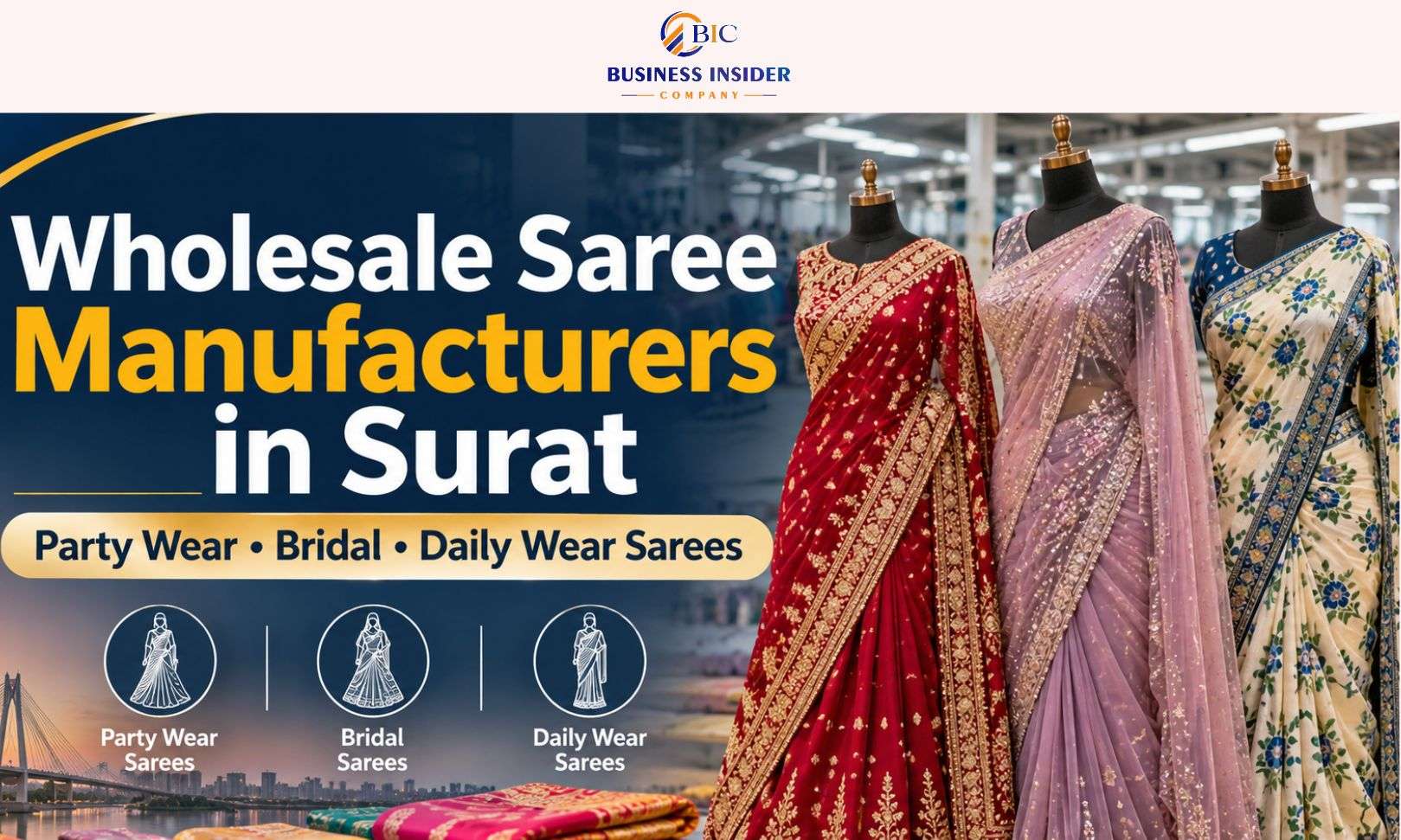
Wholesale Saree Manufacturers in Surat for Party Wear, Bridal and Daily Wear Sarees
November 19, 2026
The Indian saree market offers a wide variety of designs, fabrics, colours and traditional styles for different occasions. From elegant everyday cotton sarees to heavily embroidered bridal collections, sarees continue to be an important part of India's ethnic fashion industry. For retailers, boutique owners, distributors and online sellers, finding a dependable wholesale supplier is essential for building a profitable business.
Surat, Gujarat, has developed into one of India's major textile manufacturing centres. The city is particularly recognised for synthetic fabrics, sarees, dress materials, embroidery and textile processing. Its manufacturing ecosystem offers buyers access to different product categories, competitive sourcing opportunities and a wide range of designs.
Choosing the right wholesale saree manufacturers in surat can help retailers maintain consistent product quality, introduce fresh collections and manage inventory according to customer demand. Whether you want party wear sarees, bridal sarees or comfortable daily wear designs, understanding the wholesale market can make purchasing decisions easier.
This guide explains saree categories, fabrics, pricing factors, supplier selection, online purchasing and bulk-order considerations for businesses looking to source sarees from Surat.
Why Surat Is a Popular Destination for Wholesale Saree Purchasing
Surat has a well-established textile ecosystem that includes yarn suppliers, weaving units, textile processors, printing businesses, embroidery specialists, wholesalers and distributors. This connected supply chain makes it easier for buyers to explore different saree collections within the same textile market.
The city's textile industry is known for producing and processing man-made fabrics, particularly polyester-based materials. Buyers can find printed, embroidered, embellished and designer-inspired saree collections for different customer segments.
According to the Government of India's textile-sector information, Surat is an important man-made fibre textile centre. Its textile ecosystem supports the production of synthetic fabrics and traditional ethnic-wear materials. You can explore more about the Surat textile cluster to understand its manufacturing and processing activities.
Key Advantages of Buying Sarees from Surat
1. Wide product selection
Buyers can explore multiple saree categories, including party wear, bridal, festive, casual, printed, embroidered and lightweight collections. This makes Surat useful for retailers who serve customers with different budgets and preferences.
2. Competitive sourcing opportunities
The presence of several manufacturers, processing units and wholesalers creates opportunities to compare prices and product specifications. Businesses can select collections according to their expected selling price and profit margins.
3. Variety of fabrics
Surat's textile market offers different synthetic and blended fabrics, including georgette, chiffon, satin, art silk and other materials. These fabrics are used for creating lightweight, decorative and occasion-based sarees.
4. Design and colour variations
Manufacturers regularly introduce new prints, embroidery patterns, colour combinations and border designs. Retailers can use these collections to refresh their inventory during wedding seasons, festivals and other important shopping periods.
5. Bulk purchasing opportunities
Many suppliers cater to retailers and distributors purchasing multiple pieces or complete design collections. However, minimum order quantities and wholesale conditions differ from one supplier to another.
Understanding Different Saree Categories for Wholesale Buyers
Before purchasing inventory, retailers should understand which saree categories are suitable for their target customers. A balanced collection can include affordable everyday designs, mid-range festive options and premium occasion wear.
1. Party Wear Sarees
Party wear sarees are designed for celebrations, receptions, engagement functions, birthday parties and festive gatherings. These sarees generally feature decorative elements that create an attractive appearance without necessarily having the heavy construction of bridal collections.
Popular party wear styles include:
-
Sequin work sarees with contemporary patterns.
-
Georgette sarees with embellished borders.
-
Satin sarees with elegant draping.
-
Net sarees featuring stone and thread work.
-
Organza sarees with embroidered detailing.
-
Lightweight designer sarees with modern prints.
For retailers, party wear collections can attract customers looking for stylish outfits at different price points. Maintaining a combination of subtle and heavily embellished designs can help serve customers with different preferences.
2. Bridal Sarees
Bridal sarees are among the most detailed and occasion-specific categories in the ethnic fashion market. Customers often look for rich colours, traditional motifs, intricate embroidery, zari work and premium-looking fabrics.
Common bridal saree options include:
-
Traditional silk-style sarees.
-
Heavy zari-work sarees.
-
Embroidered bridal sarees.
-
Velvet-finish occasion sarees.
-
Designer reception sarees.
-
Banarasi-inspired sarees.
Retailers should carefully inspect embroidery finishing, border attachment, fabric quality, blouse-piece details and colour consistency before purchasing bridal inventory.
Since bridal purchases are often planned around specific ceremonies, offering multiple colours and design variations can help businesses serve different customer requirements.
3. Daily Wear Sarees
Daily wear sarees are designed for regular use, workplace dressing, household activities and casual occasions. Comfort, easy maintenance, fabric durability and affordability are important purchasing considerations in this category.
Popular options include:
-
Printed cotton sarees.
-
Lightweight synthetic sarees.
-
Daily wear georgette sarees.
-
Simple floral-print sarees.
-
Comfortable blended-fabric sarees.
-
Minimal-border designs.
Daily wear products can generate repeat purchases because customers often buy them for regular wardrobe use. Retailers can maintain a wider selection of colours, prints and affordable designs to appeal to different customer groups.
Fabric Selection: What Should Retailers Look For?
Fabric selection affects the appearance, comfort, durability and selling price of a saree. Buyers should understand the characteristics of commonly available materials before placing bulk orders.
|
Fabric |
Common use |
Key characteristics |
|---|---|---|
|
Georgette |
Party and daily wear |
Lightweight, flowing drape |
|
Chiffon |
Party and casual wear |
Sheer, soft and lightweight |
|
Organza |
Festive and occasion wear |
Structured and translucent |
|
Satin |
Party wear |
Smooth surface and subtle shine |
|
Art silk |
Festive and bridal-inspired |
Silk-like appearance |
|
Cotton |
Daily wear |
Breathable and comfortable |
|
Net |
Party and bridal wear |
Sheer and decorative |
A good sourcing strategy involves selecting fabrics based on customer requirements rather than focusing only on appearance. For example, a retailer selling everyday sarees should prioritise comfort and easy maintenance, whereas a bridal boutique may focus more on embroidery, fabric richness and finishing.
How to Identify Reliable Suppliers and Manufacturers
Selecting a supplier is one of the most important decisions for a saree retailer. A low quotation does not automatically indicate a good purchasing opportunity. Businesses should evaluate product quality, communication, order policies and delivery reliability.
When comparing wholesale saree manufacturers in surat, consider the following factors:
Manufacturing and product specialisation: Understand whether the business manufactures sarees, processes fabrics, performs embroidery or operates primarily as a wholesale distributor. This helps you identify the right source for your product requirements.
Product catalogue: Request an updated catalogue containing clear photographs, fabric information, available colours, design codes and wholesale prices.
Sample availability: Whenever possible, order samples before purchasing a large quantity. Physical inspection helps you evaluate fabric texture, stitching, embroidery and finishing.
Minimum order quantity: Ask whether the supplier accepts single-design bulk orders, mixed-design orders or a minimum quantity across the complete catalogue.
Payment terms: Clarify advance payments, balance payments, accepted payment methods and refund or replacement policies.
Shipping arrangements: Check dispatch timelines, packaging standards, transportation charges and delivery coverage.
Communication: A dependable supplier should provide clear answers about product availability, order status and any changes in specifications.
How to Build a Profitable Saree Inventory
Retailers should avoid purchasing every available design simply because it looks attractive. A better approach is to develop an inventory plan according to customer demand, seasonal requirements and available investment.
For example, a retailer serving budget-conscious customers may focus more on daily wear sarees and affordable festive collections. A boutique serving premium customers may allocate more inventory to designer, embroidered and bridal options.
A balanced purchasing strategy can include:
-
Daily wear sarees for regular customer demand.
-
Party wear sarees for celebrations and events.
-
Bridal collections for wedding-related shopping.
-
Festive sarees for seasonal promotions.
-
Lightweight sarees for younger customers and casual occasions.
Review sales performance regularly. Designs that sell consistently can be reordered, while slow-moving products should be evaluated before investing in similar collections.
Wholesale Sourcing and Price Considerations
Price is an important factor when purchasing sarees in bulk. However, the final wholesale rate depends on several product specifications, including fabric, design complexity, embroidery, printing, finishing and order quantity.
Retailers should compare the complete product specification rather than selecting a supplier based only on the lowest quotation.
wholesale saree manufacturers in india: Understanding the Supplier Network
India has a diverse textile and ethnic-wear manufacturing industry. Different regions specialise in particular fabrics, weaving techniques, printing styles and traditional designs.
Surat is particularly recognised for synthetic sarees, man-made fabrics, dress materials and textile processing. Other manufacturing centres are known for silk, cotton, traditional weaving and regional textile crafts.
Businesses exploring Indian textile industry information can learn more about the country's textile sector, its contribution to employment and its importance to the economy.
When comparing suppliers, consider:
-
Product specialisation and manufacturing capabilities.
-
Fabric sourcing and quality standards.
-
Bulk-order availability.
-
Design customisation options.
-
Production and dispatch timelines.
-
Domestic and international shipping support.
For retailers, working with a supplier that understands their product category can make inventory planning and repeat purchasing easier.
wholesale saree manufacturers in surat with price: What Determines the Cost?
The wholesale price of a saree is not fixed across all collections. Two sarees with similar colours may have very different prices because of their fabric, construction and decorative work.
Important pricing factors include:
1. Fabric quality: The type, weight, texture and quality of the fabric influence the base cost. Premium materials generally have different pricing from basic synthetic fabrics.
2. Embroidery and embellishment: Thread embroidery, zari, sequins, stones and decorative borders require additional materials and workmanship.
3. Printing technique: Digital printing, screen printing and other surface-decoration methods can have different production costs.
4. Design complexity: Sarees with intricate patterns, multiple decorative elements or detailed finishing may cost more than simple designs.
5. Order quantity: Some manufacturers offer different rates for larger orders. The actual discount depends on production requirements and supplier policies.
6. Packaging and transportation: Individual packaging, bulk cartons, insurance and delivery charges can affect the final landed cost.
7. Product specifications: Blouse-piece inclusion, border detailing, fabric length and finishing requirements should be confirmed before finalising a quotation.
Retailers should request a written quotation with product codes and specifications. This helps prevent confusion when ordering repeat collections.
wholesale sarees in surat with low price: How to Purchase Economically
Businesses looking for affordable inventory should focus on value rather than simply choosing the lowest available price. Low-cost products can become expensive if they have poor finishing, inconsistent colours or high return rates.
Consider these practical purchasing methods:
-
Compare quotations from multiple suppliers.
-
Ask for catalogue-based bulk pricing.
-
Check whether mixed-design orders are accepted.
-
Purchase samples before confirming large orders.
-
Prioritise designs that match your customer demand.
-
Confirm whether the quoted price includes packaging and GST.
-
Check the replacement policy for damaged products.
For example, a small retailer may prefer purchasing a limited quantity of different designs to understand customer preferences. A large distributor may benefit from negotiating a repeat-order arrangement for products with consistent demand.
A simple example of wholesale cost calculation
Suppose a retailer purchases 50 sarees at an average supplier price of ₹500 each.
|
Particulars |
Amount |
|---|---|
|
Quantity |
50 pieces |
|
Average purchase price |
₹500 |
|
Total product cost |
₹25,000 |
|
Estimated transportation |
₹1,000 |
|
Total before applicable taxes and other costs |
₹26,000 |
The average landed cost is ₹520 per saree before any applicable additional expenses.
If the retailer sells each saree for ₹750, the difference between selling price and landed cost is ₹230 per piece, before operating expenses, discounts, returns and other business costs.
This example is only an illustration. Actual prices and profit margins depend on the supplier, product quality and selling conditions.
How to Purchase Sarees Online from Wholesale Suppliers
Online sourcing has made it easier for retailers to discover collections without travelling to different textile markets. Businesses can review catalogues, compare product details and communicate with suppliers remotely.
However, online purchasing requires additional attention because buyers cannot physically inspect every product before placing an order.
wholesale sarees online: A Practical Buying Guide
When purchasing through online catalogues or supplier websites, follow these steps:
Step 1: Identify your product requirements
Decide whether you need party wear, bridal, daily wear, festive or mixed collections. Define the preferred fabric, colours, price range and quantity.
Step 2: Request an updated catalogue
Ask suppliers for recent product photographs and videos. Ensure that the images represent the actual products being supplied.
Step 3: Confirm product details
Check the fabric description, saree length, blouse-piece details, embroidery, colour options and finishing specifications.
Step 4: Verify the supplier
Look for business information, contact details, customer feedback and a clear order process. For large orders, consider requesting a business invoice and other relevant documentation.
Step 5: Order samples
If possible, purchase a few pieces before confirming a large shipment. This allows you to evaluate the actual fabric and finishing.
Step 6: Confirm payment and shipping terms
Discuss advance payments, dispatch schedules, transportation costs, packaging and damage-related policies.
Step 7: Maintain purchase records
Keep invoices, product codes, supplier communications and order confirmations. These records can be helpful when placing repeat orders.
surat sarees online low price: Finding Affordable Collections
Businesses searching for affordable online collections should compare multiple suppliers and carefully review product specifications.
Look for catalogues that provide transparent prices, clear product images and information about available quantities. Avoid making large payments to unverified sellers based only on attractive photographs or unusually low quotations.
You should also consider whether the supplier can maintain the same quality and design specifications across repeat orders. Consistency is particularly important for businesses selling through their own websites, marketplaces or physical stores.
A well-planned online sourcing process can help retailers save time, explore more designs and maintain a flexible inventory.
Important Quality Checks Before Confirming a Bulk Order
Quality inspection helps reduce product complaints, returns and inventory losses. Even if a supplier has a good reputation, every new collection should be evaluated according to its specifications.
Fabric inspection: Check the texture, transparency, thickness, colour and overall condition of the material.
Stitching and finishing: Examine the edges, fall, pico, seams and attachment of decorative elements.
Embroidery inspection: Look for loose threads, uneven stitching, missing stones and poorly attached embellishments.
Colour consistency: Compare multiple pieces from the same design to identify noticeable differences.
Blouse-piece verification: Confirm whether the saree includes an unstitched blouse piece and whether its fabric matches the product description.
Measurement verification: Check the advertised saree length and blouse-piece measurements.
Packaging inspection: Ensure that sarees are packed appropriately to minimise damage, moisture exposure and handling issues during transportation.
A quality checklist can be particularly useful for businesses purchasing dozens or hundreds of pieces at a time.
How Different Businesses Can Benefit from Wholesale Saree Sourcing
The wholesale saree market serves businesses with different operating models. Each type of buyer should develop a sourcing strategy according to its customer base and sales channels.
1. Retail Clothing Stores
Physical retailers need collections that appeal to local customers. They can maintain daily wear, festive and party wear categories to encourage repeat visits and increase product variety.
2. Saree Boutiques
Boutiques often focus on selected designs, unique colour combinations and premium-looking collections. They should prioritise fabric quality, finishing and distinctive styling.
3. Online Resellers
Online resellers can benefit from catalogue-based purchasing and product videos. Before listing a saree, they should verify that the product images, descriptions and specifications accurately represent the actual item.
4. Marketplace Sellers
Businesses selling through e-commerce marketplaces should focus on consistent product information, accurate images, packaging and stock management. They should also calculate marketplace fees and return-related expenses when deciding their selling prices.
5. Distributors and Bulk Buyers
Distributors generally require dependable supply, competitive purchase rates and repeat-order availability. They should evaluate production capacity, dispatch timelines and the supplier's ability to fulfil larger requirements.
Seasonal Demand and Saree Collection Planning
Saree purchasing patterns often change throughout the year. Festivals, weddings, family celebrations and regional events can influence customer preferences.
Retailers should plan their inventory in advance rather than waiting until demand increases.
|
Shopping period |
Suggested collections |
|---|---|
|
Wedding season |
Bridal and heavy embroidered sarees |
|
Navratri |
Colourful festive sarees |
|
Diwali |
Designer and party wear sarees |
|
Summer |
Lightweight cotton and breathable fabrics |
|
Regular shopping |
Printed and affordable daily wear |
|
Reception season |
Elegant embellished sarees |
These are general merchandising suggestions, not guaranteed demand forecasts. Local customer preferences and previous sales records should guide the final buying decision.
Common Mistakes to Avoid When Buying Wholesale Sarees
Even experienced retailers can face purchasing problems if they do not evaluate suppliers and products carefully. Avoiding common mistakes can help businesses protect their investment.
1. Purchasing only according to price
The cheapest product is not always the most economical option. Poor-quality fabric or finishing can increase customer complaints and returns.
2. Ignoring minimum order quantities
Always clarify the minimum quantity before finalising a collection. Some suppliers may require a specific quantity per design rather than allowing a mixed assortment.
3. Not checking actual product images
Ask for real photographs and videos instead of relying entirely on edited catalogue pictures. This is especially important for embellished and bridal sarees.
4. Overlooking delivery timelines
Late deliveries can affect seasonal sales and customer commitments. Confirm dispatch and estimated delivery dates before making payment.
5. Not discussing replacement policies
Understand how the supplier handles damaged, defective or incorrect products. Keep these terms in writing.
6. Buying too much untested inventory
New businesses should avoid investing their entire budget in untested designs. Start with a manageable assortment and expand based on actual sales.
Why Businesses Should Compare Multiple Wholesale Suppliers
Working with one supplier may simplify purchasing, but comparing multiple suppliers can help retailers understand market prices, available collections and product quality.
For example, one supplier may specialise in lightweight printed sarees, while another may offer embroidered party wear and bridal collections. Comparing their product ranges allows a retailer to develop a more complete catalogue.
When researching saree manufacturing and supplier options, buyers should consider the following:
-
Does the supplier offer the required saree categories?
-
Are product descriptions and specifications clear?
-
Can the supplier provide samples?
-
Are bulk prices competitive?
-
Is repeat-order availability confirmed?
-
Are payment and shipping conditions transparent?
A reliable sourcing relationship should offer more than an attractive first quotation. Product consistency, communication and order fulfilment are equally important.
Future Opportunities in the Wholesale Saree Market
The saree industry continues to evolve as customer preferences change and businesses expand their online presence. Traditional styles remain important, while contemporary colours, lightweight fabrics and modern embellishments attract customers looking for updated ethnic fashion.
Some important opportunities for retailers include:
Online retail expansion: Social media platforms, websites and e-commerce marketplaces allow businesses to reach customers beyond their local markets.
Personalised collections: Retailers can develop collections according to regional preferences, festivals, age groups and customer budgets.
Contemporary ethnic fashion: Modern blouse combinations, minimal borders, pastel shades and lightweight designs can attract customers interested in contemporary styling.
Premium occasion wear: Designer-inspired and embroidered sarees provide opportunities to serve customers shopping for weddings, receptions and celebrations.
Better inventory management: Using digital stock records and tracking best-selling designs can help businesses make more informed purchasing decisions.
Businesses sourcing through wholesale saree manufacturers in surat should pay attention to changing market preferences and regularly review available collections. Building relationships with dependable suppliers can make it easier to introduce new products and maintain a competitive assortment.
Frequently Asked Questions (FAQs)
Q1. Why is Surat popular for wholesale saree purchasing?
Surat is known for its textile manufacturing and processing ecosystem. The city offers a wide selection of synthetic sarees, printed fabrics, embroidered collections and dress materials, making it an important sourcing destination for retailers and distributors.
Q2. What types of sarees can retailers purchase from Surat?
Retailers can explore party wear, bridal, daily wear, printed, georgette, chiffon, organza, satin, synthetic and embroidered saree collections. Availability varies by supplier and season.
Q3. How can I find reliable wholesale saree manufacturers?
Check supplier credentials, product catalogues, fabric specifications, sample availability, minimum order quantities, payment policies and customer feedback. Requesting a sample is a useful way to assess quality before placing a large order.
Q4. What factors affect wholesale saree prices?
Fabric type, embroidery, printing, design complexity, finishing, quantity, packaging and transportation can influence wholesale prices. Buyers should compare quotations using the same product specifications.
Q5. Can small retailers purchase sarees in bulk?
Yes. Some suppliers accept smaller bulk orders, while others have higher minimum order quantities. Retailers should confirm these conditions before selecting a collection.
Q6. Is online saree purchasing suitable for retailers?
Yes, online purchasing can help retailers compare catalogues and explore different collections. However, they should verify supplier details, request actual product photographs and videos, and understand payment and replacement policies.
Q7. Which sarees are suitable for everyday retail sales?
Printed, lightweight synthetic, cotton and simple georgette sarees can be suitable options for everyday collections. The best selection depends on local customer preferences and price expectations.
Q8. How can retailers calculate their saree selling prices?
Retailers should include the purchase price, transportation, packaging, applicable taxes, marketplace fees, operating expenses and expected profit margin when calculating the final selling price.
Conclusion: Make Better Wholesale Saree Purchasing Decisions
Choosing the right supplier is an important step for retailers, boutique owners, distributors and online sellers entering or expanding in the ethnic fashion market. Surat offers a broad textile ecosystem, multiple product categories and opportunities to source collections for different customer segments.
Whether your business focuses on affordable daily wear, fashionable party wear or premium bridal collections, always prioritise product quality, transparent pricing and dependable supply. Compare multiple catalogues, inspect samples, understand minimum order quantities and confirm delivery conditions before investing in bulk inventory.
For businesses planning to expand their product range, connecting with reliable wholesale saree manufacturers in surat can support better inventory planning, consistent product availability and long-term supplier relationships.
A well-researched sourcing strategy, combined with an understanding of customer demand, can help your saree business build a stronger position in the competitive ethnic fashion market.