

Solar Energy for Businesses – The Future of Sustainable Growth
March 16, 2026
The global shift toward renewable energy has transformed how companies manage electricity consumption and environmental responsibility. Today, solar energy for businesses is no longer just an eco-friendly option—it has become a powerful financial strategy. Rising electricity costs, government incentives, and environmental awareness are pushing organizations to adopt solar energy at an unprecedented pace. In many industries, companies that invest in solar infrastructure are discovering significant long-term savings and greater energy independence.
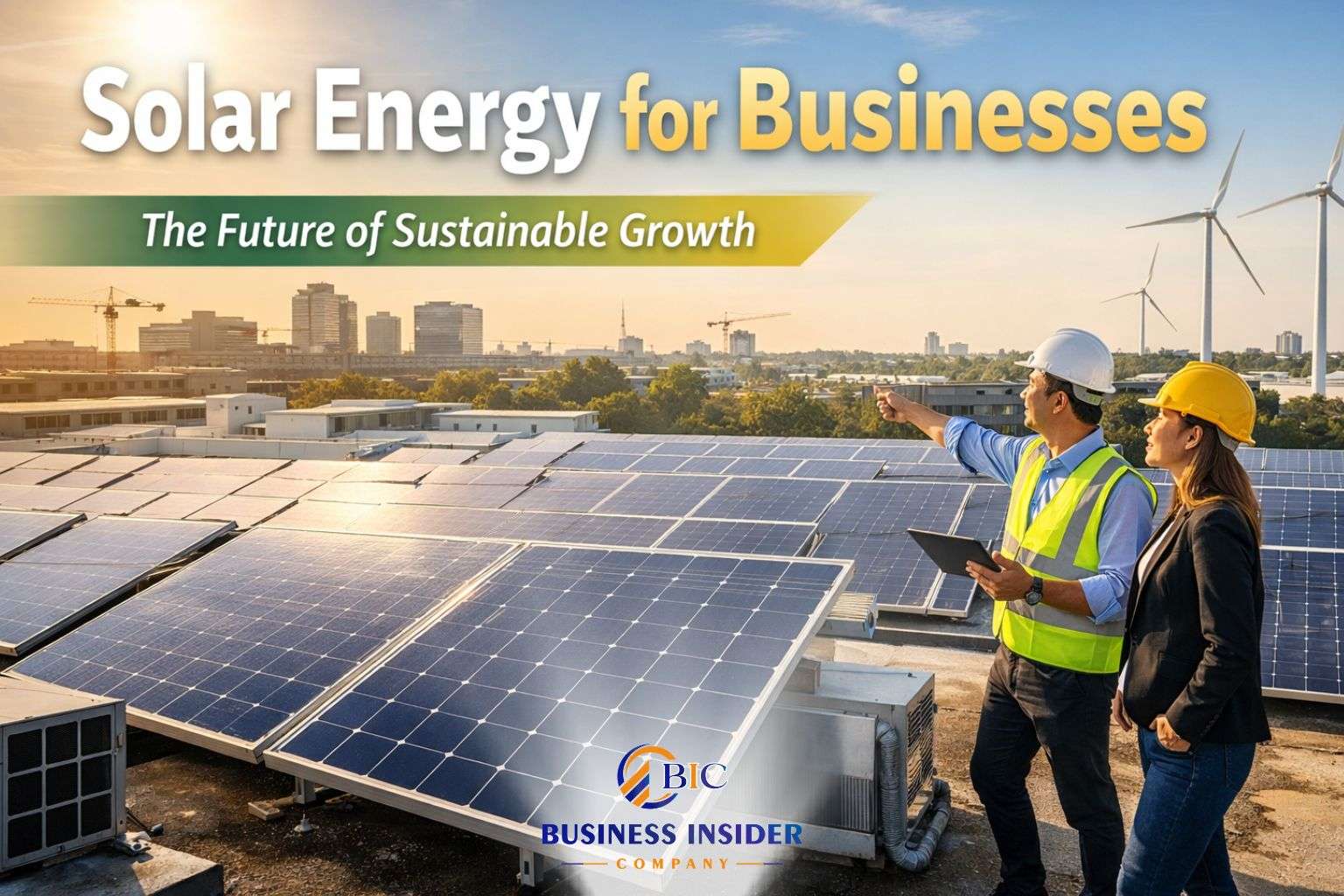
Across the world, businesses are installing rooftop solar panels to reduce operational expenses. In fact, studies show that commercial solar systems can deliver a return on investment between 10% and 15%, with payback periods typically ranging from 5 to 8 years. Once the system pays for itself, companies essentially generate electricity at almost zero cost for decades. That’s like owning a power plant on your rooftop—quietly generating value every day.
Another reason why solar energy for businesses is gaining traction is sustainability. Consumers, investors, and partners increasingly prefer companies that demonstrate environmental responsibility. When a brand adopts solar power, it signals commitment to reducing carbon emissions and supporting clean energy initiatives. This not only strengthens corporate reputation but also opens doors to partnerships with environmentally conscious organizations.
Businesses in manufacturing, retail, logistics, and technology sectors are rapidly adopting solar solutions. Industrial rooftops, warehouses, shopping malls, and office buildings provide large spaces perfect for solar installations. As solar technology continues to evolve, the efficiency of photovoltaic panels is improving while installation costs continue to fall. The result is simple: solar energy is becoming more accessible and profitable than ever.
Solar Energy Service Provider – Choosing the Right Partner
When companies decide to adopt solar power, the first critical step is selecting a reliable solar energy service provider. This partner plays a crucial role in designing, installing, and maintaining the solar system that will power your operations. Think of them as the architects of your energy future. A professional provider analyzes your building’s energy consumption, roof orientation, and sunlight exposure before recommending the best system size.
A reputable solar energy service provider offers end-to-end solutions—from feasibility studies to system monitoring. Their expertise ensures the installation meets safety standards, maximizes efficiency, and complies with government regulations. Many providers also assist businesses in accessing financing options, government incentives, and tax benefits that significantly reduce project costs.
Companies should evaluate several factors before choosing a provider. Experience in commercial installations, strong technical expertise, and a proven track record are essential. Customer reviews and case studies also provide insights into how well a provider handles large projects. Businesses often overlook maintenance services, but regular system monitoring and cleaning are vital for maintaining performance.
Choosing the right partner can mean the difference between an average solar system and a highly optimized energy solution. With the right expertise, companies can generate consistent power, minimize downtime, and enjoy decades of reliable electricity generation.
Solar Panel Installation Business – How Commercial Systems Work
The growth of renewable energy has also fueled the rise of the solar panel installation business. These companies specialize in designing and installing photovoltaic systems for residential, commercial, and industrial properties. In the commercial sector, installations are typically larger and more complex, requiring specialized engineering and energy management strategies.
Commercial solar systems convert sunlight into electricity through photovoltaic panels mounted on rooftops or ground structures. The electricity generated can power office equipment, machinery, lighting systems, and even electric vehicle charging stations. Any surplus electricity can often be fed back into the grid through net-metering policies, generating additional revenue or credits.
A modern solar panel installation business usually provides integrated services including system design, procurement of panels and inverters, installation, and maintenance. Some companies also offer energy monitoring software that allows businesses to track their solar production in real time. This transparency helps organizations measure savings and optimize energy consumption.
Businesses that partner with experienced installers benefit from high-quality equipment and professional engineering design. This ensures optimal system performance for decades. Solar panels typically have lifespans of 25 years or more, making them one of the most durable and reliable energy technologies available today.
Renewable Energy Business for Sale – Investment Opportunities
The booming clean energy sector has created numerous opportunities for entrepreneurs and investors. One increasingly popular trend is purchasing a renewable energy business for sale. Instead of starting from scratch, investors can acquire an existing solar company with established clients, trained technicians, and operational infrastructure.
Buying a renewable energy business for sale offers several advantages. First, it provides immediate entry into a rapidly expanding industry. Renewable energy markets continue to grow as governments implement stricter environmental regulations and businesses seek sustainable solutions. Second, existing companies often already have partnerships with equipment suppliers and project developers.
Investors interested in the solar sector should carefully evaluate business performance, customer contracts, and future growth potential. Key indicators include revenue stability, project pipeline, and technical expertise of the workforce. Many solar companies operate under long-term maintenance contracts, creating consistent income streams.
The renewable energy sector has become one of the most attractive investment areas globally. As electricity demand rises and environmental regulations tighten, solar businesses are expected to grow significantly in the coming decades.
Renewable Energy Grants for Businesses – Funding Your Solar Project
One of the biggest advantages of adopting solar power is access to renewable energy grants for businesses. Governments worldwide provide financial incentives to encourage companies to switch to clean energy sources. These incentives significantly reduce installation costs and improve return on investment.
Many programs provide funding based on system capacity. For example, some commercial solar grant schemes can provide up to €162,600 in funding for installations up to 1000kWp, making solar systems more affordable for businesses of all sizes. Grants typically cover a portion of equipment and installation costs, enabling companies to adopt renewable energy without heavy upfront investments.
Another major advantage of renewable energy grants for businesses is access to tax credits and depreciation benefits. In many regions, companies can deduct a large percentage of installation costs from their taxable income. These incentives accelerate the payback period and improve financial returns.
Government initiatives demonstrate how seriously policymakers are taking climate change and energy independence. By supporting businesses financially, these programs encourage rapid adoption of solar technology while reducing reliance on fossil fuels.
Benefits of Renewable Energy for Businesses
The benefits of renewable energy for businesses go far beyond reducing electricity bills. Solar power transforms how companies manage operational costs, environmental impact, and long-term energy security. Businesses that install solar systems often experience dramatic reductions in energy expenses, freeing up capital for expansion and innovation.
One of the most significant benefits of renewable energy for businesses is protection from rising electricity prices. Utility rates have increased steadily over the past decade, placing pressure on operational budgets. Solar energy provides predictable energy costs because sunlight is free. Once the system is installed, companies can generate electricity without relying entirely on the grid.
Another advantage is energy independence. Businesses that produce their own electricity are less vulnerable to power outages or grid instability. With battery storage systems, companies can maintain operations even during blackouts. This reliability is particularly valuable for manufacturing facilities and data centers that require continuous power.
Solar energy also improves corporate image. Consumers increasingly prefer brands that demonstrate environmental responsibility. By adopting renewable energy, businesses show commitment to sustainability, which can enhance customer trust and brand loyalty.
Commercial Solar Energy Solutions
Modern commercial solar energy solutions are designed to meet the complex energy demands of businesses. Unlike residential systems, commercial installations often involve hundreds or thousands of panels generating significant amounts of electricity. These systems can power factories, shopping centers, warehouses, and office buildings.
A typical commercial solar energy solutions package includes solar panels, inverters, monitoring systems, and optional battery storage. Together, these components create an integrated energy ecosystem that maximizes efficiency and reliability. Advanced software platforms allow companies to monitor energy production in real time and adjust consumption patterns accordingly.
Many businesses are now adopting hybrid energy systems that combine solar power with battery storage and smart energy management technology. These systems ensure that excess solar energy produced during the day can be stored and used during peak demand hours. This strategy reduces reliance on grid electricity and improves overall energy efficiency.
Solar technology is also evolving rapidly. High-efficiency photovoltaic cells are capable of generating more electricity from the same surface area, making installations more cost-effective for commercial properties.
Solar Energy for Businesses in the Modern Economy
Companies looking for sustainable growth opportunities increasingly turn toward solar energy for businesses. This transformation is driven by economic necessity as much as environmental responsibility. Electricity is one of the largest operational expenses for many industries, and solar power offers a powerful way to reduce those costs.
For businesses exploring sustainable strategies, adopting solar energy for businesses can be a competitive advantage. Companies that reduce energy costs can offer better pricing, invest in innovation, and expand operations more efficiently. Solar power also supports long-term energy planning, allowing businesses to forecast energy expenses more accurately.
Another major advantage is scalability. Solar installations can be expanded over time as energy needs grow. Businesses can start with a smaller system and gradually increase capacity as their operations expand.
Organizations seeking insights into sustainable business strategies often explore resources such as solar energy for businesses to understand how renewable energy solutions can transform operational efficiency.
Future of Solar Energy for Businesses
The future of solar energy for businesses looks exceptionally promising. Advances in photovoltaic technology, battery storage, and smart energy management systems are making solar power more efficient and affordable than ever before. Researchers are also developing next-generation solar materials such as perovskites that could significantly increase panel efficiency.
Experts predict that solar installations will continue growing worldwide as businesses prioritize sustainability and energy independence. Lower equipment costs and improved financing options will make solar adoption accessible even for small and medium-sized enterprises.
Businesses that invest in solar today are positioning themselves for long-term success. As environmental regulations tighten and consumers demand sustainable practices, companies powered by renewable energy will have a clear competitive advantage.
Conclusion
Solar power is transforming the global business landscape. Companies that adopt renewable energy not only reduce operational costs but also strengthen their environmental credentials and long-term competitiveness. From government grants and tax incentives to improved solar technologies, the advantages of adopting solar power are becoming impossible to ignore.
Organizations that invest in solar energy today are preparing for a future where sustainability, energy efficiency, and environmental responsibility define business success. With the right strategy, solar power can turn rooftops into revenue-generating assets and help companies thrive in a cleaner, more sustainable world.