

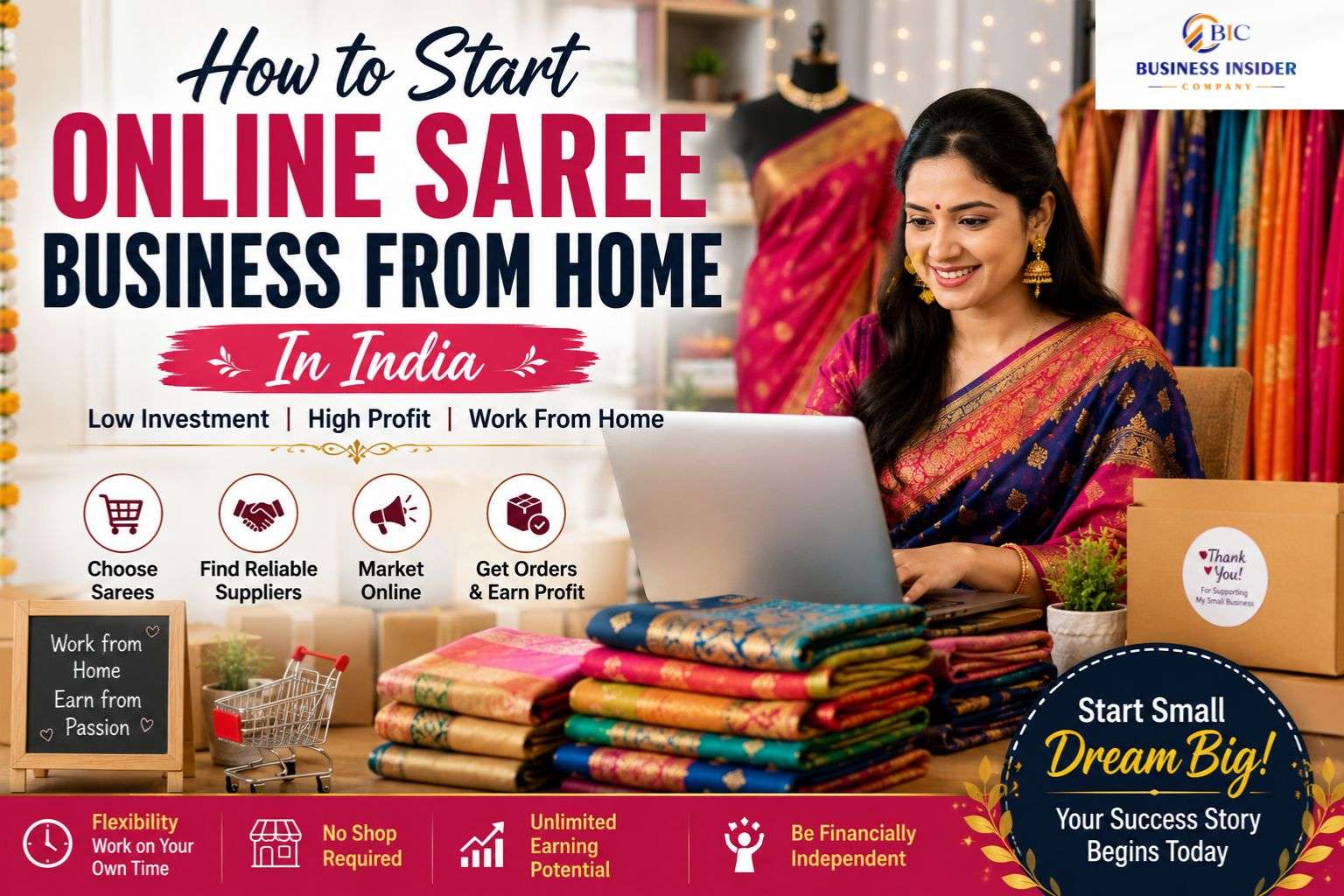
How to Start Online Saree Business From Home in India
May 13, 2026
Starting a saree business today is no longer limited to physical stores and expensive showrooms. Thanks to social media, eCommerce platforms, and digital payments, anyone with a smartphone and internet connection can launch a profitable saree business right from their living room. If you have ever dreamed about building your own fashion brand, this is probably one of the easiest industries to enter in India. Sarees are not just garments; they are emotions stitched into six yards of elegance. From weddings and festivals to office wear and casual fashion, sarees continue to dominate the Indian ethnic market.
The Indian ethnic wear industry has seen explosive growth over the last few years. According to industry reports, online ethnic fashion sales are rising rapidly because more consumers now prefer shopping online rather than visiting crowded markets. This creates a huge opportunity for entrepreneurs who want to learn how to start online saree business from home without investing lakhs of rupees. The best part? You can begin small and gradually scale into a recognizable brand.
A successful saree business combines creativity, customer understanding, and smart marketing. Whether you want to become a reseller, source products from wholesalers, or build your own boutique brand, the opportunities are endless. If you strategically use social media, SEO, and online marketplaces, you can start getting customers within weeks. Many women entrepreneurs across India are already earning a steady monthly income through home-based online saree businesses, and there’s no reason you cannot do the same.
One important thing to remember is that success in this industry depends heavily on presentation and trust. Customers want good quality, trendy collections, and responsive customer service. So if you can deliver value while building relationships, your business can grow surprisingly fast. You can also explore fashion-related opportunities through how to start online saree business from home to understand broader fashion and accessory trends connected with ethnic wear.
Why the Saree Market is Booming in India
India’s saree market has remained strong despite changing fashion trends because sarees are deeply connected with Indian culture and identity. Every state has its own weaving style, fabric tradition, and regional designs. From Banarasi and Kanjeevaram to Bandhani and Chiffon, sarees continue evolving with modern tastes while retaining their traditional charm. Young women are now styling sarees in contemporary ways, making them relevant even for college events and corporate functions.
Another major reason behind the boom is digital accessibility. Earlier, people had limited access to saree collections unless they visited famous textile cities like Surat, Jaipur, or Varanasi. Today, customers can browse thousands of designs online from the comfort of their homes. Social media platforms such as Instagram and Facebook have become virtual fashion markets where sellers showcase collections through reels, stories, and live sessions. This shift has created tremendous opportunities for small sellers entering the online saree business from home sector.
The rise of affordable courier services and UPI payments has also transformed the online fashion business landscape. Customers are now more comfortable ordering ethnic wear online because delivery systems have become faster and safer. Many saree businesses operate entirely through WhatsApp catalogs and Instagram pages without maintaining physical stores. That means lower operational costs and higher profit margins.
Festivals and wedding seasons further fuel the demand. India celebrates countless occasions where ethnic fashion becomes essential. Women purchase sarees not only for themselves but also as gifts for relatives and friends. This repeated buying behavior creates a stable customer base for saree entrepreneurs. With the right strategy, even a beginner can enter this booming market and build a strong customer network over time.
Understanding the Online Saree Business From Home Model
The beauty of an online saree business from home lies in its flexibility. Unlike traditional retail stores, you do not need heavy investment in rent, interiors, or staff. You can begin with minimal stock or even work as a reseller without purchasing inventory upfront. Many entrepreneurs initially start by uploading supplier images online and ordering products only after receiving customer payments. This reduces financial risk dramatically.
There are several business models you can choose from depending on your budget and goals. Some sellers prefer bulk purchasing from wholesalers because it gives them better profit margins. Others choose dropshipping or reseller models to avoid inventory management. Each method has its own advantages, but beginners often find reselling easier because it requires less capital. A home-based saree business allows you to work according to your schedule while managing household responsibilities simultaneously.
Saree Reseller Business
A saree reseller business is ideal for beginners who want to test the market without huge investment. In this model, you partner with wholesalers or manufacturers who provide product catalogs. You share these designs on social media, WhatsApp groups, or marketplaces. Once a customer places an order, the supplier ships the saree directly to the customer or to you for packaging.
This business model has become extremely popular among homemakers and students because it removes inventory pressure. You do not need warehouses or physical shops. Your primary focus remains on customer acquisition and marketing. Many resellers earn consistent profits by targeting niche audiences like bridal wear, office sarees, or festive collections.
The key to success in reselling is selecting reliable suppliers and maintaining transparency with customers. Delivery delays or poor-quality products can damage your reputation quickly. Building trust is essential because repeat customers often become the backbone of successful saree businesses. Over time, many resellers transition into full-fledged boutique owners once they understand customer preferences and market trends.
Choosing the Right Saree Niche
One of the smartest ways to stand out in a competitive market is by choosing a specific niche instead of selling everything. Think about it this way: when customers visit your page, they should instantly understand your specialty. Are you focusing on bridal sarees? Affordable daily wear? Designer party collections? Linen office sarees? A clear niche helps create a stronger brand identity.
India’s saree market is incredibly diverse. Silk sarees attract wedding buyers, cotton sarees appeal to working professionals, and lightweight georgette sarees remain popular among younger audiences. If you research customer demand carefully, you can position your brand more effectively. Many successful sellers specialize in one category before expanding into multiple collections later.
Trend analysis plays a huge role here. Fashion trends change rapidly due to Bollywood influence and social media exposure. Watching influencer styling videos, Instagram fashion reels, and marketplace bestsellers can help you identify trending patterns. You can also use platforms like online saree business from home to explore related business insights and understand evolving consumer behavior in the fashion industry.
Another important factor is pricing. Some niches deliver higher margins than others. Premium handloom sarees may have larger profits per piece, while affordable daily wear collections generate faster sales volumes. Ideally, you should balance demand, competition, and profitability when selecting your niche.
Setting Up Your Home-Based Saree Business
Starting a home-based saree business does not require a fancy office or expensive studio. A small organized workspace with good lighting and internet connectivity is more than enough initially. Since online selling depends heavily on presentation, your primary focus should be creating visually appealing product images and videos.
A smartphone with a good camera can handle most of your content needs. Natural lighting works wonders for saree photography because it highlights colors and textures accurately. You should also invest in simple packaging materials like poly bags, thank-you cards, and branded stickers. These small details create a professional customer experience and encourage repeat orders.
Inventory management is another important consideration. If you are stocking sarees, organize them systematically based on categories, colors, or suppliers. Keeping accurate records helps prevent order confusion. Many beginners use spreadsheets initially before upgrading to inventory software as the business grows.
Customer service can make or break your reputation. Responding quickly to inquiries, sharing real product videos, and maintaining polite communication builds trust. Remember, customers buying sarees online often worry about fabric quality and color accuracy. The more transparent you are, the higher your chances of converting inquiries into sales.
Finding Reliable Saree Suppliers
Your supplier is the backbone of your business. Even the best marketing strategies will fail if product quality disappoints customers. India has several textile hubs famous for wholesale saree manufacturing, including Surat, Jaipur, Kolkata, and Varanasi. Surat, especially, is known for synthetic, designer, and daily wear sarees at highly competitive prices.
Before finalizing suppliers, always verify product quality through sample orders. Examine stitching, fabric feel, color accuracy, and finishing details carefully. Good suppliers maintain consistent quality standards and communicate transparently about delivery timelines. Many wholesalers now provide reseller catalogs and dropshipping support specifically designed for online sellers.
Online B2B marketplaces have also simplified supplier discovery. Platforms like IndiaMART and TradeIndia connect sellers with manufacturers across the country. These platforms allow you to compare pricing, MOQ requirements, and customer reviews before making decisions. Attending textile exhibitions and trade fairs can also help you build valuable industry relationships.
Negotiation skills matter significantly in this business. Even small discounts on bulk purchases can increase your profit margins considerably over time. Developing long-term supplier relationships often leads to better rates, faster deliveries, and access to exclusive collections. Reliable sourcing eventually becomes one of the strongest competitive advantages for your saree business.
Creating Your Online Presence
Your online presence acts like your digital showroom. Since customers cannot physically touch products, your branding and presentation must create confidence instantly. Instagram has become one of the most powerful platforms for ethnic fashion businesses because sarees are highly visual products. Beautiful reels, styling videos, and customer testimonials can attract thousands of potential buyers organically.
Facebook Marketplace and WhatsApp Business are equally effective for local customer targeting. Many small businesses generate excellent sales simply through WhatsApp status updates and community referrals. Consistency is the secret here. Posting regularly keeps your audience engaged and improves visibility.
Creating your own website adds professionalism and long-term credibility. Even a basic eCommerce site with product categories, secure payment options, and contact information can improve customer trust dramatically. SEO optimization becomes especially valuable because it helps customers discover your brand through Google searches. If you understand how to start online saree business from home, then mastering digital visibility becomes absolutely essential for sustainable growth.
Content marketing also works surprisingly well for fashion businesses. Blog articles, styling guides, saree draping tips, and festive fashion trends attract organic traffic while positioning your brand as an authority. Customers are more likely to purchase from sellers who educate and inspire them rather than simply posting product images constantly.
Marketing Strategies for Fast Growth
Marketing is the engine that drives every successful saree business. Without visibility, even the best collections remain unnoticed. Social media advertising offers one of the fastest ways to attract customers because you can target specific demographics based on age, location, interests, and shopping behavior.
Influencer collaborations work particularly well in ethnic fashion. Micro-influencers with loyal followers often deliver better engagement than celebrities because audiences trust their recommendations more. Sending sarees to fashion creators for reviews and styling videos can increase brand awareness rapidly.
WhatsApp marketing remains underrated yet extremely effective. Building broadcast lists and customer communities allows you to share new arrivals directly with interested buyers. Personalized communication creates stronger relationships and encourages repeat purchases. Many sellers achieve consistent monthly sales through loyal WhatsApp customers alone.
SEO should also be part of your long-term strategy. Optimizing product descriptions, blog articles, and website pages with keywords like online saree business in India helps improve Google rankings over time. Organic traffic becomes increasingly valuable because it reduces dependence on paid advertising. Businesses that consistently create valuable content often gain a competitive advantage in crowded markets.
Here’s a simple comparison of marketing channels:
| Marketing Method | Investment Level | Best For | Results Speed |
|---|---|---|---|
| Instagram Reels | Low | Brand Awareness | Fast |
| Facebook Ads | Medium | Sales Conversion | Fast |
| WhatsApp Marketing | Low | Repeat Customers | Medium |
| SEO Blogging | Medium | Organic Traffic | Slow but Long-Term |
| Influencer Marketing | Medium | Trust Building | Fast |
Profit Margins and Scaling Your Business
Profit margins in saree businesses can vary significantly depending on sourcing methods and target audiences. Resellers often earn margins between 15% and 30%, while boutique owners sourcing directly from manufacturers may achieve even higher profits. Premium designer collections typically generate better margins than low-cost daily wear products.
Pricing strategy requires careful balance. If your prices are too high, customers may switch to competitors. If they are too low, profitability suffers. Smart sellers combine reasonable pricing with value-added services like attractive packaging, fast delivery, and personalized recommendations. Customers often pay slightly more for better experiences.
Scaling your business involves expanding both reach and product variety. Once you establish consistent sales, you can introduce complementary products like blouses, jewelry, handbags, and ethnic accessories. Cross-selling increases average order value and enhances customer convenience.
You can also expand geographically by targeting different states through multilingual marketing campaigns. India’s saree demand varies regionally, so understanding local preferences becomes important. Building a recognizable brand takes time, but consistency, customer trust, and strategic marketing eventually create long-term business stability.
Conclusion
Starting a saree business from home is one of the most accessible and profitable opportunities in India’s growing online fashion market. Whether you choose reselling, wholesale sourcing, or boutique branding, the industry offers immense flexibility and growth potential. The key lies in understanding customer preferences, building trust, and using digital marketing effectively.
If you truly want to master how to start online saree business from home, focus on consistency rather than perfection. Start small, learn continuously, improve your presentation, and build genuine relationships with customers. Every successful fashion brand began with a single step, and your journey can begin today from the comfort of your own home.
FAQs
1. How much investment is needed to start an online saree business from home?
You can start with as little as ₹5,000 to ₹20,000 if you choose the reseller model. Bulk inventory businesses may require higher investments.
2. Is a saree reseller business profitable in India?
Yes, a saree reseller business can be highly profitable if you target the right audience and use social media marketing effectively.
3. Which platform is best for selling sarees online?
Instagram, Facebook, WhatsApp Business, and your own website are excellent platforms for saree selling.
4. Can I run a home-based saree business without GST?
Small businesses below the GST threshold may not require registration initially, but regulations can vary depending on turnover and platform usage.
5. How do I get customers for my online saree business in India?
Use Instagram reels, influencer collaborations, SEO blogs, WhatsApp marketing, and referral programs to attract customers consistently.