

Embroidery Job Work: A Complete Guide to Services, Designs, Pricing, and Wholesale Business Opportunities
October 19, 2026
The textile and garment industry relies on embroidery to add creativity, value, and visual appeal to clothing and fabric products. From traditional sarees and designer blouses to uniforms, kurtis, and fashion accessories, embroidery helps businesses offer distinctive products to their customers. Choosing the right embroidery service provider is important for maintaining quality, controlling production costs, and completing bulk orders on time.
For garment manufacturers, boutique owners, wholesalers, and fashion entrepreneurs, understanding embroidery services can make purchasing decisions easier. This guide explains the different services available, regional opportunities, GST considerations, and practical ways to find reliable embroidery partners.
What Is Embroidery Job Work?
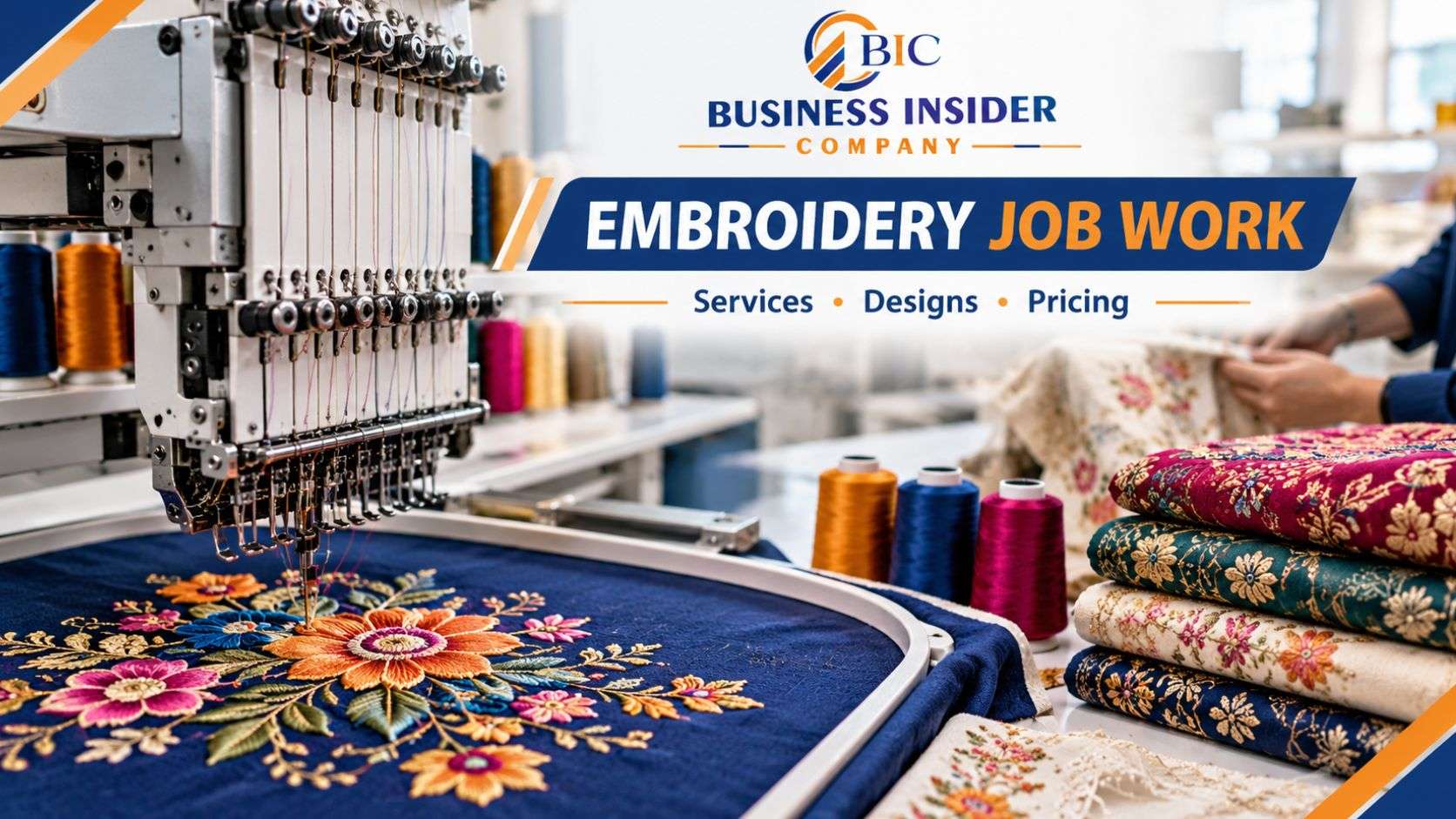
Embroidery job work involves decorating fabric or finished garments with stitched patterns, logos, motifs, and other designs on behalf of a customer or business. The customer generally supplies the fabric, garments, design specifications, or other required materials, while the service provider completes the embroidery according to the agreed requirements.
Businesses can choose traditional hand stitching or machine-based methods depending on the design, fabric, quantity, and available budget. Computerized machines are suitable for repeatable patterns and bulk production, whereas hand embroidery is often preferred for detailed, artistic, and customized designs.
Common applications include sarees, salwar suits, lehengas, shirts, uniforms, home textiles, handbags, and promotional products. Before placing an order, buyers should confirm the design, sample quality, production timeline, and total charges.
Embroidery Job Work in Surat: Services and Business Opportunities
Surat is one of India's important textile and garment trading hubs, making it a relevant market for businesses looking for embroidery services and fabric decoration solutions. Saree manufacturers, dress material suppliers, garment wholesalers, and boutique owners can explore local service providers to support their production requirements.
When evaluating embroidery job work in Surat, consider the following factors:
-
Design capabilities: Check whether the provider can produce zari work, floral motifs, sequins, thread embroidery, or customized patterns.
-
Production capacity: Confirm whether the business can manage your required quantity within the agreed deadline.
-
Fabric compatibility: Ask whether the provider has experience working with georgette, silk, cotton, chiffon, and other delicate fabrics.
-
Sample approval: Request a sample before approving a large production order.
-
Pricing transparency: Confirm whether the quoted price includes setup, thread, embellishments, finishing, and any additional charges.
For businesses sourcing textile partners, the Business Insider Company business directory can also serve as a starting point for exploring business listings and relevant service categories.
Embroidery Job Work HSN Code and GST Rate
Understanding the applicable HSN or service classification and GST treatment is important for businesses issuing invoices and maintaining tax records. The correct classification depends on the nature of the activity, the materials supplied, the contractual arrangement, and whether the transaction is treated as a service or a supply of finished goods.
For embroidery services, businesses should not assume that one HSN or GST rate applies to every transaction. Job-work services involving textile products may be treated differently depending on the specific activity and applicable GST notifications.
Before preparing an invoice, consider these steps:
-
Identify whether you are providing embroidery as a service or supplying an embroidered finished product.
-
Review the applicable service accounting code (SAC) or HSN classification for the transaction.
-
Confirm the GST rate and any relevant conditions under current government notifications.
-
Check registration requirements and invoicing rules applicable to your business.
-
Consult a qualified accountant or GST professional if materials are supplied by different parties or the contract includes multiple services.
Accurate classification helps reduce invoicing errors and makes business transactions more transparent. Always verify the latest official GST guidance rather than relying solely on an online rate chart.
Computer Embroidery Job Work in Mumbai
Mumbai offers opportunities for garment businesses, fashion labels, uniform suppliers, and promotional merchandise companies seeking machine-based embroidery services. Computerized embroidery uses digital design files to guide stitching machines, helping businesses reproduce logos, lettering, and decorative patterns with consistent results.
Computer embroidery is particularly useful for bulk orders where uniformity and turnaround time are important. Common applications include corporate uniforms, school uniforms, branded apparel, caps, bags, designer garments, and customized promotional products.
Before selecting a provider, ask about machine capacity, the maximum embroidery area, supported file formats, thread options, and minimum order quantities. You should also clarify whether digitizing charges are included in the quotation or billed separately.
Compare more than just the price per piece. Stitch density, fabric preparation, thread quality, finishing, and rejection policies can affect the final cost. A slightly higher quotation may provide better consistency and fewer production problems.
For businesses operating across different cities, comparing samples and written quotations can help identify a suitable partner for recurring orders.
Hand Embroidery Job Work at Home
Hand embroidery can offer an opportunity for skilled artisans and small-scale entrepreneurs who want to work from home. This method is especially useful for customized garments, decorative motifs, boutique collections, and designs requiring detailed manual stitching.
Individuals interested in hand embroidery job work at home should first assess their stitching skills, available working hours, equipment, and ability to meet delivery deadlines. Starting with small orders can help build experience and demonstrate workmanship to potential clients.
Practical steps for getting started include:
-
Learn popular techniques such as chain stitch, satin stitch, mirror work, and traditional regional embroidery.
-
Prepare sample pieces that demonstrate your design skills and finishing quality.
-
Approach local boutiques, tailors, garment manufacturers, and independent designers.
-
Agree on payment terms, material responsibility, delivery dates, and revision requirements before beginning work.
-
Maintain a record of completed pieces, time spent, and earnings to understand profitability.
Be cautious of work-from-home offers that demand large advance payments for registration or guaranteed job allocation. Verify the business and written terms before sharing money or accepting materials.
How to Calculate Embroidery Costs
Embroidery pricing depends on the design complexity, number of stitches, fabric type, quantity, embellishments, and production method. Hand embroidery is commonly priced according to the time and skill required, while machine embroidery may be priced per piece, design, stitch count, or production batch.
A practical quotation should account for labour, thread and other materials, machine setup, digitizing where applicable, finishing, packaging, and transportation. Buyers should also ask whether sample development and rejected pieces are charged separately.
For example, a simple logo on a uniform may require less time than a heavily embroidered bridal garment. Therefore, comparing quotations is most useful when the specifications, fabric, design, and order quantity are the same.
How to Choose the Right Embroidery Partner
Selecting a dependable service provider can improve product quality and help maintain a consistent supply chain. Begin by defining your requirements, including the type of garment, design, fabric, quantity, budget, and deadline.
Next, review the provider's previous work and request a sample. Confirm the expected production capacity and quality-control process, and obtain a written quotation covering all relevant costs. For regular orders, discuss repeat-design consistency, payment milestones, delivery arrangements, and how defects will be handled.
Business networking platforms such as Business Insider Company can help entrepreneurs explore relevant business information and discover potential connections. However, always verify a provider's credentials, capabilities, and commercial terms before entering into an agreement.
Conclusion
Embroidery is an important value-added service for the textile and garment industry, supporting everything from everyday clothing to premium designer products. Whether you need machine embroidery for bulk production, detailed hand stitching, or a home-based embroidery opportunity, the right approach starts with clear specifications, reliable workmanship, and transparent pricing.
Businesses should also verify the applicable tax classification, compare samples, and confirm delivery terms before committing to an order. Careful supplier selection can help improve product quality, control costs, and support long-term growth.
Call to Action
Looking for business connections, textile service providers, or opportunities to expand your network? Explore embroidery job work through Business Insider Company to discover relevant business information and strengthen your sourcing strategy. Visit the platform to explore business listings, connect with potential partners, and find opportunities to grow your business.