

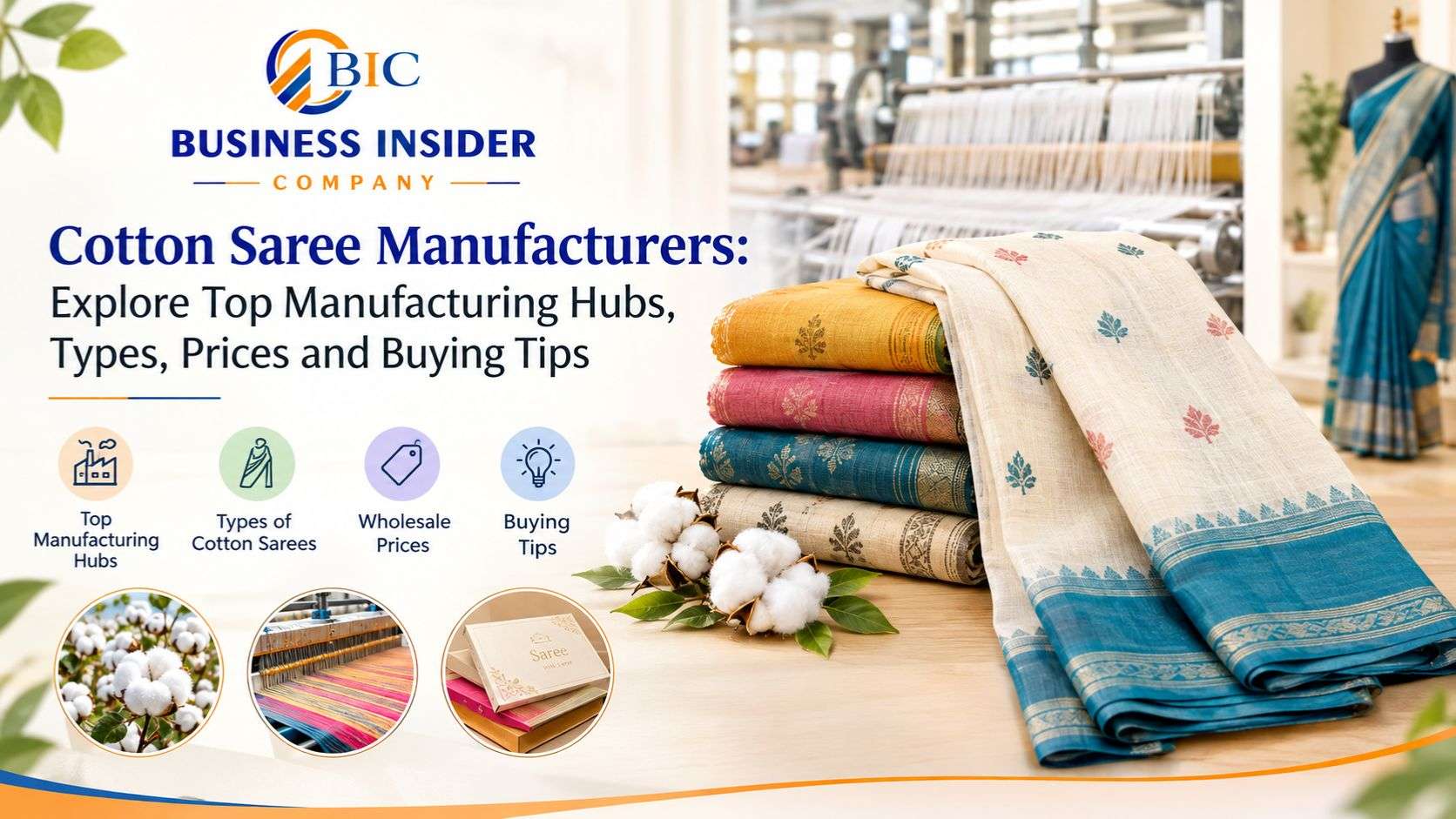
Cotton Saree Manufacturers: Explore Top Manufacturing Hubs, Types, Prices and Buying Tips
October 07, 2026
The Indian textile industry offers a wide variety of sarees for retailers, wholesalers, boutiques, exporters, and online sellers. Cotton saree manufacturers play an important role in supplying comfortable, versatile, and affordable sarees for different markets. Cotton sarees are popular because they offer breathability, easy maintenance, and attractive designs for everyday and professional wear.
When sourcing sarees in bulk, buyers should evaluate fabric quality, weaving methods, designs, finishing, production capacity, and pricing. Moreover, choosing an experienced supplier can help businesses maintain consistent quality and competitive margins. Buyers can also explore the cotton saree manufacturers category to discover relevant textile businesses and manufacturing opportunities.
Saree Box Manufacturer: Packaging for Wholesale Sarees
A saree box manufacturer supplies packaging solutions designed to protect sarees during storage, transportation, and retail display. Good packaging can prevent dust, moisture, folding damage, and unnecessary wear during delivery.
For wholesalers and retailers, attractive packaging can also improve product presentation. Therefore, businesses should consider box size, material strength, printing quality, and customization options before placing large packaging orders.
A reliable saree box manufacturer can provide customized packaging for different saree collections. This is particularly useful for businesses that sell premium cotton, handloom, linen, or designer sarees.
Cotton Saree Manufacturers in India: Major Production Hubs
Cotton saree manufacturers in India operate across several textile regions. Different locations are known for different weaving traditions, fabrics, patterns, and production techniques.
Tamil Nadu is well known for cotton weaving and traditional textile production. Gujarat is another important textile region, especially for wholesale distribution and large-scale fabric businesses. West Bengal, Maharashtra, Telangana, Karnataka, and other states also contribute to India's diverse saree manufacturing sector.
When selecting cotton saree manufacturers in India, buyers should compare fabric composition, weaving quality, minimum order quantities, customization options, delivery schedules, and wholesale prices.
For businesses searching for textile suppliers and related wholesale categories, a wholesale textile business directory can also help with supplier research.
Pure Linen Sarees Manufacturers: Premium Fabric Options
Pure linen sarees manufacturers focus on producing sarees using linen or linen-blend fabrics. Linen is appreciated for its lightweight texture, natural appearance, and comfortable feel.
Although linen sarees are different from cotton sarees, they can complement a wholesale collection. Retailers can offer linen collections alongside cotton products to target customers looking for premium and breathable fabrics.
When evaluating pure linen sarees manufacturers, buyers should confirm the fabric composition, weaving process, finishing, color fastness, and available designs. These factors can influence both product quality and wholesale pricing.
Handloom Saree Manufacturer: Traditional Weaving and Quality
A handloom saree manufacturer creates sarees using traditional weaving techniques. Handloom production often gives each saree a distinctive texture and appearance.
Retailers interested in traditional collections can include handloom products alongside contemporary cotton designs. Such collections can attract customers who value craftsmanship, regional weaving traditions, and unique patterns.
Before working with a handloom saree manufacturer, businesses should ask about production capacity, fabric details, weaving techniques, customization, sample availability, and delivery timelines.
Saree Manufacturer Machine Price: Understanding Production Costs
The saree manufacturer machine price depends on machine type, automation level, production capacity, technology, and manufacturer specifications. Modern textile machinery can support weaving, printing, finishing, and other stages of production.
Businesses planning manufacturing operations should compare machine features instead of considering price alone. Maintenance requirements, electricity consumption, production speed, spare parts, and technical support can affect the long-term cost.
The saree manufacturer machine price can therefore vary significantly between basic and advanced equipment. A proper cost analysis helps manufacturers select machinery according to their expected production volume.
Saree Manufacturing Machine: Technology in Textile Production
A saree manufacturing machine can support different stages of textile production depending on its design and functionality. Manufacturers may use specialized machinery for weaving, printing, dyeing, embroidery, finishing, and fabric processing.
Automation can help manufacturers improve production consistency and manage larger orders. However, machinery does not replace the importance of skilled workers, quality control, fabric selection, and proper finishing.
Before investing in a saree manufacturing machine, manufacturers should calculate expected output, installation expenses, maintenance costs, operating requirements, and return on investment.
How to Choose the Right Supplier for Bulk Orders
Choosing the right supplier is essential for retailers and wholesalers. Start by checking fabric quality and requesting samples before placing a large order. Samples allow buyers to evaluate texture, color, stitching, finishing, and overall workmanship.
Next, compare wholesale prices from multiple suppliers. A low price should not be the only deciding factor. Consistent quality, reliable delivery, flexible order quantities, and responsive communication are equally important.
Buyers should also ask about minimum order quantities and customization. Some suppliers may offer private labeling, customized colors, exclusive patterns, or packaging options for bulk customers.
For new businesses, starting with a smaller test order can reduce purchasing risk. Once the supplier consistently meets quality and delivery expectations, buyers can increase their order volume.
What Affects Cotton Saree Wholesale Prices?
Several factors influence wholesale saree prices. Fabric quality is one of the most important considerations. Sarees made from better-quality cotton may have higher prices because of their material and finishing.
Design complexity also affects pricing. Printed designs, embroidery, borders, special weaving techniques, and customized patterns can increase production costs.
Order quantity can influence the final quotation as well. Larger bulk orders may provide better commercial pricing, depending on the supplier's production model.
Transportation, packaging, customization, and delivery location can also contribute to the final purchasing cost. Therefore, buyers should request a complete quotation before confirming their order.
Buying Tips for Retailers and Resellers
Retailers should understand their target customers before selecting products. Everyday cotton sarees can work well for customers seeking comfort and easy maintenance. Premium designs may be more suitable for boutiques and specialty stores.
Always check fabric details, available sizes, colors, patterns, and finishing. Ask suppliers about replacement policies for damaged or incorrect products before confirming bulk purchases.
It is also useful to maintain multiple supplier relationships. This approach can help businesses compare collections, manage seasonal demand, and reduce dependency on a single source.
Build a Profitable Saree Collection
A successful wholesale collection should offer variety without becoming difficult to manage. Retailers can combine printed cotton sarees, traditional designs, contemporary patterns, and premium fabrics according to their customer base.
Businesses should monitor which designs sell quickly and reorder proven products. At the same time, introducing limited new designs can keep the collection fresh.
Digital catalogs, social media marketing, ecommerce platforms, and wholesale marketplaces can further expand product reach. Strong product photography and accurate descriptions can also improve online conversions.
Conclusion
The Indian textile market provides extensive opportunities for retailers, wholesalers, boutiques, and resellers looking for quality sarees. Working with dependable cotton saree manufacturers can help businesses access varied designs, competitive wholesale pricing, and consistent supply.
From cotton and linen collections to traditional handloom products, buyers have many options to build a strong product range. Understanding manufacturing processes, packaging, machinery, fabric quality, and pricing can make wholesale purchasing more efficient.
Before placing a bulk order, compare suppliers, request samples, confirm specifications, discuss delivery terms, and calculate your expected margins. With careful sourcing and consistent quality control, businesses can build a reliable saree collection and serve customers more effectively.
Ready to Source Sarees in Bulk?
If you are a retailer, wholesaler, boutique owner, or reseller, explore suitable textile suppliers, compare product categories, and start building your wholesale collection today. Connect with reliable cotton saree manufacturers and discuss your bulk requirements, designs, pricing, and delivery needs before placing your order.