

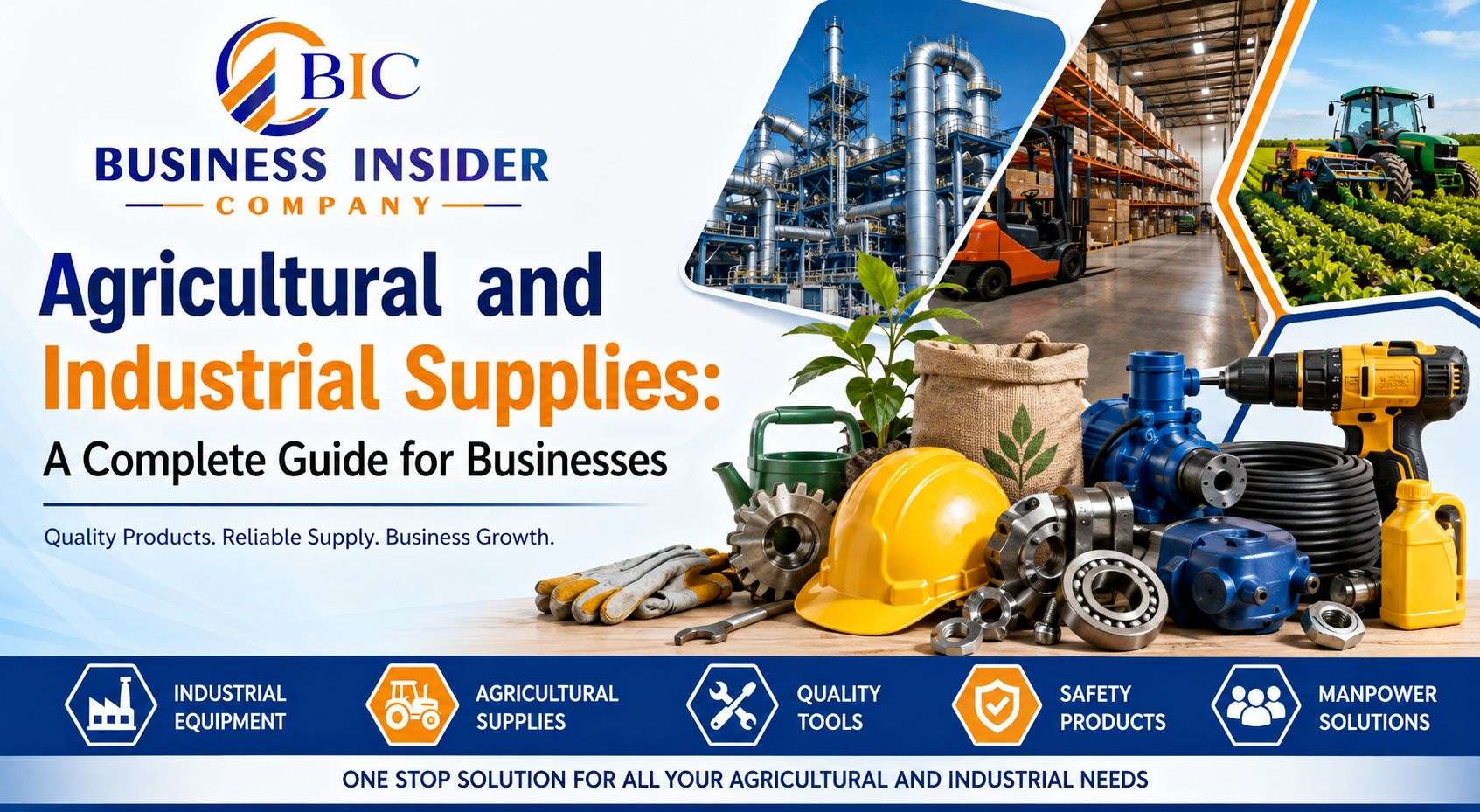
Agricultural and Industrial Supplies: A Complete Guide for Businesses
August 14, 2026
Businesses operating in farming, manufacturing, construction, logistics, and processing depend on reliable materials, equipment, tools, and support services. Choosing the right agricultural and industrial supplies can improve productivity, reduce operational delays, and help companies maintain consistent quality.
From farm machinery and irrigation equipment to industrial tools, safety products, maintenance components, and workforce support, the supply industry covers a broad range of business requirements. A reliable supplier can also help organizations manage costs and maintain a steady flow of essential resources.
Agricultural and Industrial Supplies for Modern Businesses
Modern businesses need dependable products that match their operational requirements. Agricultural companies may require seeds, irrigation systems, fertilizers, farming equipment, protective products, and machinery, while industrial organizations may need tools, electrical components, machine parts, safety equipment, and maintenance products.
For companies searching for dependable agricultural and industrial supplies, evaluating product quality, supplier reliability, delivery capability, pricing, and after-sales support is essential.
Agricultural supply chains connect producers with input suppliers, manufacturers, distributors, and retailers. The FAO describes agricultural supply chains as networks covering inputs, production, processing, transportation, marketing, distribution, and retail.
Businesses can therefore benefit from working with suppliers that understand both product requirements and supply-chain challenges.
Global Industrial Supply
The concept of global industrial supply has become increasingly important as businesses purchase products from manufacturers and distributors across different regions. International sourcing can provide access to specialized machinery, components, tools, and technical products that may not be readily available in local markets.
A strong global industrial supply strategy involves comparing manufacturers, checking specifications, understanding shipping requirements, and maintaining quality standards. Businesses should also evaluate lead times, minimum order quantities, warranties, certifications, and supplier communication before placing large orders.
For companies purchasing internationally, responsible sourcing and supply-chain transparency are becoming increasingly important. The OECD-FAO framework highlights the importance of identifying and managing environmental and social risks throughout agricultural supply chains.
This approach can help businesses build more resilient and responsible procurement systems.
Industrial Supplying Corporation
An industrial supplying corporation generally provides products and services required by manufacturing, construction, engineering, infrastructure, and other commercial sectors. Depending on its specialization, an industrial supplier may offer machinery, spare parts, tools, safety products, electrical equipment, raw materials, or maintenance solutions.
Choosing the right industrial supplying corporation requires more than comparing prices. Businesses should examine product availability, technical support, delivery schedules, quality certifications, replacement policies, and the supplier's experience with similar industries.
A dependable supplier should be capable of responding when businesses need urgent replacement parts or additional inventory. This is particularly important for factories where equipment downtime can result in production losses.
Industrial Manpower Supply
Equipment alone cannot keep an operation running efficiently. Skilled workers are also essential for installation, machine operation, maintenance, warehouse activities, construction, logistics, and technical services. This is where industrial manpower supply becomes valuable.
Companies using industrial manpower supply services can access workers according to their operational requirements. Depending on the business, this may include technicians, machine operators, warehouse workers, maintenance personnel, supervisors, drivers, and other skilled or semi-skilled employees.
When selecting manpower providers, companies should evaluate worker qualifications, training, compliance procedures, experience, attendance management, and workforce scalability.
Safety should also remain a priority in industrial environments. OSHA guidance notes that machinery can create serious hazards and emphasizes safeguards for moving machine parts and other mechanical risks.
Industrial Supply Chain Management
Effective industrial supply chain management helps businesses maintain the right products at the right time. Poor inventory planning can result in shortages, excess stock, higher storage expenses, and production interruptions.
Businesses should begin by identifying frequently used products and setting minimum inventory levels. They can then categorize suppliers according to importance, delivery performance, product quality, and pricing.
Digital inventory systems can also help businesses monitor stock levels, purchase orders, supplier performance, and delivery schedules. Regular supplier reviews are useful for identifying recurring delays or quality issues.
For agricultural businesses, supply-chain resilience is especially important because disruptions can affect access to seeds, fertilizers, machinery, labor, and other essential inputs.
Business Supply Solutions
Reliable business supply solutions combine products, sourcing, logistics, technical assistance, and workforce support to solve practical operational problems.
For example, a manufacturing company may need machine components, protective equipment, electrical products, maintenance tools, and skilled technicians. Instead of managing every requirement separately, the business can work with experienced suppliers that provide multiple categories of support.
This can simplify purchasing, improve communication, and potentially reduce procurement costs.
Businesses interested in exploring additional supply-related services can also visit Business Insider Company for broader business information and resources.
How to Choose the Right Supplier
Before purchasing agricultural and industrial supplies, businesses should create a clear supplier evaluation process.
Consider these factors:
-
Product quality: Check specifications, materials, durability, and certifications.
-
Pricing: Compare total purchasing costs rather than only the quoted unit price.
-
Availability: Confirm whether products are regularly stocked.
-
Delivery: Review delivery schedules and logistics capabilities.
-
Technical support: Check whether assistance is available for specialized products.
-
Warranty: Understand replacement and warranty conditions.
-
Supplier reputation: Review experience and customer feedback.
-
Scalability: Ensure the supplier can support future business growth.
A supplier that meets these requirements can become a long-term procurement partner rather than simply a product vendor.
Why Agricultural and Industrial Supplies Matter
Reliable agricultural and industrial supplies contribute directly to business continuity. Farmers need dependable inputs and machinery to maintain productivity, while industrial companies rely on equipment, components, safety products, and technical resources to keep operations running.
A well-organized supply network can reduce downtime, improve resource utilization, and make purchasing more predictable.
Businesses should also consider sustainability when selecting suppliers. Responsible sourcing, efficient transportation, durable products, and better inventory planning can reduce unnecessary waste while supporting long-term operational efficiency.
For agricultural machinery specifically, FAO explains that machinery supply chains can involve manufacturers, importers, dealers, service providers, repairers, and farmers. This demonstrates why supplier relationships are important throughout the entire equipment lifecycle.
Where to Find Reliable Industrial Supply Products
Businesses looking for specialized products can compare manufacturers, distributors, wholesalers, and online B2B suppliers. Product catalogs should be reviewed carefully to ensure that specifications match the actual application.
Companies can also explore specialized agricultural and industrial supplies through established B2B suppliers and industry-focused marketplaces.
For businesses specifically looking for industrial products and related categories, industrial supplies provides a dedicated resource.
When comparing suppliers, businesses should avoid making purchasing decisions based solely on the lowest price. Product quality, delivery reliability, technical support, and long-term value are equally important.
Final Thoughts
The right supply strategy can make a significant difference to agricultural, manufacturing, construction, and industrial businesses. From equipment and machinery to maintenance products, safety tools, and workforce support, every component contributes to operational performance.
Companies should focus on dependable suppliers, transparent pricing, consistent quality, efficient logistics, and responsive support. A well-planned procurement strategy can reduce risks while creating opportunities for sustainable business growth.
Whether a company needs local products or participates in a global industrial supply network, careful supplier evaluation remains essential. Businesses that combine reliable sourcing with effective industrial supply chain management can build stronger and more resilient operations.